

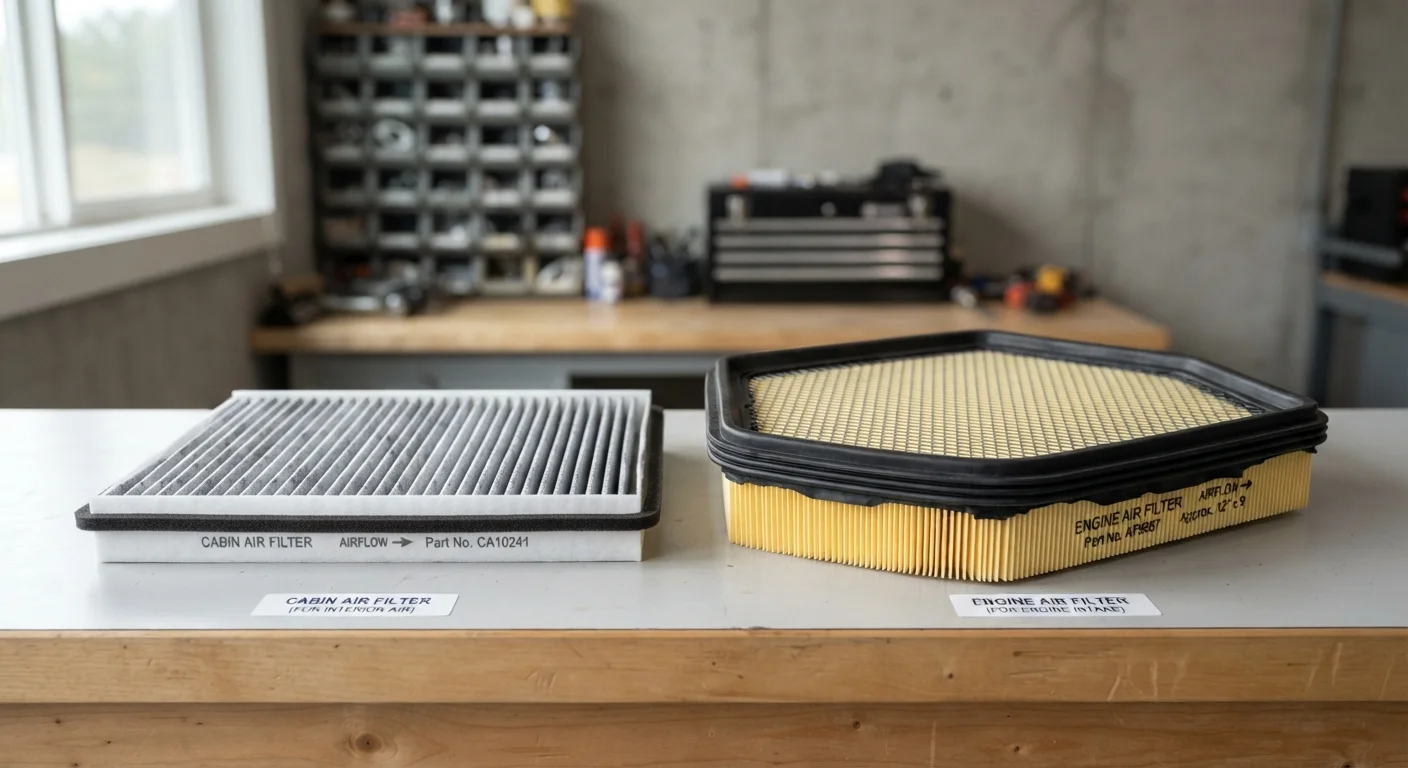
Option A
Cabin Air Filter
The filter that keeps the air inside your car clean.
Best for: Protecting passengers from dust, pollen, exhaust particles, and other airborne contaminants entering through the HVAC system.
Option B
Engine Air Filter
The filter that keeps your engine breathing cleanly.
Best for: Blocking dirt, debris, and particles from entering the engine's combustion system and causing internal wear.
What Each Filter Actually Does
Despite sharing a name, these two filters operate in completely separate systems and serve different purposes. Understanding the distinction helps you keep both in check - and catch a problem before it becomes a bigger repair.
The cabin air filter sits in the HVAC (heating, ventilation, and air conditioning) system, typically behind the glove box or under the dashboard. Every time you run your heat, air conditioning, or fan, air is pulled through this filter before it reaches the passenger cabin. It traps pollen, dust, mold spores, bacteria, and in some cases, fine exhaust particles. A quality cabin filter makes a real difference for allergy sufferers and anyone spending significant time in their vehicle.
The engine air filter lives in the engine bay, inside the air intake system. Its job is to prevent dirt, insects, dust, and debris from entering the engine's combustion chamber. Without it, abrasive particles would accelerate wear on cylinder walls, pistons, and other internal components. Engines require a precise air-to-fuel mixture to run efficiently - a clogged filter disrupts that balance.
| Criterion | Cabin Air Filter | Engine Air Filter |
|---|---|---|
| What it protects | Passenger cabin air quality | Engine internals and combustion system |
| Location | Behind glove box or under dash | Engine bay air intake housing |
| Typical replacement interval | 15,000-25,000 miles | 15,000-30,000 miles |
| Key warning signs | Weak airflow, musty smell | Reduced power, lower fuel economy |
| Impact if neglected | Poor air quality, HVAC strain | Engine wear, inefficient combustion |
| DIY difficulty | Generally easy, no tools needed | Easy to moderate, basic tools may help |
How to Know When Each Filter Needs Replacing
Both filters degrade over time, but they show different warning signs and follow different replacement intervals.
Cabin Air Filter Warning Signs
- Reduced airflow from dashboard vents even on high fan settings
- Musty or stale odors when the HVAC system is running
- Increased dust accumulation on interior surfaces
- Allergy symptoms that seem worse inside the car
Most manufacturers suggest inspecting the cabin air filter every 12,000-15,000 miles and replacing it every 15,000-25,000 miles. Driving in areas with heavy pollen, wildfire smoke, or urban pollution can shorten that interval considerably.
Engine Air Filter Warning Signs
- Decreased acceleration or engine hesitation
- Slightly reduced fuel economy over time
- Black smoke from the exhaust (in more severe cases)
- A visibly dark, clogged filter on inspection
Engine air filters are commonly replaced on a 15,000-30,000 mile schedule, but check your owner's manual - driving in dusty or rural conditions warrants more frequent inspection. Both filters can often be visually inspected in minutes, which makes keeping tabs on them straightforward.
Check Your Owner's Manual First
Replacement intervals listed here are general guidelines based on common industry standards. Your vehicle's manufacturer may specify different intervals based on your engine design, driving conditions, or filter type. Always consult your owner's manual for the recommended schedule specific to your make and model - and factor in your local driving environment, which can significantly affect how quickly filters become clogged.
DIY or Shop? What to Expect for Each
Both filters are among the more approachable maintenance tasks for drivers who are comfortable doing basic work on their vehicle. The cabin air filter is usually accessible by opening the glove box and releasing a few clips - no tools required in many vehicles. The engine air filter sits in a plastic housing secured by clips or screws and typically takes under 10 minutes to swap out.
That said, some vehicles - particularly those with tight engine compartments or unusual HVAC configurations - can make access more challenging. If you are unsure, a quick check of your owner's manual or a reputable vehicle-specific tutorial can clarify the process before you start. When in doubt, a trusted mechanic can handle either replacement quickly and at modest cost during a routine service visit.
The key takeaway: neither filter should be treated as a set-and-forget item. Both play an important role in your vehicle's overall health and the comfort of everyone inside it. Building a habit of checking them at every oil change is a simple way to stay ahead of a common and easily preventable problem.
The content provided on our blog site traverses numerous categories, offering readers valuable and practical information. Readers can use the editorial team’s research and data to gain more insights into their topics of interest. However, they are requested not to treat the articles as conclusive. The website team cannot be held responsible for differences in data or inaccuracies found across other platforms. Please also note that the site might also miss out on various schemes and offers available that the readers may find more beneficial than the ones we cover.