

Summary
22 items · 20-40 minutes
Why a Readiness Check Matters Before Workout One
Most people start a new fitness routine with energy and good intentions - and abandon it within a few weeks. Rarely is this about willpower. More often, the routine was set up in a way that didn't fit the person's real life: too intense, too time-consuming, or missing key preparation steps that would have made it stick.
This checklist is designed to close that gap. Think of it as a pre-flight check before your first workout. Working through it honestly - not optimistically - gives you a realistic picture of what you're starting with and what a sustainable routine actually looks like for you. Just as a pre-trip research checklist helps you avoid surprises on the road, this readiness review helps you avoid the friction that derails beginners.
This article is for general informational purposes only and is not a substitute for medical advice. If you have any health conditions, injuries, or concerns, please consult a qualified healthcare professional before beginning any new exercise program.
Consult a Professional Before Starting
If you have a cardiovascular condition, diabetes, joint disease, osteoporosis, or are pregnant, please speak with your doctor or a qualified physical therapist before beginning any new exercise program. This checklist is a general planning tool, not a medical clearance. Your healthcare provider can help you identify safe starting points and any movements to avoid.
How to Use This Checklist
Go through each group at your own pace - ideally a day or two before you plan to start, not the morning of. Items marked must are non-negotiable for safety and sustainability. Items marked should are strongly recommended to set yourself up for success. Nice-to-have items are genuine enhancements, but skipping them won't derail you.
Be honest with your answers. This isn't a test - it's a mirror. If you find yourself skipping an item because the answer is uncomfortable, that's exactly the item worth paying attention to.
Physical Health Considerations
Schedule and Lifestyle Realism
Equipment and Environment
Goal Clarity
Recovery and Sustainability Planning
Tools and Resources Worth Having Ready
You don't need much to get started - and that's intentional. The list below reflects what's genuinely useful, not what fitness marketing tells you is essential. If budget is a consideration, the budgeting basics hub can help you think through discretionary spending thoughtfully before committing to any fitness purchases.
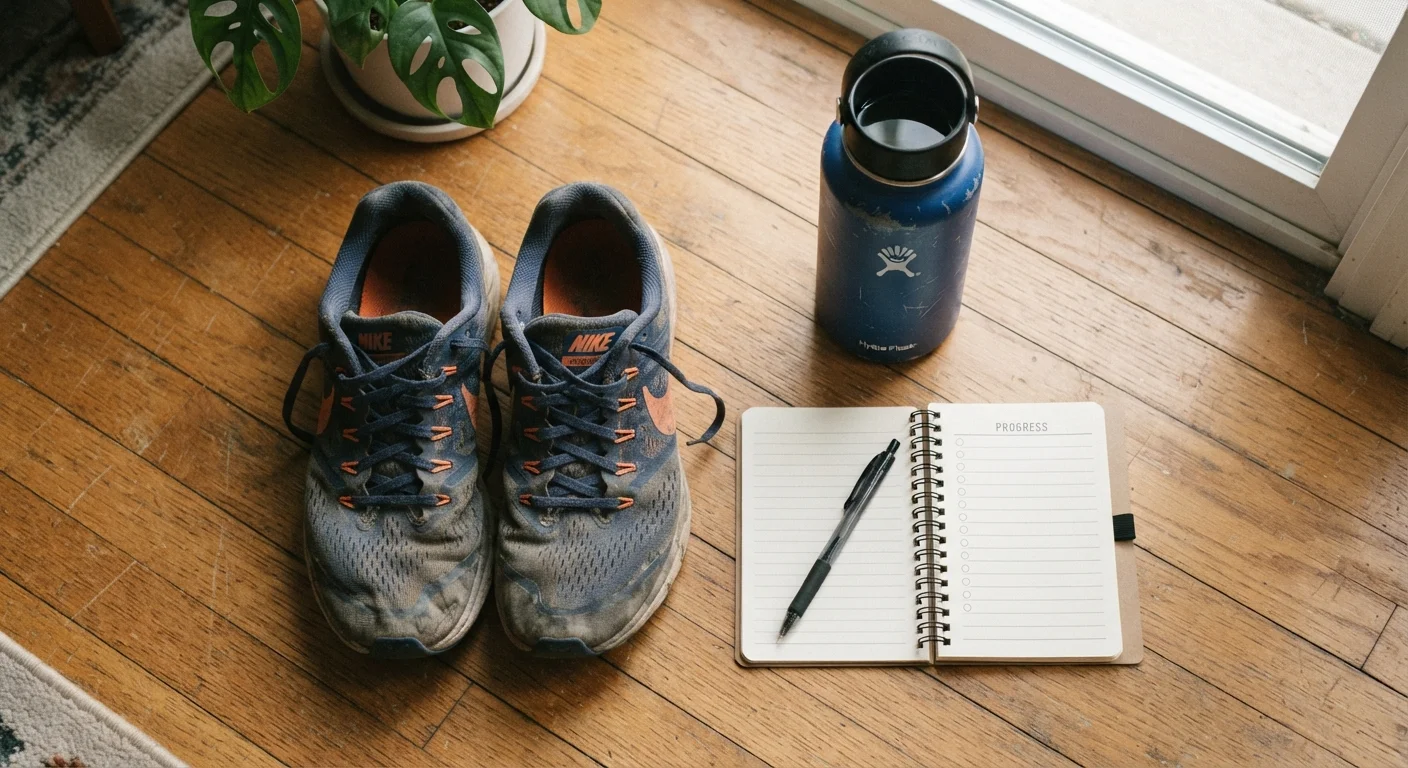
Supportive athletic shoes
Proper footwear reduces injury risk across virtually all movement types and is the single most important equipment investment for beginners.
Water bottle (reusable)
Staying hydrated before, during, and after movement supports performance and recovery.
Paper notebook or free phone notes app
Logging sessions - even briefly - helps you track consistency and notice patterns over time.
Yoga or exercise mat
Provides cushioning and grip for floor-based movements and stretching.
Resistance bands
Lightweight and inexpensive, resistance bands allow a wide variety of strength exercises without equipment-heavy setups.
Free fitness timer app
Interval timers help structure sessions without constant clock-watching, useful for bodyweight circuits or walk-run intervals.
After the Checklist: Setting Your First Two Weeks
Once you've worked through these items, resist the urge to overhaul everything at once. Research consistently suggests that habits form more reliably when they're attached to existing routines - moving after your morning coffee, for example, or walking during a lunch break already in your calendar.
Plan your first two weeks at roughly 60-70% of what you think you're capable of. This feels too easy - and that's the point. Early wins build the confidence and physical conditioning that make it possible to progress safely. Many people are surprised to find that consistency at a moderate level produces more meaningful change than intensity that leads to soreness, skipped days, and frustration.
Recovery isn't optional. Sleep, adequate hydration, and rest days are when your body actually adapts to the work you've done. Skimping here doesn't make you tougher - it slows progress and raises injury risk. If you share your life with a pet, you might even find that building your movement habit mirrors some of the same principles behind consistent training sessions for pets - short, regular, and well-prepared beats long and unpredictable every time.
This article is for general informational purposes only and does not constitute medical advice. Always consult a qualified healthcare professional before starting a new fitness routine, particularly if you have existing health conditions, are pregnant, or are recovering from injury.
Don't Let 'All or Nothing' Thinking Derail You
One missed workout does not mean your routine has failed. Treating a skipped session as a reason to start over from scratch - rather than simply continuing the next scheduled day - is one of the most common reasons people abandon routines that were otherwise working. A single missed day has no meaningful impact on progress. Missing the next day because of the first one does.
The content provided on our blog site traverses numerous categories, offering readers valuable and practical information. Readers can use the editorial team’s research and data to gain more insights into their topics of interest. However, they are requested not to treat the articles as conclusive. The website team cannot be held responsible for differences in data or inaccuracies found across other platforms. Please also note that the site might also miss out on various schemes and offers available that the readers may find more beneficial than the ones we cover.