

Why Joint-Friendly Movement Matters
Joint pain - whether from arthritis, past injuries, aging, or simply a body that's been pushed hard - is one of the most common reasons people step back from exercise. But rest alone rarely solves the problem. Regular movement helps maintain joint flexibility, supports the muscles that stabilize vulnerable areas, and contributes to overall cardiovascular health.
The good news: you don't have to choose between protecting your joints and staying genuinely active. Low-impact exercise keeps stress off cartilage and connective tissue while still delivering real fitness benefits. If you've ever believed that effective workouts have to be punishing, that idea deserves a closer look.
The options below span a range of settings, budgets, and ability levels. Think of this as a starting-point menu - not a prescription. Always check with a qualified healthcare professional before beginning any new exercise program, especially if you're managing a health condition or recovering from an injury.
Swimming and Water Aerobics
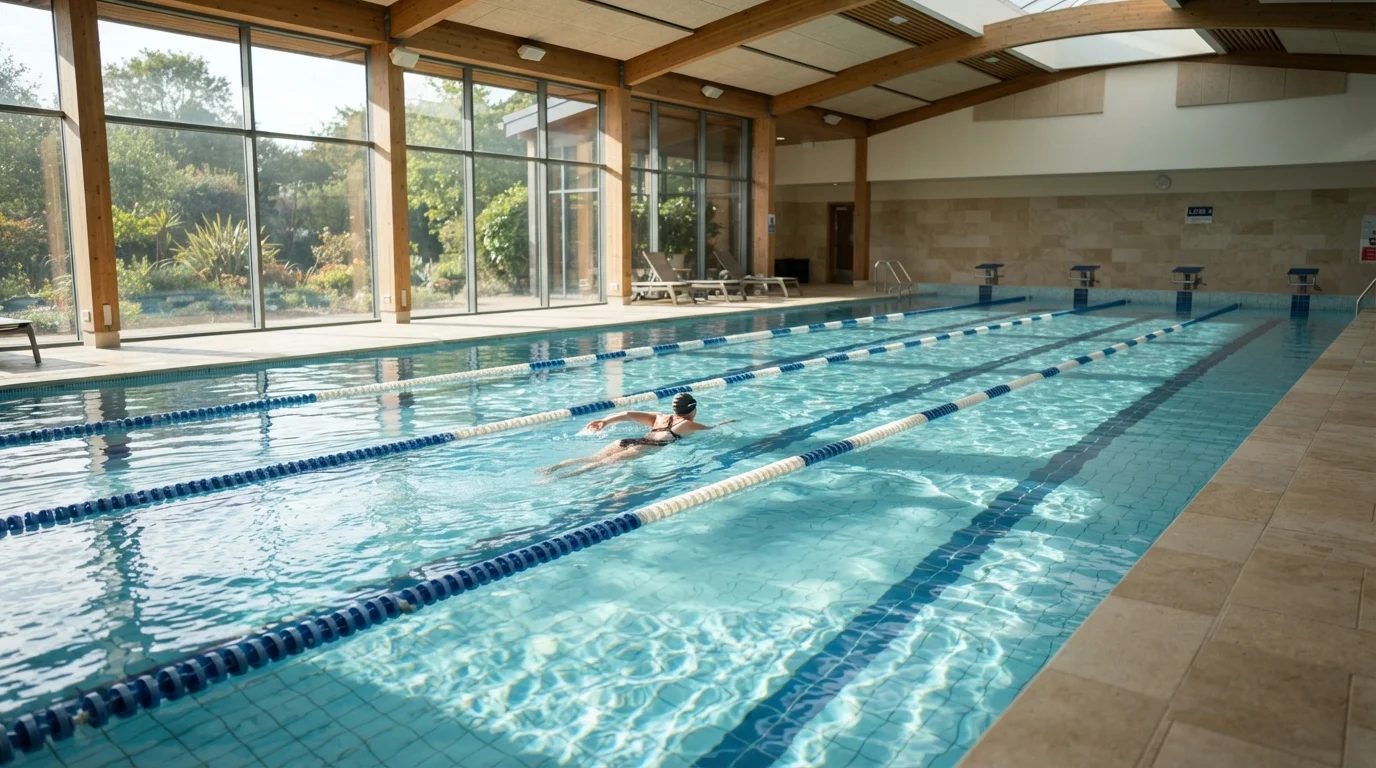
Water is one of the most forgiving environments for movement. Buoyancy reduces the effective weight your joints bear - research suggests water can support up to 90% of body weight when submerged to the neck - which dramatically lowers impact on hips, knees, and ankles. At the same time, water's natural resistance means your muscles still work hard with every stroke or movement.
Swimming laps builds cardiovascular endurance and engages nearly every major muscle group. Water aerobics classes, often available at community pools, offer a social, structured alternative that's particularly popular with older adults and those managing arthritis. Neither requires competitive skill - even slow, steady movement through water produces meaningful benefit.
Water's buoyancy can support up to 90% of body weight, dramatically reducing joint stress.
Cycling (Stationary or Outdoor)
Cycling keeps your body weight supported - either by a saddle or through a smooth pedaling motion - making it significantly easier on knees, hips, and ankles than running. A properly fitted bike matters: a seat set too low can create knee strain, while the right height allows a slight bend at the bottom of each pedal stroke.
Stationary bikes remove variables like road surface and traffic, making them a reliable indoor option year-round. Recumbent bikes, where you pedal with your legs in front of you rather than below, offer even more lower-back and joint support. Outdoor cycling adds variety and can serve as practical transportation, which research associates with better long-term adherence.
A properly fitted bike seat is essential - the wrong height can create rather than prevent knee strain.
Yoga
Yoga emphasizes controlled movement, breath awareness, and flexibility - a combination that strengthens stabilizing muscles around joints without high force loads. Styles vary widely: restorative and gentle yoga focus almost entirely on slow, supported stretching, while more dynamic styles like vinyasa involve flowing sequences that build strength alongside flexibility.
For joint health specifically, poses that gently move hips, shoulders, and spine through their range of motion can reduce stiffness over time. Props like blocks, straps, and bolsters allow modifications for most poses, making yoga broadly accessible. Look for beginner or chair yoga classes if mobility is currently limited - these are specifically designed to reduce barriers to entry.
Props like blocks and straps allow yoga poses to be modified for nearly any mobility level.
Tai Chi
Tai chi is a centuries-old Chinese practice that involves slow, deliberate sequences of movement coordinated with breath. Its gentle, flowing nature makes it particularly well-suited for older adults or anyone dealing with balance concerns alongside joint issues. Multiple studies have found it associated with improvements in balance, fall prevention, and joint pain management - particularly for people with knee osteoarthritis.
Classes are widely available in community centers, YMCAs, and online. Because movements are low-speed and bodyweight-only, the risk of overexertion is low. The meditative quality of the practice also contributes to stress reduction, which has its own relationship with inflammation and pain perception.
Tai chi's slow, deliberate movements are associated with improved balance and reduced fall risk.
Elliptical Training
An elliptical machine simulates the motion of walking or running without the repetitive ground impact. Feet stay in contact with the pedals throughout the stride cycle, which eliminates the jarring heel-strike that contributes to joint stress in running. Most machines also include movable handlebars that engage the upper body, distributing effort more broadly.
Resistance and incline settings allow you to adjust intensity gradually as fitness improves - a useful feature for those returning to exercise after a break or managing a condition that requires careful progression. Ellipticals are common in gyms, though compact versions are available for home use if gym access is a barrier.
The elliptical eliminates the heel-strike impact of running while maintaining a similar full-body movement pattern.
Walking
Walking is often underestimated as exercise, but it's one of the most consistently evidence-supported activities for overall health - cardiovascular, metabolic, and musculoskeletal. Unlike running, it keeps at least one foot on the ground at all times, meaning impact forces are significantly lower. For most people without severe joint conditions, walking is a natural starting point that requires no equipment beyond supportive footwear.
Pace, terrain, and duration all influence the benefits you gain. A brisk walk on a varied surface challenges balance and engages more muscles than a slow stroll on flat pavement. The simplicity of walking also makes it easy to layer into daily life - a quality that supports long-term habit formation. For a deeper look at what walking delivers physiologically, see what walking actually does for your body.
Walking requires no equipment, fits into daily routines naturally, and is backed by broad evidence for health benefits.
Finding a Routine That Works for You
The best low-impact exercise is the one you'll actually do consistently. If swimming feels like a chore, try cycling. If a yoga class feels intimidating at first, a short guided session at home can be a gentler entry point. Mixing two or three of these activities across a week can also prevent overuse strain on any single set of muscles or joints.
Start Small and Build Gradually
If you're new to exercise or returning after a long break, shorter sessions done consistently are more sustainable than ambitious workouts that lead to soreness or burnout. A 15-minute swim or cycling session several times a week is a genuinely solid foundation. Progress naturally as your body adapts - there's no minimum intensity required to begin seeing benefit.
Building momentum matters more than perfection. Even brief sessions count - see how movement snacks throughout the day can add up to meaningful gains. And if walking is your preferred starting point, it carries more physiological weight than many people realize - explore what walking actually does for your body for a fuller picture.
Once a style of movement starts to feel natural, turning it into a lasting habit is the next step. Start modest, be patient with yourself, and let consistency do the heavy lifting.
This article is for general informational purposes only and is not a substitute for professional medical advice. Speak with a qualified healthcare provider before starting any new exercise program, particularly if you have a medical condition, joint concerns, or are recovering from injury.
The content provided on our blog site traverses numerous categories, offering readers valuable and practical information. Readers can use the editorial team’s research and data to gain more insights into their topics of interest. However, they are requested not to treat the articles as conclusive. The website team cannot be held responsible for differences in data or inaccuracies found across other platforms. Please also note that the site might also miss out on various schemes and offers available that the readers may find more beneficial than the ones we cover.