

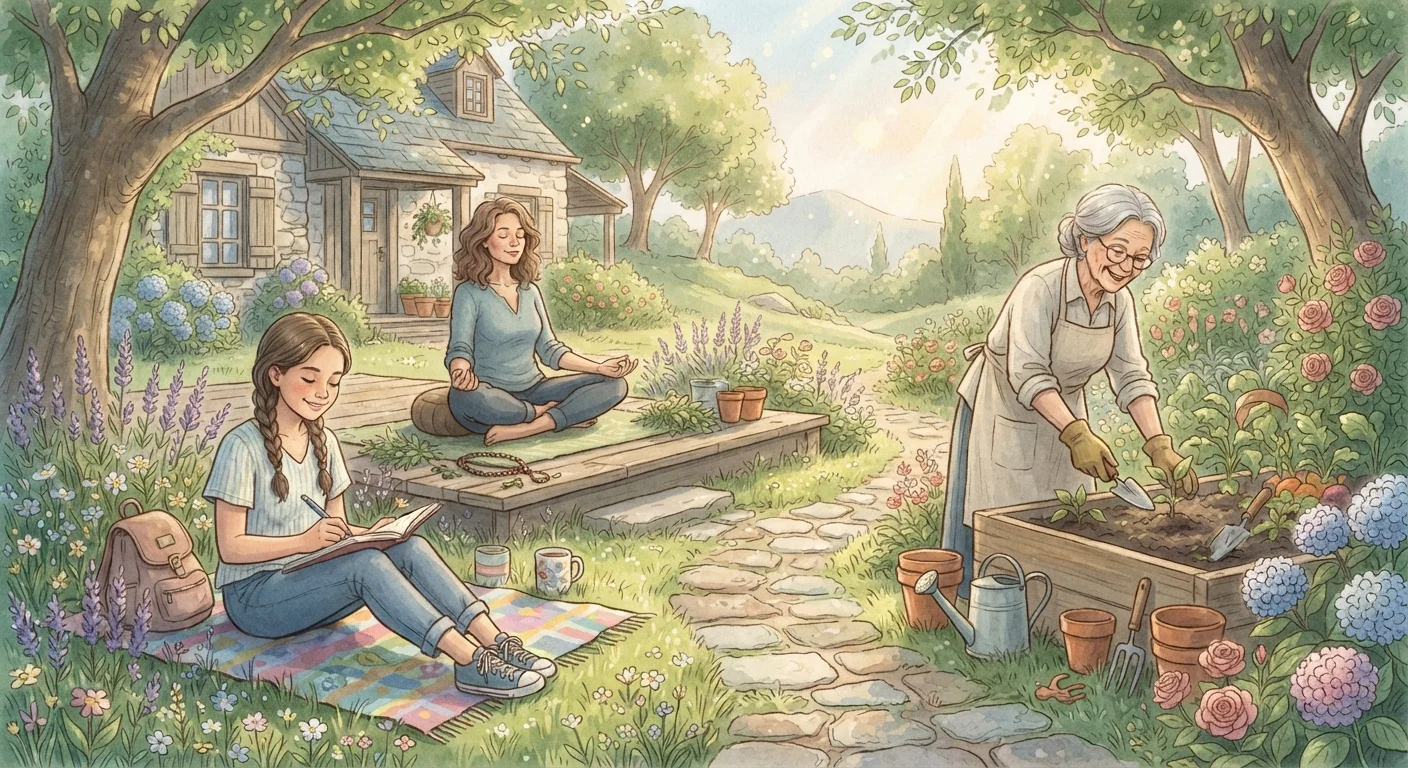
Why Life Stage Matters for Mental Wellness
Mental wellness isn't a fixed destination - it's an ongoing practice that shifts alongside the demands of your life. A college student managing academic pressure faces fundamentally different stressors than a parent in the sandwich generation or a retiree navigating a new sense of identity. Recognizing this isn't an excuse to put self-care off for a "better season" - it's an invitation to meet yourself where you actually are.
Research in developmental psychology consistently shows that psychological needs change across adulthood. What counts as adequate social connection, restorative rest, or meaningful purpose evolves alongside our roles and biology. If you've never taken stock of your emotional wellbeing across these shifts, this no-jargon introduction to mental wellness offers a clear starting point.
The habits below aren't prescriptions - they're evidence-informed patterns that tend to support emotional resilience when practiced consistently. Always consult a qualified mental health professional for guidance tailored to your individual circumstances.
Young Adulthood (Roughly Ages 18-35): Building the Foundation
Early adulthood is often when mental health challenges first emerge - anxiety disorders, mood disorders, and substance use issues frequently appear before age 25, according to research published by the National Institute of Mental Health. Yet it's also a period of remarkable neurological flexibility, making it an ideal time to establish habits that will serve you for decades.
Social connection is particularly powerful at this stage. Friendships formed in young adulthood often become the support networks people rely on during later crises. Decades of research confirm that meaningful relationships aren't optional for mental health - they're structural.
It's also worth noting that financial stress and mental health are closely intertwined at this stage. Interestingly, the habit-formation skills that support emotional wellness overlap with those that build long-term financial stability - consistency, reflection, and small daily actions compound over time in both domains.
Midlife (Roughly Ages 36-60): Sustaining Wellbeing Under Pressure
Midlife is frequently when competing demands peak simultaneously - career pressures, parenting, and often the beginning of caregiving for aging parents. This "sandwich generation" pressure is a well-documented source of chronic stress. Without intentional habit maintenance, emotional reserves can quietly erode before a person recognizes the warning signs.
Parents in this stage may also find that their own wellness habits model behavior for their children. Adolescents are particularly attuned to the emotional climate at home - supporting a middle schooler through emotional turbulence is easier when a parent has their own coping strategies in place. Practicing mindfulness or meditation - even briefly - has shown benefits for stress regulation in multiple controlled studies.
Supporting family members without burning out requires recognizing that you cannot sustain care for others without tending to your own emotional reserves first.
Later Life (Ages 60 and Beyond): Protecting and Deepening Wellbeing
Later adulthood brings its own psychological landscape - retirement transitions, shifts in physical capacity, grief from losing peers, and a recalibration of identity and purpose. While media narratives often frame aging as a period of inevitable decline, research in positive psychology and gerontology suggests that many people experience greater emotional stability and life satisfaction in their 60s and 70s than in earlier decades.
Maintaining social ties is one of the most consistently supported protective factors for mental health in older adults. Structured routines - even simple ones - provide a scaffold for purpose when occupational identity fades. Regularly checking in on your emotional state becomes especially valuable when life transitions are frequent and sometimes involuntary.
For families navigating these transitions together, parenting milestones resources can also offer a useful lens for understanding how emotional development continues across generations - not just in children, but in the adults raising them.
This article is for general informational purposes only and does not constitute medical or mental health advice. Please consult a qualified healthcare or mental health professional for guidance specific to your situation.
The content provided on our blog site traverses numerous categories, offering readers valuable and practical information. Readers can use the editorial team’s research and data to gain more insights into their topics of interest. However, they are requested not to treat the articles as conclusive. The website team cannot be held responsible for differences in data or inaccuracies found across other platforms. Please also note that the site might also miss out on various schemes and offers available that the readers may find more beneficial than the ones we cover.