

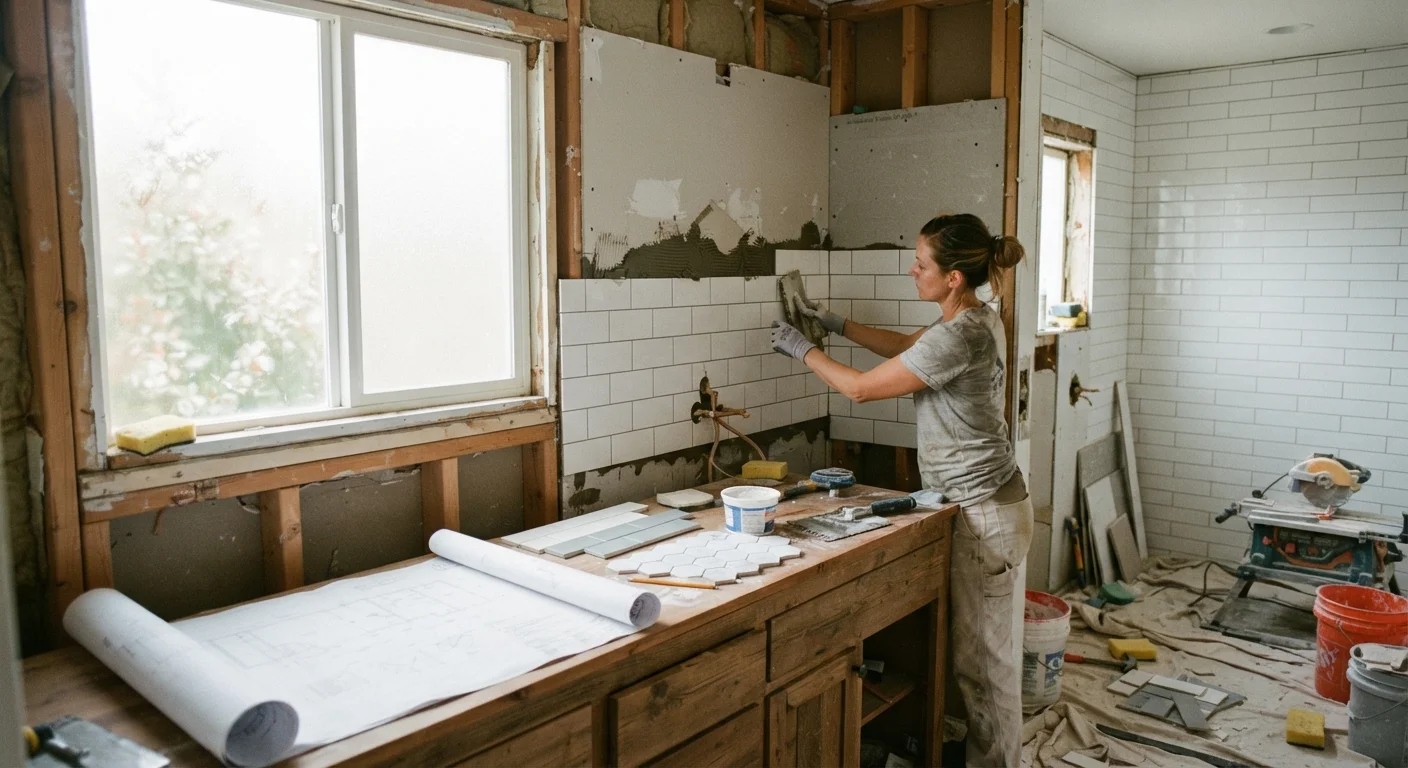
Why Bathroom Remodel Myths Are So Persistent
Bathroom renovations rank among the most frequently undertaken home improvement projects in the US - and among the most frequently misunderstood. Much of the misinformation circulates through word of mouth, online forums, and well-intentioned advice from people who completed a remodel without obvious short-term consequences. The problem is that many bathroom mistakes take months or years to surface: a slow leak behind a wall, grout that begins failing after its second winter, or a permit issue that emerges only when you list the home for sale.
Understanding what's actually true - and why - puts you in a much stronger position to plan, budget, and execute a project that holds up over time. The myth-and-fact pairs below address the most consequential misconceptions we see homeowners carry into a remodel.
Myth
Cosmetic changes - like replacing a vanity or retiling - don't require a permit.
Fact
Many jurisdictions require permits for work that touches plumbing, electrical, or structural systems, even if the visible result looks purely cosmetic.
Swapping a vanity often means disconnecting and reconnecting supply lines and drain fittings - work that falls under plumbing codes in most US municipalities. Similarly, adding a light fixture or outlet near a sink triggers electrical code requirements. The cosmetic outcome doesn't determine permit necessity; the systems touched do. Always consult your local building department before starting. For a broader overview, see our guide to permits and inspections.
Myth
Any tile can be used anywhere in a bathroom as long as it fits the aesthetic.
Fact
Tiles are rated by slip resistance, water absorption, and durability - and using the wrong type in a wet zone can lead to cracking, mold, and water infiltration.
The porcelain enamel institute (PEI) rates tiles by wear resistance, and separate ratings cover coefficient of friction (slip resistance) and water absorption. A decorative wall tile with high porosity is not suitable for a shower floor, where standing water and foot traffic demand a low-absorption, high-grip surface. Mismatched tile selection is a leading cause of early bathroom deterioration and costly repairs.
Myth
You can save money by doing all the plumbing yourself, even without experience.
Fact
Amateur plumbing errors in bathrooms - including improper venting, incorrect slope on drain lines, and failed seals - are among the most expensive home repair mistakes to remediate.
Drain lines require precise slope (typically ¼ inch per foot) to prevent standing water and blockages. Drain-waste-vent (DWV) systems must be correctly configured to avoid sewer gas entering the home. A failed wax ring or supply line connection can cause hidden leaks that damage subfloors and joists before they're ever detected. Licensed plumbers carry liability coverage and must meet code - protections DIY work does not provide.
Myth
A bathroom remodel will always recoup its full cost at resale.
Fact
According to widely cited industry research, midrange bathroom remodels typically recoup roughly 60-70% of their cost at resale - not 100% or more.
Return on investment varies significantly by region, local market conditions, home price tier, and the scope of work done. Luxury upgrades in a modest neighborhood rarely recoup at the same rate as value-appropriate improvements. Remodeling for comfort and functionality in your own home is a valid reason to invest - but expecting dollar-for-dollar return at sale is a planning assumption that often leads to disappointment. For related context on financial expectations, see common budgeting myths that affect renovation planning.
Myth
Bathroom ventilation is optional if you keep a window cracked.
Fact
Building codes in most US jurisdictions require mechanical ventilation in bathrooms without operable windows - and even windowed bathrooms benefit significantly from a properly sized exhaust fan.
Humidity from showers and baths is the primary driver of mold growth inside wall cavities, ceiling drywall, and tile grout. An operable window provides inconsistent relief and none at all in cold or rainy weather when it stays closed. A correctly sized exhaust fan (measured in CFM - cubic feet per minute - relative to room size) actively removes moisture-laden air. Inadequate ventilation is one of the most overlooked causes of bathroom structural damage over time.
Myth
Grout is waterproof, so you don't need to seal it in a shower.
Fact
Standard cement-based grout is porous and absorbs water readily; it requires periodic sealing to resist moisture, staining, and mold growth.
Epoxy grout is inherently more water-resistant, but most bathroom installations use cement-based grout, which is not waterproof. Unsealed grout in a shower can absorb water, leading to efflorescence (white mineral deposits), mold growth, and eventual cracking as freeze-thaw cycles or ongoing moisture stress the grout lines. Penetrating sealers should be applied after installation and reapplied periodically - manufacturer guidance typically suggests every one to three years depending on use and product type.
Planning a Remodel on Solid Ground
A bathroom remodel that goes smoothly isn't the result of luck - it's the result of accurate assumptions made early. That means verifying permit requirements with your local building department before any work begins, choosing materials rated for the specific conditions they'll face, and being honest about which tasks genuinely benefit from a licensed professional.
Permits Protect You, Not Just the Inspector
Skipping a required permit doesn't just risk a fine - it can void your homeowner's insurance coverage for related damage and create serious problems when you sell. Unpermitted work often must be torn out and redone at full cost. Always check with your local building department before beginning any plumbing, electrical, or structural bathroom work.
Budget planning deserves the same clear-eyed approach. Padding your contingency fund by 15-20% above your estimated project cost is a standard practice among experienced remodelers, because unexpected conditions - old water damage behind tile, outdated wiring that needs upgrading to code, subfloor rot - are common discoveries once walls open. If you're also planning other rooms, kitchen renovation planning principles apply many of the same sequencing and trade-coordination lessons. Grounding your expectations in verified facts rather than hopeful assumptions is the single most effective way to keep a bathroom remodel on track.
~65%
Average cost recouped on midrange bathroom remodel at resale
Industry cost-vs-value research consistently shows midrange bathroom remodels recouping roughly 60-70% of project cost at resale, varying by region and market.
¼ in/ft
Required drain line slope for proper drainage
Standard plumbing practice and most US building codes specify a minimum slope of one-quarter inch per foot on horizontal drain runs to ensure self-clearing flow.
The content provided on our blog site traverses numerous categories, offering readers valuable and practical information. Readers can use the editorial team’s research and data to gain more insights into their topics of interest. However, they are requested not to treat the articles as conclusive. The website team cannot be held responsible for differences in data or inaccuracies found across other platforms. Please also note that the site might also miss out on various schemes and offers available that the readers may find more beneficial than the ones we cover.