

Our Verdict
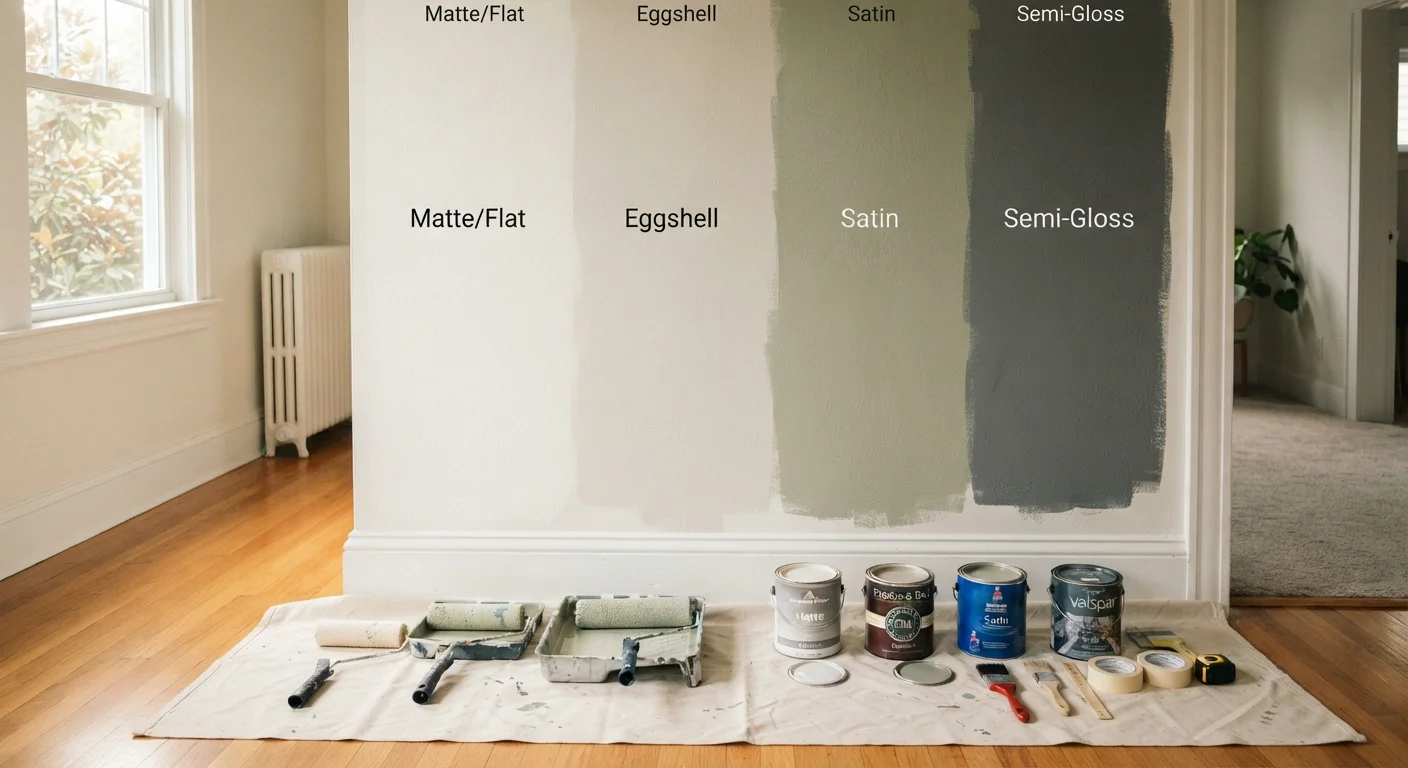
No single finish works perfectly in every room. Matte and eggshell suit low-traffic areas and spaces where hiding imperfections matters most, while satin is a versatile workhorse for family-heavy rooms. Gloss and semi-gloss belong on trim, cabinetry, and high-moisture areas where hardness and cleanability are priorities.
| Best for | Recommended |
|---|---|
| Ceilings, formal dining rooms, and adult bedrooms | Matte |
| Living rooms, hallways, and general-purpose walls | Eggshell |
| Kitchens, bathrooms, kids' rooms, and high-traffic areas | Satin |
| Trim, doors, cabinets, and moisture-prone surfaces | Gloss / Semi-Gloss |
Why Paint Finish Matters More Than Color Alone
When most homeowners think about repainting a room, color gets all the attention. But the finish - or sheen level - determines how light bounces off the surface, how well the paint resists moisture and stains, and how easy cleanup will be over the years. Choosing the wrong finish for a room's traffic level or humidity exposure can mean walls that scuff, streak, or look patchy within a season or two.
Paint finishes are defined by how much light they reflect. The more resin in the formula, the higher the sheen - and generally, the more durable and washable the surface. Each finish involves trade-offs worth understanding before you pick up a roller.
| Matte | Eggshell | Satin | Semi-Gloss / Gloss | |
|---|---|---|---|---|
| Sheen Level | Flat / None | Low | Medium | High / Very High |
| Washability | Poor | Moderate | Good | Excellent |
| Hides Imperfections | Excellent | Good | Moderate | Poor |
| Moisture Resistance | Low | Low-Moderate | Good | Excellent |
| Best Room Use | Ceilings, bedrooms | Living rooms, hallways | Kitchens, bathrooms, kids' rooms | Trim, cabinets, doors |
| Ease of Touch-Up | Easy | Moderate | Moderate | Difficult |
Matte Finish: Best for Concealing Imperfections
Matte paint (sometimes labeled flat) reflects very little light, which makes it the best choice for hiding surface flaws - drywall patches, slight texture variations, nail pops, and uneven walls all become far less noticeable under a matte coat. This is why it remains the standard for ceilings and is widely used in formal living rooms or adult bedrooms where walls see little direct contact.
The trade-off is cleanability. Matte surfaces absorb rather than repel moisture, so scrubbing with a damp cloth can lift the paint or leave shiny spots - called burnishing. Touch-up painting is usually easy since matte blends well, but matte is not a practical choice for kitchens, bathrooms, or anywhere kids regularly touch walls.
Eggshell and Satin: The Everyday Workhorses
Eggshell sits one step above matte in sheen. It has a soft, low-luster appearance (think the surface of an actual egg) that still minimizes wall imperfections while offering meaningfully better washability than flat paint. Eggshell is a dependable choice for living rooms, dining rooms, and adult bedrooms where occasional cleaning may be needed without heavy-duty scrubbing demands.
Satin has a pearl-like sheen that is noticeably shinier than eggshell. It reflects more light, which can make a room feel slightly brighter and more polished. More importantly, satin is far more moisture- and stain-resistant, making it the go-to finish for kitchens, bathrooms, laundry rooms, kids' rooms, and high-traffic hallways. It can be wiped down repeatedly without damage.
Apply Satin with a Consistent Roller Nap
Because satin's sheen reveals application inconsistencies, use a uniform roller nap (typically 3/8 inch for smooth walls) and maintain a wet edge throughout each wall. Working in sections from top to bottom - without letting any section fully dry before joining the next - helps prevent visible lap marks. Two thinner coats almost always produce a better result than one thick coat.
One consideration with satin: its higher sheen makes application technique more visible. Roller marks and lap lines are easier to spot, so consistent application - or a second coat - is important for a smooth result.
Gloss and Semi-Gloss: Hard, Durable, and Highly Cleanable
Semi-gloss and full gloss finishes reflect the most light and offer the highest durability of any interior paint type. Their hard, almost plastic-like surface resists moisture, mildew, grease, and repeated washing - which is why they are standard on interior trim, baseboards, door frames, window casings, and cabinetry.
The high reflectivity is a double-edged quality: it makes surfaces easier to clean but also amplifies every surface imperfection. Drips, brush marks, and uneven substrate texture become obvious under gloss paint. Proper surface preparation - sanding, priming, and filling - matters more here than with any other finish.
Full gloss is relatively uncommon on large wall surfaces in residential interiors because of how dramatically it highlights flaws and creates visual glare. Semi-gloss hits a better balance for most trim and high-use applications.
Practical Tips for Choosing and Applying Your Finish
A few principles help simplify the decision:
- Map finish to function. Ask how often the surface will be touched, cleaned, or exposed to humidity before choosing a sheen level.
- Use higher sheen on trim than on walls. This is a widely used design convention - it creates visual separation and makes trim easier to maintain.
- Don't forget prep. Higher-sheen finishes require better surface preparation. Fill holes, sand seams, and prime bare drywall before applying eggshell or above.
- Test before committing. Paint a 12-by-12-inch sample patch on the actual wall, let it cure for 24 to 48 hours, and evaluate it in different lighting conditions before painting the full room.
When in doubt, eggshell is a forgiving starting point for most main living areas, with satin reserved for rooms that see heavy use or moisture.
The content provided on our blog site traverses numerous categories, offering readers valuable and practical information. Readers can use the editorial team’s research and data to gain more insights into their topics of interest. However, they are requested not to treat the articles as conclusive. The website team cannot be held responsible for differences in data or inaccuracies found across other platforms. Please also note that the site might also miss out on various schemes and offers available that the readers may find more beneficial than the ones we cover.