

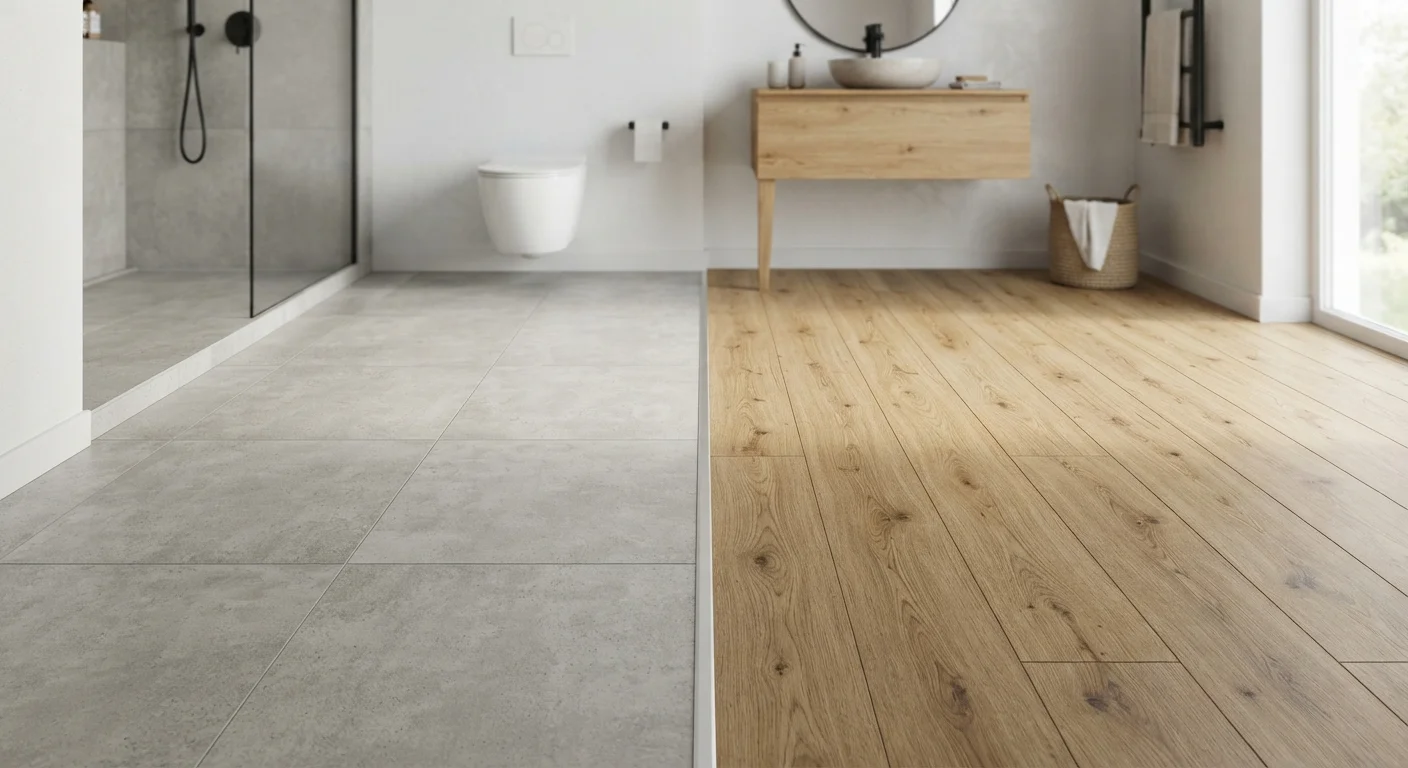
Option A
Ceramic or Porcelain Tile
The time-tested, hard-wearing standard for wet spaces.
Best for: Homeowners who want maximum durability and a permanent, high-end look in bathrooms, kitchens, or laundry rooms.
Option B
Luxury Vinyl Plank (LVP)
The flexible, budget-conscious alternative that installs fast.
Best for: Homeowners seeking a warm, wood-look floor with simpler DIY installation and lower upfront cost.
How Each Material Handles Moisture
When selecting flooring for kitchens, bathrooms, laundry rooms, or mudrooms, water resistance is non-negotiable. Both tile and luxury vinyl plank (LVP) are marketed as moisture-resistant, but their performance in wet conditions differs in important ways.
Ceramic and porcelain tile are inherently waterproof materials. Porcelain, in particular, has a very low water absorption rate (typically below 0.5%), making it resistant to moisture penetration through the tile itself. The vulnerability in a tile installation lies in the grout lines. Unsanded or improperly sealed grout can absorb water over time, allowing moisture to reach the subfloor and eventually cause mold, cracking, or adhesion failure. Regular grout sealing - generally every one to three years depending on use - addresses this risk effectively.
Luxury vinyl plank is constructed from layers of PVC, giving the planks themselves excellent water resistance. However, LVP is not a monolithic surface. Water that penetrates the seams between planks - particularly in floating installations - can reach the subfloor and create problems. For this reason, most flooring professionals recommend against using standard LVP in shower pans or other areas where water pools consistently. In bathrooms with normal splash and humidity, though, quality LVP performs reliably.
| Criterion | Ceramic / Porcelain Tile | Luxury Vinyl Plank (LVP) |
|---|---|---|
| Water resistance | Fully waterproof (tile); grout needs sealing | Water-resistant; seams can be vulnerable |
| DIY difficulty | High - labor-intensive, time-sensitive | Low to moderate - click-lock system |
| Material cost (approx.) | $1-$5+ per sq ft (ceramic/porcelain) | $2-$7 per sq ft |
| Installation labor cost | High - typically $4-$10+ per sq ft | Lower - $1-$3 per sq ft, or DIY |
| Expected lifespan | 50+ years with proper care | 15-25 years typical |
| Comfort underfoot | Hard and cold without radiant heat | Softer, warmer, better sound absorption |
| Maintenance | Grout sealing needed periodically | Sweep and damp mop only |
| Best wet-area application | Shower floors, wet rooms | Bathrooms, kitchens, laundry rooms |
Installation: What Homeowners Should Know
Installation complexity is one of the most meaningful practical differences between these two flooring types.
Tile installation involves multiple steps: subfloor preparation (tile demands a firm, level base - typically cement backer board), mortar or thinset application, tile placement and spacing, curing time, and grouting. Even experienced DIYers find tiling physically demanding and technically unforgiving. Mistakes in leveling or spacing are difficult to correct once the mortar sets. For wet areas specifically, waterproofing membranes beneath the tile layer are often recommended, adding another step. Many homeowners choose to hire a licensed tile contractor, particularly for shower installations. Always verify local building codes when tiling shower floors or walls, as some jurisdictions require specific materials or inspections.
LVP installation is significantly more accessible for DIYers. Most modern LVP uses a click-lock tongue-and-groove system that floats over the existing subfloor without adhesive. It can often be installed directly over existing vinyl or tile, reducing demo labor. The subfloor still needs to be reasonably flat - most manufacturers specify no more than 3/16 inch variation over 10 feet - but LVP tolerates minor imperfections that would disqualify a tile installation.
0.5%
Maximum water absorption for porcelain tile
The ANSI/TCNA standard classifies porcelain tile as having a water absorption rate of 0.5% or less, making it among the densest, least porous flooring materials available.
3/16"
Max subfloor variance most LVP allows
Most LVP manufacturers specify a maximum subfloor variation of 3/16 inch over a 10-foot span - more forgiving than tile but still requiring attention before installation.
50+ years
Typical lifespan of well-maintained tile floors
Industry guidance from flooring associations consistently notes that properly installed ceramic and porcelain tile floors can last the lifetime of a home with routine maintenance.
Cost, Lifespan, and Maintenance
Understanding the full cost picture - materials, labor, and long-term upkeep - helps homeowners make a financially sound decision.
Material costs for ceramic tile typically range from roughly $1 to $5 per square foot for standard options, with porcelain running higher. However, tile installation labor is among the most expensive in flooring, often doubling or tripling material costs. LVP materials range from approximately $2 to $7 per square foot for quality residential products, but installation labor is considerably lower - and eliminated entirely with a competent DIY effort.
Lifespan favors tile significantly. Porcelain and ceramic floors routinely last 50 years or more with basic maintenance. LVP typically carries manufacturer warranties of 15 to 25 years under residential use, though actual lifespan depends heavily on traffic levels and wear-layer thickness.
Maintenance for tile involves periodic grout sealing and standard mopping; cracked individual tiles can be replaced without disturbing the whole floor if matching tiles are available. LVP requires only regular sweeping and damp mopping - no sealing - but scratched or damaged planks may be harder to match if the product line is discontinued.
When to Call a Licensed Professional
Tile work in showers, wet rooms, or over a wood subfloor often requires a waterproofing membrane and may trigger local permit requirements. If your project involves structural subfloor repairs, shower pan construction, or tile on a second story, consult a licensed tile contractor before proceeding. Improper installation in wet areas is a leading cause of subfloor rot and mold - repairs far exceed the cost of professional installation from the start.
Comfort, Acoustics, and Design Flexibility
Beyond performance and price, everyday livability matters. Tile is hard underfoot, which can cause fatigue during long periods of standing - a real consideration in kitchens. It also feels cold in winter unless paired with an in-floor radiant heating system, which adds cost and installation complexity. Tile does, however, offer unmatched design variety: sizes from small mosaic to large-format slabs, and virtually unlimited color and pattern options.
LVP is softer and warmer underfoot due to its resilient PVC construction, often with an attached underlayment pad. It also absorbs sound better than tile, a practical benefit in multi-story homes. Design options have expanded dramatically - today's LVP convincingly mimics hardwood, stone, and even tile - though the visual effect on very close inspection differs from natural materials. In rooms where comfort and a warmer aesthetic are priorities, LVP tends to be the more satisfying everyday experience.
The content provided on our blog site traverses numerous categories, offering readers valuable and practical information. Readers can use the editorial team’s research and data to gain more insights into their topics of interest. However, they are requested not to treat the articles as conclusive. The website team cannot be held responsible for differences in data or inaccuracies found across other platforms. Please also note that the site might also miss out on various schemes and offers available that the readers may find more beneficial than the ones we cover.