

Our Verdict
Home grooming is genuinely valuable when matched to tasks that suit your skill level and your pet's needs. Brushing, light ear care, and gradual tooth-brushing routines are realistic goals for most owners. Higher-stakes tasks — especially anything near sensitive anatomy or requiring professional-grade tools — are generally safer in trained hands. A hybrid approach, handling routine upkeep at home while scheduling professional sessions for complex care, serves most pets well.
Owners of low- to medium-maintenance coats who are comfortable with calm, patient handling and want to reduce grooming costs without compromising their pet's safety.
What Home Grooming Actually Covers
Home grooming isn't one task — it's a collection of distinct skills, each with its own risk profile. Before deciding what to take on, it helps to map out the full range of what grooming involves and where the lines between manageable and risky tend to fall.
For most pets, grooming includes: coat brushing and detangling, nail trimming, ear cleaning (outer canal only), dental hygiene, eye area wiping, and occasional bathing. For dogs with specific breed cuts, it also includes clipping and scissoring — a substantially more complex category.
The tasks most accessible to everyday owners are those with a low margin for error and forgiving anatomy. Brushing a short-coated dog, for instance, is genuinely low-risk with consistent, gentle technique. Trimming a poodle's face is not. Knowing that difference before you pick up a tool is the foundation of safe home grooming.
Your pet's individual temperament matters as much as the task itself. A dog that tolerates calm handling will respond very differently than one that becomes reactive when touched near paws or ears. If you're building early routines with a new pet, introducing handling and light grooming from the start builds tolerance over time.
Tasks That Are Genuinely Manageable at Home
Several grooming tasks fall well within reach for owners who use correct technique and appropriate tools.
Brushing and Coat Maintenance
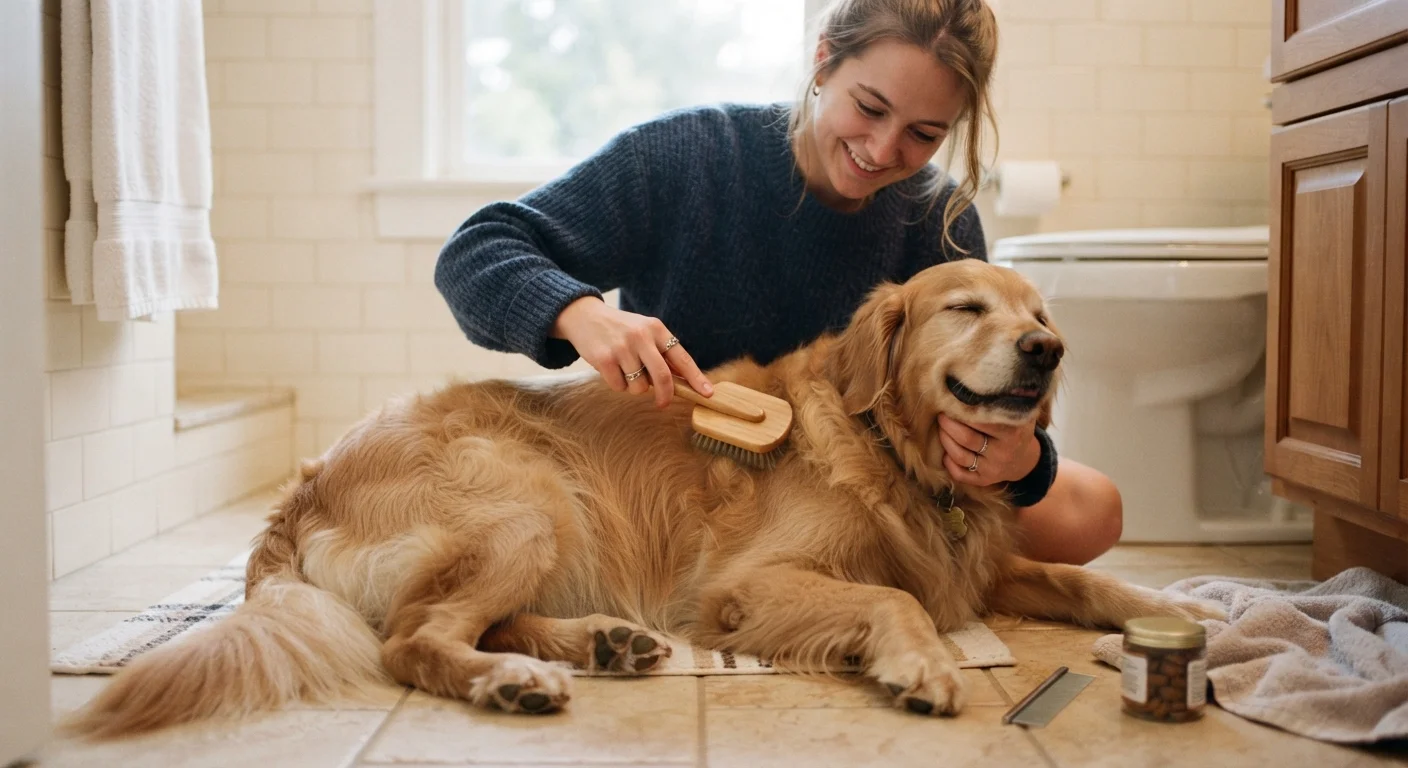
Regular brushing is one of the most beneficial things you can do at home. It removes loose fur, distributes natural skin oils, and prevents matting before it becomes a problem. Most short- and medium-coated dogs and cats can be brushed safely at home with a slicker brush or deshedding tool. The key is consistency — frequent light sessions cause less discomfort than infrequent aggressive ones.
Nail Trimming
Nail trims are doable at home, but they require learning where the quick (the blood vessel inside the nail) sits. On light-colored nails, it's visible; on dark nails, it requires more caution and shorter incremental cuts. Cutting into the quick causes pain and bleeding. For owners who aren't comfortable, a nail grinder or regular appointments at a vet or groomer is a reasonable alternative.
Basic Ear Cleaning
Cleaning the visible outer portion of the ear with a veterinarian-recommended ear cleaning solution and a cotton ball is appropriate for most dogs. Never insert anything into the ear canal. If your pet frequently shakes their head, scratches at ears, or has visible discharge or odor, that warrants professional evaluation — not a deeper home clean.
Dental Hygiene
Tooth brushing at home is one of the most impactful preventive habits you can build. Dental disease is extremely common in adult pets, and daily brushing with pet-safe toothpaste meaningfully slows its progression. Start slowly with finger brushing to build tolerance before introducing a brush.
Saves money over frequent professional grooming appointments
Professional grooming costs vary widely by breed and region, but routine visits add up. Handling basic maintenance at home can meaningfully reduce that expense over time.
Builds trust and comfort between owner and pet
Regular at-home handling — brushing, touching paws, examining ears — helps pets become more comfortable with physical contact, which benefits vet visits too.
Lets you spot health changes early
Hands-on grooming gives you a close look at skin, coat, ears, and nails. Lumps, parasites, redness, or odor are easier to catch early when you're regularly examining your pet.
Flexible scheduling around your routine
You can brush or clean ears on your own timetable rather than booking weeks in advance, making it easier to maintain consistency.
Reduces grooming-related stress for anxious pets
Some animals find unfamiliar environments and handlers stressful. For those pets, calm, familiar home sessions can be a genuine comfort.
Tasks That Carry Real Risk at Home
Some grooming tasks cross into territory where the margin for error is narrow enough that professional handling is genuinely the safer default for most owners.
Anal Gland Expression
This is one of the clearest examples of a task best left to professionals. Expressing anal glands incorrectly can cause impaction, rupture, or infection. Unless a veterinarian has specifically trained you to do this for your individual pet's needs, it should be handled in a clinical or professional grooming setting.
Breed-Specific Haircuts
Many breed cuts — the poodle lamb clip, the Bichon's rounded silhouette, the Schnauzer's skirt — require specific scissoring technique and an understanding of the coat's growth pattern. Without training, these cuts are difficult to execute safely, particularly around the face, ears, and paws.
Dematting Severely Tangled Coats
When mats are tight against the skin, attempting to cut or pull them out at home risks cutting the skin itself, which sits surprisingly close to the mat. A professional groomer has the tools and technique to assess whether a mat can be safely worked out or whether a close shave-down is the safer option.
Recognizing your limits isn't a failure — it's part of responsible ownership. The most common home care mistakes often stem from attempting tasks without adequate preparation rather than from bad intent.
Risk of injury from incorrect technique
Cutting nails too short, inserting cotton swabs into ear canals, or using the wrong scissors near sensitive areas can cause pain or injury. Poor technique is a common and preventable hazard.
High-maintenance coats require professional skill
Double-coated breeds, dogs prone to matting, and cats with long fur often need professional dematting or breed-specific cuts that require training and specialized tools to do safely.
Behavioral challenges can make home grooming unsafe
Pets that bite, scratch, or panic during grooming pose real safety risks to themselves and their owners. Forcing grooming on a reactive animal often worsens the behavior.
Some tasks require professional anatomy knowledge
Anal gland expression and deep ear cleaning involve sensitive internal structures. Done incorrectly, both can cause infections or injuries that require veterinary treatment.
Tool investment can offset savings
Quality clippers, slicker brushes, nail grinders, and ear cleaners have upfront costs. For owners who only groom occasionally, professional appointments may be more economical.
Building a Realistic Home Grooming Routine
The most sustainable approach for most households is a hybrid model: handle the basics at home on a consistent schedule while scheduling professional sessions for tasks that exceed your skill level or your pet's coat complexity.
When to Stop and Call Your Vet or Groomer
If you notice persistent ear odor, dark discharge, skin inflammation, severely matted fur, or a nail that has been cut into the quick and won't stop bleeding, stop home treatment and contact a professional. These signs can indicate underlying conditions that need trained assessment. Home grooming should support your pet's wellbeing — not delay necessary care.
Start small and build gradually. If your pet has never had their paws handled, spend a week touching and rewarding paw contact before introducing clippers. Pair each grooming interaction with calm praise and, if useful, treats — this is foundational habit-building that starts from day one.
Keep sessions short, especially at first. A two-minute brushing session that ends positively is worth more than a ten-minute session that ends in stress. Over time, your pet's tolerance builds and sessions can extend naturally.
Finally, tie grooming into your broader preventive care routine. What you observe during brushing and cleaning — skin changes, new lumps, behavioral sensitivity in a specific area — is information your vet needs. Grooming at home and professional veterinary care work together, not in place of each other.
This article provides general pet care information and is not a substitute for guidance from a licensed veterinarian or certified professional groomer. If your pet shows signs of pain, skin irritation, or ear or eye problems, consult a veterinary professional before attempting home treatment.
The content provided on our blog site traverses numerous categories, offering readers valuable and practical information. Readers can use the editorial team’s research and data to gain more insights into their topics of interest. However, they are requested not to treat the articles as conclusive. The website team cannot be held responsible for differences in data or inaccuracies found across other platforms. Please also note that the site might also miss out on various schemes and offers available that the readers may find more beneficial than the ones we cover.