

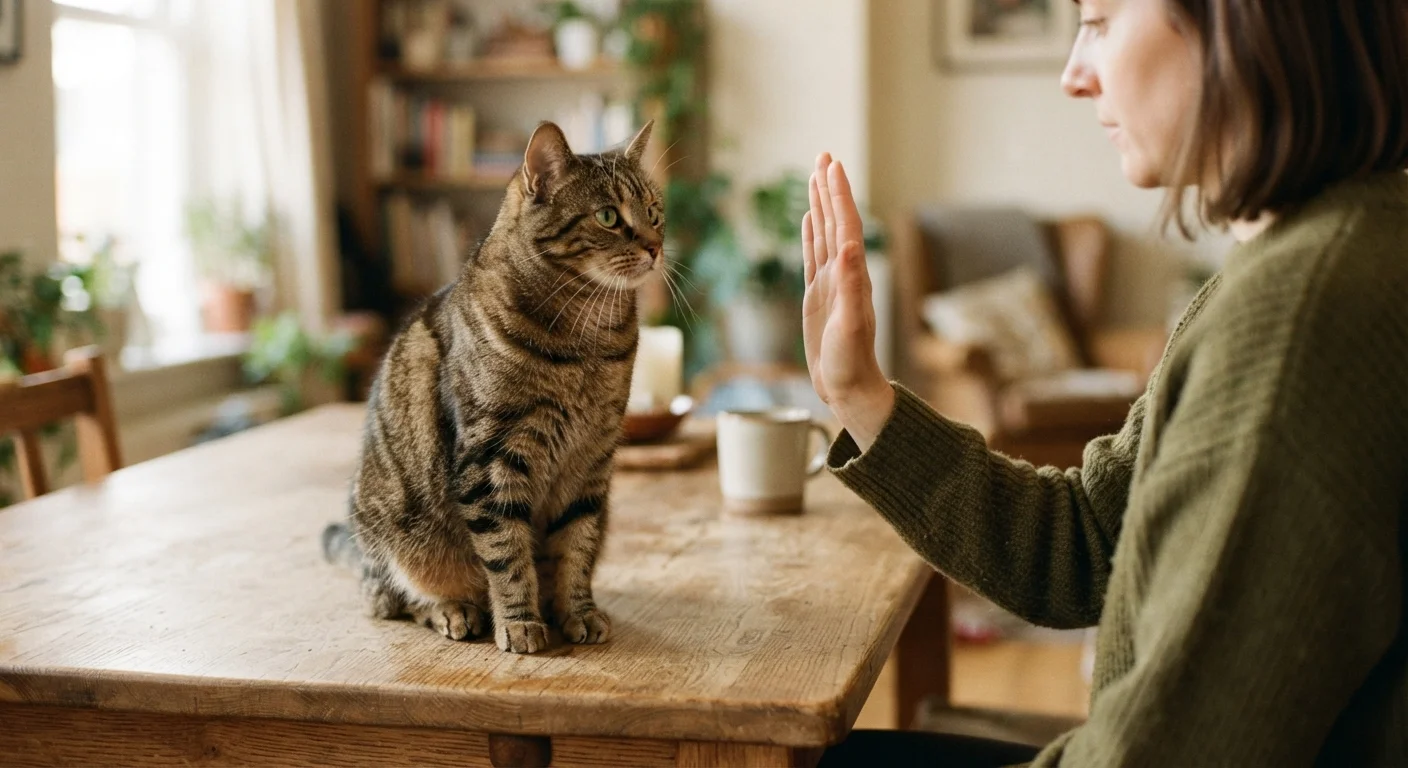
Why the 'Cats Can't Be Trained' Myth Persists
The idea that cats are untrainable is one of the most durable misconceptions in pet ownership. It likely stems from comparing cats to dogs, which are highly motivated by social praise and historically bred for cooperative tasks. Cats, by contrast, are solitary hunters by nature — they didn't evolve to take cues from a group leader the way canines did.
This difference in social structure doesn't mean cats can't learn. It means the conditions for learning look different. Cats respond to what benefits them, not what pleases their owner as a social reward in itself. When owners understand that distinction, training success becomes much more achievable.
Many popular beliefs about cats don't hold up to scrutiny, and the notion that they're untrainable is a prime example. Behaviorists who study feline cognition are clear: cats form associations, remember outcomes, and adjust their behavior accordingly.
How Cats Actually Process Learning
Cats learn primarily through operant conditioning — the same mechanism at the core of most modern animal training. When a cat performs an action that produces a good outcome, neural pathways reinforce that connection. Repeat it enough times with a consistent reward, and the behavior becomes reliable.
Timing is critical. Because cats don't process delayed feedback well, the reward must follow the target behavior almost immediately — within a second or two. A clicker (a small handheld device that makes a distinct clicking sound) is a popular tool precisely because it marks the exact moment the correct behavior occurs, bridging any gap before the treat arrives.
Cats also learn through classical conditioning — associating one stimulus with another. A cat that hears the sound of a treat bag rustling and immediately appears in the kitchen has formed exactly this kind of learned association. Owners can use this to their advantage by pairing neutral cues (a specific word or hand gesture) with rewards until the cue itself signals what's coming.
1–2 sec
Optimal reward timing window after a behavior
Animal behavior research consistently shows that reinforcement delivered within one to two seconds of the target behavior produces the strongest learned associations in cats.
2–5 min
Recommended length per training session
Feline behaviorists and certified animal trainers commonly cite this range as optimal for maintaining cat engagement without inducing frustration or disinterest.
~30
Repetitions often needed to establish a new cue
Behavioral learning literature suggests most simple behaviors require roughly 20–40 consistent repetitions before a cue reliably triggers the response in domestic cats.
Finding the Right Motivator for Your Cat
The single biggest variable in cat training is motivation. Unlike many dogs, cats won't work for social approval alone. Identifying what your individual cat values enough to work for is foundational.
- Food treats: The most broadly effective reinforcer. Small, soft pieces that can be consumed quickly work best — cats shouldn't need to chew for long or they lose momentum.
- Play: Some cats, particularly younger or more active ones, will work enthusiastically for a brief bout with a wand toy.
- Affection: A minority of cats find petting or verbal praise genuinely rewarding during training, though this varies considerably.
A practical tip: train before meals rather than after. A cat that has just eaten has little incentive to work for food. Mild hunger — not deprivation — sharpens motivation significantly.
Use a Clicker to Sharpen Your Timing
A clicker marks the precise instant your cat performs the correct behavior, making the reward connection clearer than voice alone. Pair the click with a treat consistently before your first training session so the sound itself becomes meaningful. Once that association is established, you can use it to mark behaviors as they happen — even from across the room.
Practical Training Principles That Work for Cats
Once you've identified a motivator, the mechanics of teaching a new behavior follow a consistent pattern. Start by capturing or shaping the behavior you want. Capturing means waiting for the cat to naturally perform the action — like sitting — and immediately rewarding it. Shaping means rewarding incremental approximations toward a goal behavior, step by step.
Keep sessions short. Two to five minutes, two or three times a day, builds skills faster than a single long session that exhausts the cat's interest. Always end while the cat is still engaged and on a successful repetition.
The science behind reward-based training is well established across species — and cats are no exception. Punishment and physical correction not only fail to teach the desired behavior but can damage the trust that makes training possible in the first place. If a behavior isn't improving, the answer is to adjust the approach — smaller steps, better timing, higher-value rewards — not to apply pressure.
For those starting fresh with a new cat, a structured approach to early weeks can make a real difference. Building good habits from day one is far easier than correcting established patterns later.
“The cat is not refusing to learn — it's asking, 'What's in it for me?' When we answer that question clearly and consistently, the learning follows.”
— Mikel Delgado, Certified Applied Animal Behaviorist and feline behavior researcher
What Cats Can Realistically Learn
The range of behaviors cats can learn is broader than most owners expect. Common starting points include: coming when called, sitting on cue, targeting (touching their nose to a hand or stick), entering a carrier willingly, and accepting handling like nail trims. Each of these has direct practical value for the cat's wellbeing and the owner's daily life.
Beyond basics, some cats have been trained for more complex tasks — agility courses, leash walking, and even specific household routines. These outcomes aren't universal, but they demonstrate what's possible when training is approached with patience and the right incentives.
It's worth acknowledging that common training misconceptions can derail progress before it starts. Believing a cat is being defiant or spiteful, for example, leads owners to respond in counterproductive ways. Cats aren't making moral judgments — they're responding to whether a given situation is worth their effort. That reframe alone tends to make training considerably more effective.
This article is for general educational purposes. For concerns about your cat's health or behavior, consult a qualified veterinarian or certified animal behaviorist.
Frequently Asked Questions
Yes, though the approach differs. Cats respond to the same operant learning principles as dogs, but they're often more selective about motivation and less driven by social approval. Reward-based methods work well for both species; the key difference is identifying what your cat finds genuinely rewarding.
Two to five minutes per session is generally ideal. Cats have shorter attention spans for structured tasks than dogs do, and ending on a successful repetition keeps the experience positive. Multiple short sessions throughout the day tend to produce better results than one extended session.
Small, soft food treats are the most reliable reinforcers for most cats because they're consumed quickly and can be repeated many times per session. Some cats also respond well to a brief play opportunity or specific verbal praise, but this varies considerably by individual.
No. Adult and senior cats are fully capable of learning new behaviors. Learning ability doesn't sharply decline with age in healthy cats, though patience and session length adjustments may help. A veterinary check-up is worthwhile if an older cat suddenly seems disinterested or confused.
The most common reasons are that the reward isn't motivating enough, the session is too long, the environment is too distracting, or the cat isn't hungry enough to find food rewarding. Try training before meals, in a quiet room, with a high-value treat the cat doesn't receive at other times.
Training can redirect unwanted behaviors by making an acceptable alternative more rewarding. Teaching a cat to use a scratching post, for example, involves rewarding use of the post consistently rather than trying to punish the furniture scratching. Addressing the underlying need — in this case, the urge to scratch — is more effective than suppression.
The content provided on our blog site traverses numerous categories, offering readers valuable and practical information. Readers can use the editorial team’s research and data to gain more insights into their topics of interest. However, they are requested not to treat the articles as conclusive. The website team cannot be held responsible for differences in data or inaccuracies found across other platforms. Please also note that the site might also miss out on various schemes and offers available that the readers may find more beneficial than the ones we cover.