

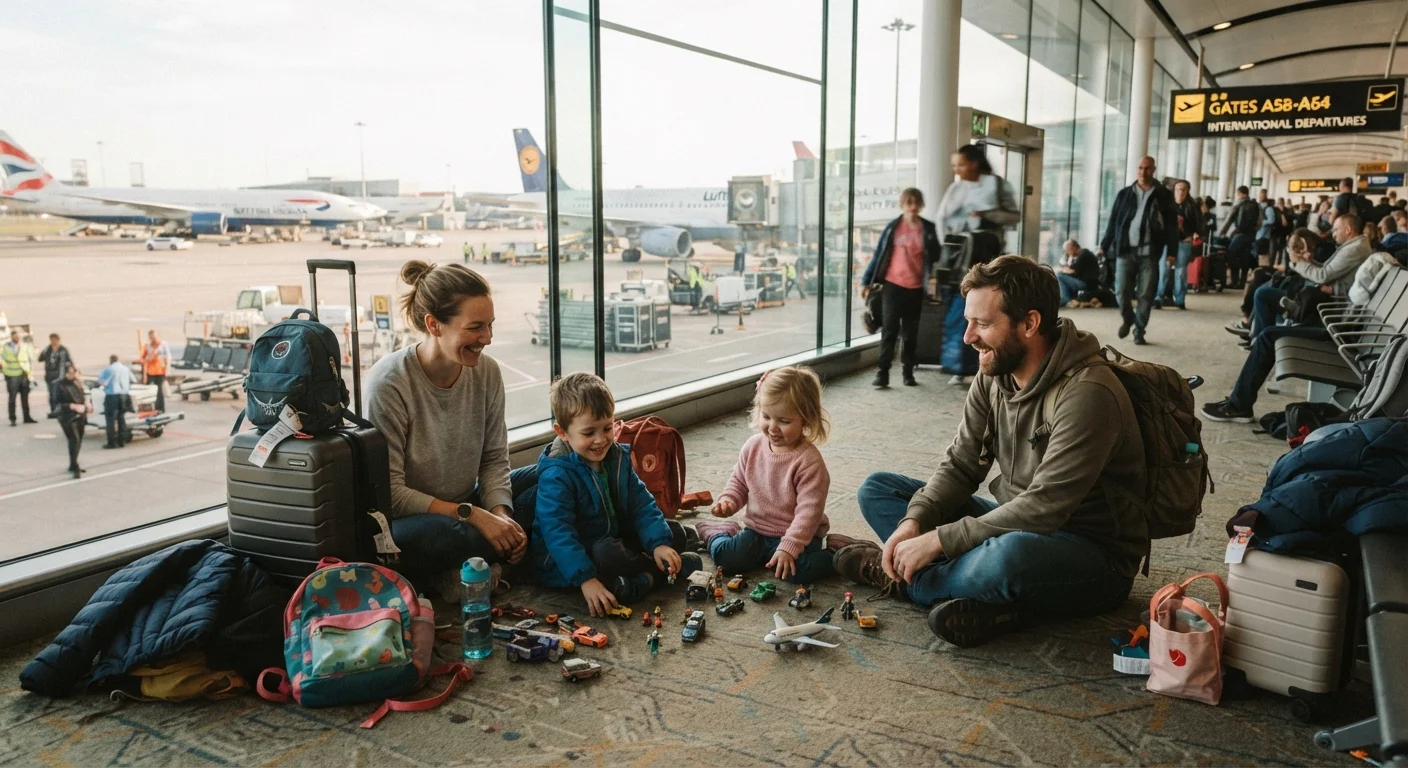
Why Layovers Deserve Their Own Plan
Ask most traveling parents what they dread most, and layovers rank right up there with lost luggage. Two or three hours in a terminal with a restless toddler or a bored eight-year-old can feel endless — but the families who handle it best usually share one trait: they planned for it as deliberately as they planned for the destination itself.
A layover isn't wasted travel time. It's a structured pause that, handled well, can recharge both kids and adults before the next leg. The tips below are grounded in practical family travel logic — not wishful thinking. For a broader look at how age shapes what kids need on any trip, see our guide on traveling with kids at every age.
Map the terminal before you land
Most major airports publish detailed terminal maps on their websites, and many list family-specific amenities including nursing lounges, children's play areas, prayer rooms, and family restrooms. Before your travel day, spend ten minutes identifying where these are relative to your gate.
Knowing that a children's play zone is one concourse over — rather than discovering it after a frustrated twenty-minute wander — changes the energy completely. If you're flying through a hub you've never used before, a quick search of the airport's name plus "family amenities" often surfaces traveler forum posts with up-to-date, on-the-ground details.
Ten minutes of pre-flight research can save an hour of in-terminal frustration.
Build your carry-on around the layover, not just the flight
Most families pack their carry-on for the plane ride and treat the layover as an afterthought. Flip that logic. The terminal is where you'll have the most freedom of movement, so make your bag work there too.
Pack a small activity kit at the top of your bag — crayons and a coloring book, a deck of cards, a favorite small toy, or a simple travel game. Offline content on a tablet is also worth loading ahead of time since airport Wi-Fi is notoriously unreliable. Snacks that require no refrigeration and minimal mess (crackers, dried fruit, nut butter pouches) can bridge the gap between meals without triggering a full tantrum spiral.
Pack your carry-on for the terminal first, the plane second.
Anchor the schedule to feeding and nap times
For children under five especially, hunger and exhaustion are the fastest route to a meltdown. During a layover, try to maintain the rough rhythm of your child's normal eating and sleeping schedule rather than pushing through it.
If a nap window is approaching, look for a quieter gate area away from foot traffic. A familiar blanket or stuffed animal in the carry-on can help signal to younger kids that it's rest time even in an unfamiliar place. For families dealing with time zone shifts, understanding jet lag in children is worth reading before you go — it sets realistic expectations about disrupted rhythms during travel days.
Hunger and exhaustion are the fastest route to a terminal meltdown — plan around them.
Use movement intentionally
Children who have been seated on a plane for two or three hours need to move before they're asked to sit again. Rather than parking at the gate immediately after deplaning, treat the layover as a structured walk. Many airports have long connector corridors that work perfectly as a low-stakes movement break.
If the terminal has an outdoor observation deck, moving walkways, or a children's area with climbing elements, prioritize those stops early in the layover. Burning off physical energy in the first half of a layover tends to make the second half — closer to boarding — significantly calmer.
Burn energy early in the layover so the second half near the gate stays calm.
Divide responsibilities if you're traveling with a partner
When two adults are traveling together, treating the layover as a joint effort rather than one person managing everything makes a measurable difference. A simple split: one adult handles the logistics (checking the departure board, finding food, monitoring gate changes) while the other focuses entirely on the children.
Rotate after thirty or forty minutes so neither adult hits a wall. This structure also means that if a child needs a bathroom run at the same moment your gate updates, you're not scrambling to handle both at once. It sounds obvious, but many traveling couples default to improvising in the moment rather than setting a loose plan at the start of the layover.
Dividing logistics from childcare — even loosely — prevents layover chaos for two-parent families.
Keep a realistic buffer for gate changes and delays
Airports are dynamic environments, and gate changes happen with little warning. Families who wander far from their departure area or lose track of time at an airport restaurant are the most vulnerable when a gate change comes through.
A practical rule: stay within a five-minute walk of your assigned gate for the final forty-five minutes before scheduled boarding. Set a phone timer if you're the kind of traveler who gets absorbed in a meal or a book. If your layover is very long, consider asking airline staff whether early check-in at the new gate is an option — some airports allow families with young children to wait in a designated area closer to the jetway.
Stay within five minutes of your gate for the last 45 minutes before boarding.
Turning the Wait Into a Win
No layover strategy works perfectly every time — flights run late, kids surprise you, and airports vary wildly in how family-friendly they actually are. The goal isn't a flawless experience; it's a manageable one. Families who approach layovers with flexible expectations and a stocked carry-on tend to arrive at their gate calmer and more ready to fly.
Give Kids One Job During the Layover
Giving children a small sense of responsibility — like being the one to watch the departure board for your flight number, or carrying their own mini backpack with snacks — can reduce restlessness and redirect anxious energy. It turns passive waiting into active participation, which tends to make the time feel shorter for everyone.
If your itinerary includes multiple legs or tight connections, it's also worth thinking about pacing across the entire trip. Our article on itinerary pacing for family trips offers a useful framework for building in breathing room without losing momentum.
The content provided on our blog site traverses numerous categories, offering readers valuable and practical information. Readers can use the editorial team’s research and data to gain more insights into their topics of interest. However, they are requested not to treat the articles as conclusive. The website team cannot be held responsible for differences in data or inaccuracies found across other platforms. Please also note that the site might also miss out on various schemes and offers available that the readers may find more beneficial than the ones we cover.