

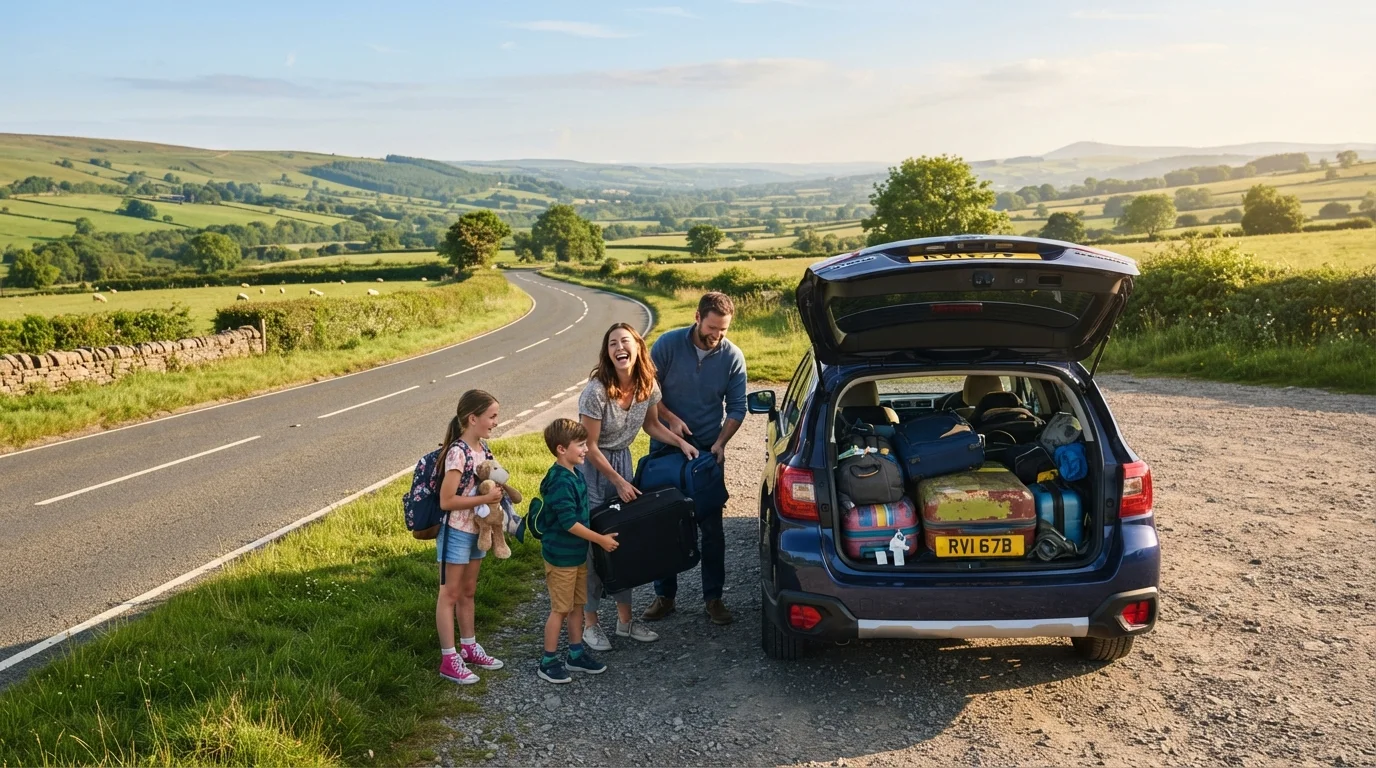
Option A
Road Trip
The flexible, door-to-door adventure option.
Best for: Families who want to control their schedule, carry more gear, and make the journey part of the experience.
Option B
Fly-and-Stay
The time-efficient, destination-focused choice.
Best for: Households traveling long distances who want to maximize time at the destination rather than in transit.
The Real Cost Comparison: What Each Option Actually Runs
Sticker price rarely tells the full story for either travel mode. A road trip budget must honestly account for fuel (calculated at current prices over the full round-trip mileage), tolls, at least one or two nights of lodging if the drive exceeds eight hours, and the added cost of restaurant meals that replace home cooking. Don't overlook wear on the vehicle — oil changes, tire wear, and the statistical bump in maintenance costs from highway miles are real, if easy to ignore.
Flying carries its own hidden ledger. The base fare is just the beginning. Add checked baggage fees for each traveler, seat selection charges, airport parking or rideshare to and from home airports, and ground transportation at the destination — rental car, taxi, or transit passes. For a family of four with checked bags, those ancillary costs can add $300–$600 before a single meal is purchased.
The honest answer: road trips tend to win on total cost for families of three or more on trips under 500 miles. Flights become more competitive as distance grows and family size shrinks. Build a realistic budget for both options side by side before committing to either.
| Criterion | Road Trip | Fly-and-Stay |
|---|---|---|
| Upfront cost (family of 4) | Fuel, tolls, food en route | Airfare + baggage fees |
| Hidden costs | Vehicle wear, overnight lodging | Parking, ground transport, seat fees |
| Door-to-door time (400 mi) | 6–8 hours | 5–7 hours total |
| Schedule flexibility | High — leave anytime, adjust freely | Low — fixed departure times |
| Luggage freedom | Pack as much as fits | Per-bag fees; weight limits |
| Disruption risk | Traffic, weather delays | Cancellations, delays, rebooking |
| Best distance range | Under 500 miles | Over 600 miles |
Time, Stress, and the Human Experience of Getting There
A 400-mile drive typically takes six to eight hours, door to door — factoring in rest stops, traffic, and the inevitable snack debate. A 400-mile flight, when you add two-hour early arrival, security, boarding, the flight itself, baggage claim, and ground transport, often consumes five to seven hours. The gap is smaller than most people assume for mid-range distances.
Where flying genuinely wins is on distances above 600 miles, particularly cross-country routes. A ten-hour drive becomes a two-hour flight, and that math is hard to argue with when vacation days are limited. But airports add a specific kind of stress — crowds, TSA lines, gate changes, and the powerless feeling of a weather delay — that the open road simply doesn't.
Road trips let families control the experience. Kids can stretch, sleep flat, or watch movies without tray-table geometry. Families with young children, travelers with mobility considerations, or anyone hauling specialty equipment (bikes, camping gear, sports equipment) often find driving dramatically less stressful than navigating airports. For a deeper dive on family-specific trade-offs, see flying vs. driving with kids.
Accessibility and Road Trips
For travelers with mobility needs or medical equipment, road trips often provide more control — you can pack exactly what you need without airline restrictions on devices or medications. However, long driving stretches can be taxing. Always plan rest stops and consult with a healthcare provider about extended travel comfort before setting out.
Flexibility, Planning, and What Goes Wrong
One of the road trip's strongest advantages is resilience. If a storm rolls in, you pull off. If a roadside attraction catches your eye, you stop. If someone gets sick the morning of departure, you delay without penalty. Airlines don't offer that grace — change fees, rebooking logistics, and the ripple effects of one missed flight can derail an entire itinerary.
That said, flights reward planners. Book far enough in advance and the per-person cost can be genuinely competitive, especially when you consider that flying preserves vacation days that might otherwise be spent in a car. When you travel matters enormously — both for airfare pricing and highway traffic patterns on road trips.
Common planning myths compound these decisions. Many families overestimate road trip costs (forgetting cars they already own are sunk costs) or underestimate flying's total price tag. Check your assumptions against common trip-planning myths before locking in a mode of travel. The right call is almost always destination- and family-specific — there's no universal winner.
The content provided on our blog site traverses numerous categories, offering readers valuable and practical information. Readers can use the editorial team’s research and data to gain more insights into their topics of interest. However, they are requested not to treat the articles as conclusive. The website team cannot be held responsible for differences in data or inaccuracies found across other platforms. Please also note that the site might also miss out on various schemes and offers available that the readers may find more beneficial than the ones we cover.