

Our Verdict
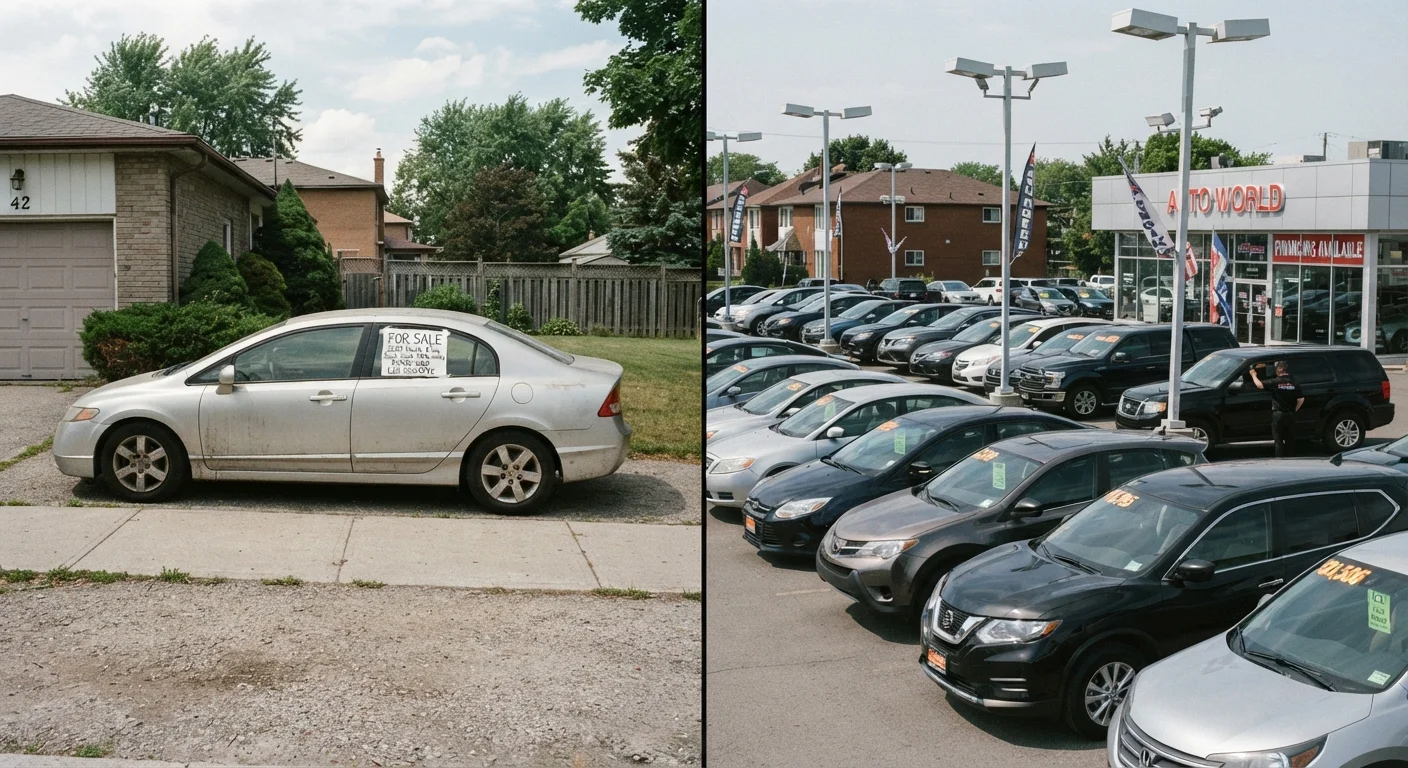
Neither route is universally superior - the right choice depends on your priorities, risk tolerance, and preparation level. Private sales can yield genuine savings for buyers willing to do thorough due diligence. Dealerships offer structure, financing, and recourse that reduce risk, usually at a higher price point.
| Best for | Recommended |
|---|---|
| Budget-conscious buyers comfortable doing their own research | Private Seller |
| First-time used-car buyers who want financing and consumer protections | Dealership |
| Buyers seeking a manufacturer-backed warranty on a used vehicle | Dealership (CPO program) |
| Buyers with cash and mechanical knowledge seeking the lowest price | Private Seller |
The Core Difference: Who You're Dealing With
When you buy a used car from a private seller, you're transacting with an individual - usually someone who simply wants to move on from their vehicle. When you buy from a dealership, you're dealing with a licensed business subject to state consumer protection laws, federal disclosure requirements, and in many cases manufacturer oversight.
That distinction shapes nearly every element of the transaction: price, paperwork, financing availability, and what happens if something goes wrong after you drive away. For a broader look at how the whole process fits together, see the car-buying process from start to finish.
Neither channel is inherently better. Each involves real trade-offs that matter differently depending on your situation.
Price and Negotiation
Private listings tend to carry lower asking prices than equivalent dealer inventory. Sellers aren't paying for lot overhead, reconditioning, or sales staff - and many simply want a quick, fair deal. That creates genuine room for savings, particularly on older, higher-mileage vehicles.
Dealerships, on the other hand, typically price used inventory with margin built in to cover reconditioning costs, warranty provisions, and profit. However, dealers negotiate on multiple levers: the vehicle price, financing terms, trade-in value, and add-ons. Understanding what add-ons dealers offer at signing can help you avoid paying for products you don't need.
| Criterion | Private Seller | Dealership | |
|---|---|---|---|
| Typical price | Often lower | Generally higher | |
| Warranty / protections | As-is, no warranty | Limited warranty or CPO options available | |
| Financing options | Buyer must arrange in advance | On-site financing available | |
| Paperwork handling | Shared between buyer and seller | Dealer handles most filings | |
| Legal accountability | Minimal recourse after sale | Subject to state and federal regulations | |
| Trade-in option | Not applicable | Available, value varies | |
| Negotiation flexibility | Often flexible on price | Flexible on fees, add-ons, trade-in |
One caution on private pricing: a below-market listing isn't automatically a bargain. It may reflect undisclosed mechanical issues, title problems, or a salvage history - all of which require verification before you commit.
Consumer Protections and Recourse
This is where dealerships hold a clear structural advantage. Licensed dealers in most states are legally required to disclose known defects, provide a buyer's guide disclosing warranty terms (as required by the FTC Used Car Rule), and maintain records that can be audited. Many states also give buyers limited rights to return a vehicle or seek remedies if a dealer misrepresented a car's condition.
Private sales are almost always "as-is" transactions. Once money changes hands, the seller has no legal obligation to fix problems that emerge. There's no warranty, no return window, and limited legal recourse - even if a serious defect surfaces within days of purchase.
Always Get an Independent Inspection
Whether buying from a private seller or a dealer, have the vehicle inspected by a mechanic you choose - not one affiliated with the seller. A thorough pre-purchase inspection can identify expensive mechanical issues before they become your problem. Budget $100-$200 for this step; it's one of the most cost-effective safeguards in any used-car purchase.
If you're weighing a certified pre-owned vehicle through a dealer, the protections extend further. CPO programs carry specific inspection and warranty standards that standard used sales - dealer or private - do not include.
Financing and Paperwork
Dealers can arrange financing on the spot, giving buyers without pre-arranged loans a direct path to purchase. That convenience comes with trade-offs worth understanding - see how dealer financing compares to outside financing before you sit down in the finance office.
Private sales require the buyer to arrange their own financing in advance - most banks and credit unions offer used-car loans, but the process takes more planning. Payment is typically cash, cashier's check, or an electronic transfer; personal checks are rarely accepted.
On paperwork, private sales place most of the administrative work on both parties. Title transfer, odometer disclosure statements, and bill of sale documentation must be handled correctly to avoid registration issues. Dealers handle the bulk of this paperwork internally and typically deliver a clean title, handle DMV filings, and collect sales tax on the state's behalf.
Due Diligence: What You Must Do Either Way
Regardless of where you buy, certain steps are non-negotiable. Run a vehicle history report using the VIN to check for accidents, title issues, odometer discrepancies, and prior ownership. Then arrange a pre-purchase inspection (PPI) with an independent mechanic - not one recommended by the seller or dealer. A PPI typically costs between $100 and $200 and can surface problems that no history report will show.
Preparing before you visit any seller - including knowing the vehicle's market value from independent pricing guides - puts you in a much stronger negotiating position either way.
If you're trading in a vehicle, be aware that private sales don't accommodate trade-ins; you'd need to sell your current car separately, which takes more time but may net you more than a dealer trade-in would. Understanding how trade-in valuations work can help set realistic expectations.
The content provided on our blog site traverses numerous categories, offering readers valuable and practical information. Readers can use the editorial team’s research and data to gain more insights into their topics of interest. However, they are requested not to treat the articles as conclusive. The website team cannot be held responsible for differences in data or inaccuracies found across other platforms. Please also note that the site might also miss out on various schemes and offers available that the readers may find more beneficial than the ones we cover.