

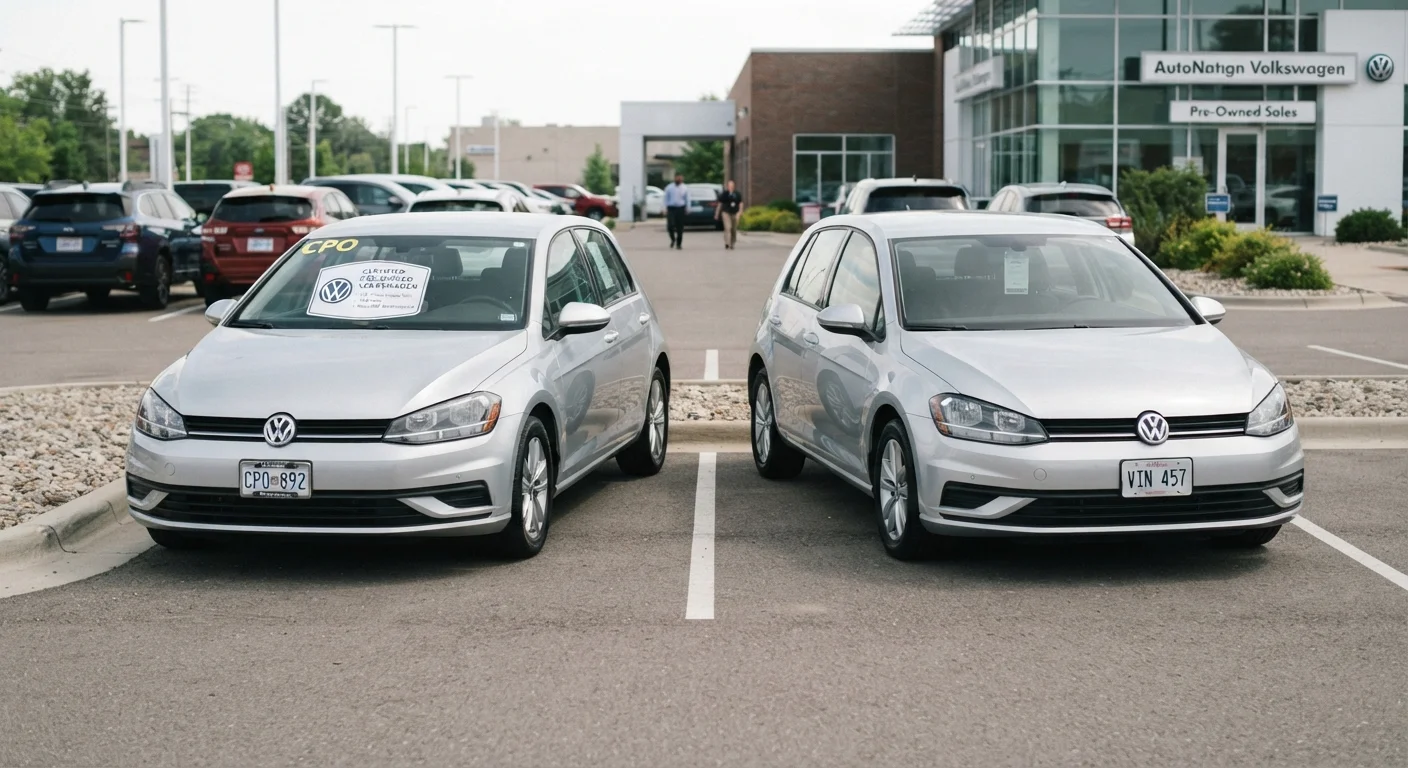
Option A
Certified Pre-Owned (CPO)
The inspected, warranted, program-backed option.
Best for: Buyers who want used-car pricing with closer-to-new peace of mind and documented quality standards.
Option B
Standard Used
The flexible, lower-cost, buyer-beware alternative.
Best for: Budget-conscious buyers willing to do their own due diligence in exchange for a lower purchase price.
What 'Certified Pre-Owned' Actually Means
The term certified pre-owned (CPO) sounds official, but it doesn't refer to a single universal standard. It means a used vehicle has gone through an inspection and reconditioning process defined by whoever is offering the certification - and that entity matters enormously.
There are two main types of CPO programs:
- Manufacturer-backed CPO programs are administered by the automaker (e.g., a program run by the vehicle's original manufacturer). These tend to have strict eligibility requirements - typically limiting vehicles by age, mileage, and condition - and back the warranty with the manufacturer itself. Coverage details are published and verifiable.
- Dealer-certified programs are created and managed by individual dealerships or dealer groups. There is no standardised requirement, so the inspection depth, warranty terms, and claims process can vary widely from one dealer to the next.
In short: two vehicles both labelled "certified" can carry very different levels of protection. Always ask specifically which type of certification applies and request documentation of what was inspected and what was repaired or replaced.
| Criterion | Certified Pre-Owned | Standard Used |
|---|---|---|
| Inspection requirement | Defined checklist (varies by program) | None required |
| Included warranty | Yes - terms vary by program | None (unless factory coverage remains) |
| Typical price | Higher than equivalent standard used | Lower upfront cost |
| Age/mileage eligibility | Usually capped (e.g., under 5-6 years) | No restrictions |
| Available from private sellers | No - dealerships only | Yes |
| Standardisation | Varies widely by program type | No standard - buyer beware |
| Buyer due diligence needed | Moderate - verify program specifics | High - inspection strongly advised |
What Standard Used Vehicles Offer - and What They Don't
A standard used vehicle is sold as-is unless otherwise stated in writing. That means the seller makes no representations about the vehicle's condition beyond what's required by law (such as odometer disclosure), and there is typically no included warranty unless the original factory coverage is still active and transferable.
That doesn't make standard used vehicles a bad choice - it means the responsibility for due diligence falls more squarely on the buyer. The practical tools available to you include:
- A vehicle history report (using the VIN) to check for reported accidents, title issues, and service records
- An independent pre-purchase inspection by a mechanic not affiliated with the seller - see our guide on getting a pre-purchase inspection done right for what this covers and how to arrange it
- Negotiating based on any issues uncovered during inspection
Standard used vehicles are available from dealerships and private sellers alike. If you're comparing the two sales channels, our article on private seller vs. dealership buying walks through the trade-offs in detail.
When Dealer-Certified Means Very Little
Dealer-certified programs have no external oversight or required standards, which means a vehicle can technically be called "certified" after a cursory visual check. Before paying any premium for a dealer-certified vehicle, ask for the inspection checklist in writing, the name of the technician who performed it, and what - if anything - was repaired. If documentation isn't available, treat the vehicle as standard used. You may also want to review common dealership add-ons at signing, as extended warranty products are frequently offered alongside CPO vehicles.
Evaluating Whether the CPO Premium Is Worth It
CPO vehicles generally carry a price premium over comparable standard used vehicles - sometimes a few hundred dollars, sometimes several thousand, depending on the vehicle and program. Whether that premium is justified comes down to a few key questions:
- What does the warranty actually cover? Review the specific terms: powertrain only, or bumper-to-bumper? What's the deductible? Are wear items like brakes and tires included?
- How long does coverage last? Some programs extend coverage several years beyond the sale; others add only a short-term buffer.
- Is remaining factory warranty still active? If a vehicle still has significant factory coverage left and it transfers to you, a CPO program may add little incremental value.
- What's the vehicle's age and mileage? CPO programs typically cap eligibility, so you'll generally be looking at newer, lower-mileage vehicles - which affects the value calculation.
For a broader look at total cost beyond the sticker price, see understanding the true cost of owning a car, which covers insurance, maintenance, depreciation, and more. And if you're still deciding between used and new, new car vs. used car trade-offs provides a useful comparison of those two paths.
172-point
Typical manufacturer CPO inspection checklist length
Many manufacturer-backed CPO programs publish their inspection checklists; point counts commonly range from around 100 to over 200 items depending on the automaker.
~$1,000-$3,500
Estimated CPO price premium over comparable standard used
Industry analysts have observed CPO vehicles typically carrying a meaningful price premium over equivalent non-certified used vehicles, though the gap varies by make, model, and market conditions.
The content provided on our blog site traverses numerous categories, offering readers valuable and practical information. Readers can use the editorial team’s research and data to gain more insights into their topics of interest. However, they are requested not to treat the articles as conclusive. The website team cannot be held responsible for differences in data or inaccuracies found across other platforms. Please also note that the site might also miss out on various schemes and offers available that the readers may find more beneficial than the ones we cover.