

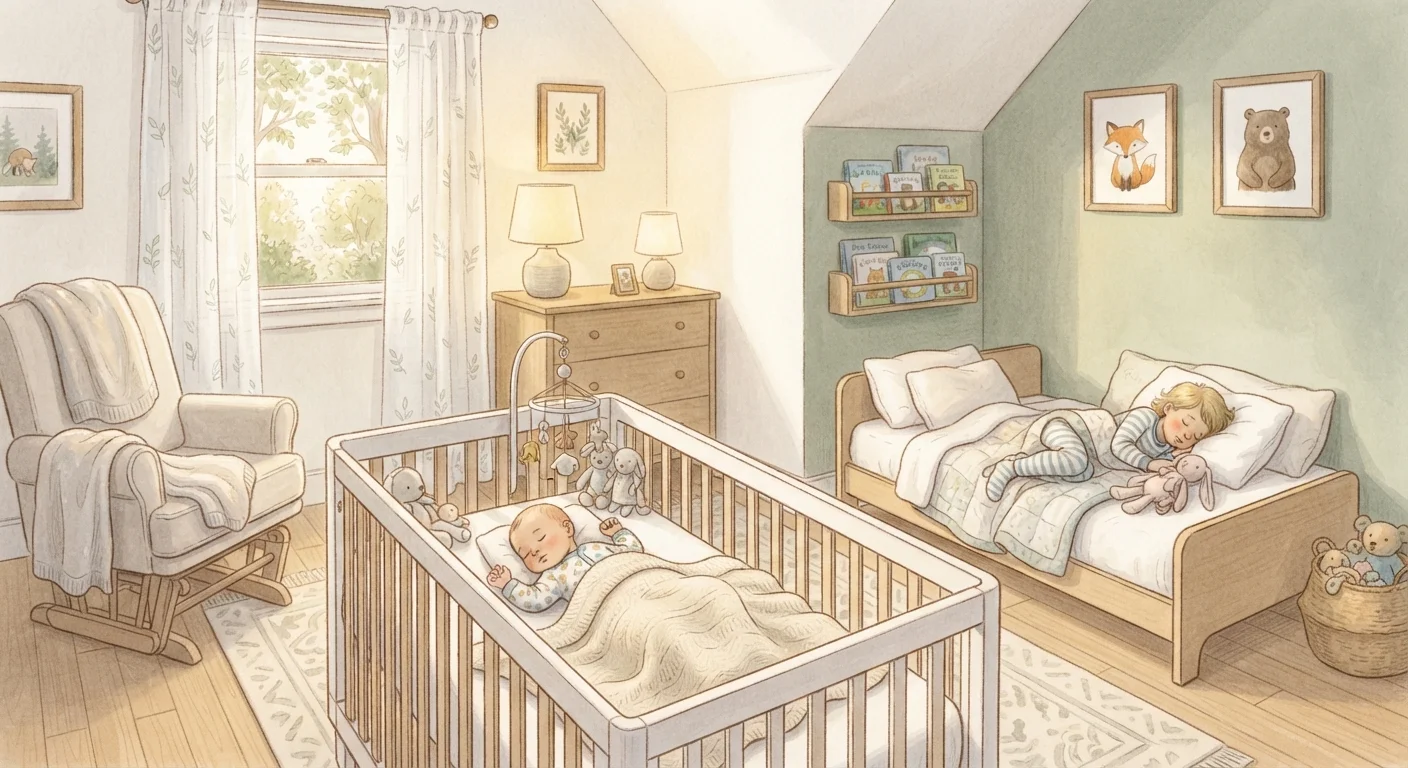
Why Sleep Needs Change So Dramatically in the First Five Years
No other developmental period compresses as much neurological growth into as short a time as birth through age five. Sleep is not simply rest - it is the period when the brain consolidates new skills, regulates hormones, and builds immune function. Because the brain matures rapidly, the architecture of sleep changes too: cycles shorten, deep sleep proportions shift, and the biological drive to nap gradually recedes.
Understanding these shifts helps families set realistic expectations rather than measuring their child against a neighbor's or a social media post. The ranges below reflect guidelines from pediatric organizations such as the American Academy of Pediatrics (AAP), which recommends total daily sleep - including naps - for each age group.
| Newborn daily sleep (0-3 months) | 14-17 hours (American Academy of Pediatrics (AAP) / American Academy of Sleep Medicine) |
| Infant daily sleep (4-11 months) | 12-16 hours (American Academy of Pediatrics (AAP)) |
| Toddler daily sleep (1-2 years) | 11-14 hours (American Academy of Pediatrics (AAP)) |
| Preschooler daily sleep (3-5 years) | 10-13 hours (American Academy of Pediatrics (AAP)) |
| Age napping typically ends | Between 3 and 5 years (Varies by child; consult pediatrician if concerns arise) |
| Recommended safe sleep position | Back to sleep, every sleep (AAP Safe Sleep Guidelines) |
See our month-by-month infant development guide for context on how sleep milestones fit alongside other physical and cognitive changes in the first year.
Stage-by-Stage Sleep Reference: Newborn Through Age Five
Newborns (0-3 months): 14-17 hours total
Newborns sleep in short bursts of 2-4 hours around the clock because their stomachs are tiny and their circadian rhythm - the internal clock that distinguishes day from night - has not yet developed. Expect 4-6 sleep periods per day with no predictable schedule. Night stretches gradually lengthen toward the end of this stage as melatonin production matures.
Infants (4-11 months): 12-16 hours total
By 4 months, most infants begin consolidating night sleep into longer stretches and settle into 2-3 naps per day. The "4-month sleep regression" is widely noted and reflects a permanent shift in sleep-cycle structure, not a step backward. Around 6-9 months, many infants drop to two naps. Safe sleep guidance - firm, flat surface, no loose bedding, room-sharing without bed-sharing - remains essential throughout infancy.
Toddlers (1-2 years): 11-14 hours total
Most toddlers transition from two naps to one nap somewhere between 12 and 18 months, though timing varies. A single midday nap of 1-2 hours is common. Separation anxiety, new motor skills (walking, climbing), and language leaps can all temporarily disrupt sleep. Consistent bedtime routines - bath, book, song - are among the most evidence-supported strategies for smoother bedtimes at this stage.
Preschoolers (3-5 years): 10-13 hours total
Napping fades for many children between ages 3 and 5, though some continue a brief rest period. Nighttime fears and vivid dreams become more common as imagination develops. Total sleep time decreases, but the importance of adequate rest does not - sleep-deprived preschoolers commonly show behavioral symptoms (irritability, difficulty regulating emotions) that can be mistaken for temperament issues.
Circadian rhythm
The body's internal 24-hour clock that regulates the timing of sleep and wakefulness. In newborns it is not yet established and gradually matures over the first few months of life.
Sleep regression
A temporary period when a child who has been sleeping well suddenly wakes more frequently or resists sleep. Regressions are typically tied to developmental milestones and resolve on their own.
Sleep architecture
The pattern and proportion of different sleep stages - including light, deep, and REM sleep - within a full night or nap. Sleep architecture changes significantly during early childhood.
Nap transition
The gradual process by which a child drops one daily nap and consolidates sleep into fewer, longer periods. Common transitions are 3-to-2 naps, 2-to-1 nap, and eventually nap-to-no-nap.
Melatonin
A hormone produced by the brain's pineal gland that signals the body it is time to sleep. Production follows a daily cycle influenced by light and darkness, and it matures in infants over the first few months.
Safe sleep environment
A sleep setup that meets pediatric safety guidelines to reduce the risk of sleep-related infant deaths. Key elements include a firm, flat surface, no loose bedding or soft objects, and room-sharing without bed-sharing for at least the first six months.
Common Sleep Disruptions and What Drives Them
Across all stages, sleep disruptions cluster around predictable triggers. Knowing the likely cause helps families respond proportionately rather than assuming something is seriously wrong.
- Sleep regressions: Temporary disruptions tied to developmental leaps - typically noted around 4 months, 8-10 months, 18 months, and 2 years. They usually resolve within 2-6 weeks.
- Illness: Any illness can temporarily fragment sleep. Expect a return to baseline within days to a week or two of recovery.
- Travel and time-zone changes: Young children's circadian rhythms are sensitive to schedule shifts. For practical strategies, see our guide to traveling with babies and toddlers.
- New siblings, childcare, or home changes: Environmental and emotional upheaval commonly resurfaces nighttime waking even in children who previously slept well.
- Screen exposure near bedtime: Blue-light devices and stimulating content can delay melatonin onset. Our overview of screen time research by age separates established findings from overstated claims.
Persistent sleep difficulties - snoring, labored breathing, excessive daytime sleepiness, or behavioral concerns - warrant a conversation with your child's pediatrician rather than a wait-and-see approach.
This article provides general educational information about typical childhood sleep patterns and is not a substitute for personalized medical advice. Always consult your child's pediatrician with specific concerns about sleep, health, or development.
The content provided on our blog site traverses numerous categories, offering readers valuable and practical information. Readers can use the editorial team’s research and data to gain more insights into their topics of interest. However, they are requested not to treat the articles as conclusive. The website team cannot be held responsible for differences in data or inaccuracies found across other platforms. Please also note that the site might also miss out on various schemes and offers available that the readers may find more beneficial than the ones we cover.