

Our Verdict
Traveling with babies and toddlers is genuinely challenging, but it is also genuinely rewarding — and far more manageable when expectations are realistic. The families who enjoy it most tend to plan for flexibility, pack with precision, and measure success by connection rather than itinerary completion. The logistics are real, the rewards are too.
Ideal for parents and caregivers who want an honest, balanced picture of what travel with very young children actually involves before committing to a trip.
What Travel Actually Looks Like at This Stage
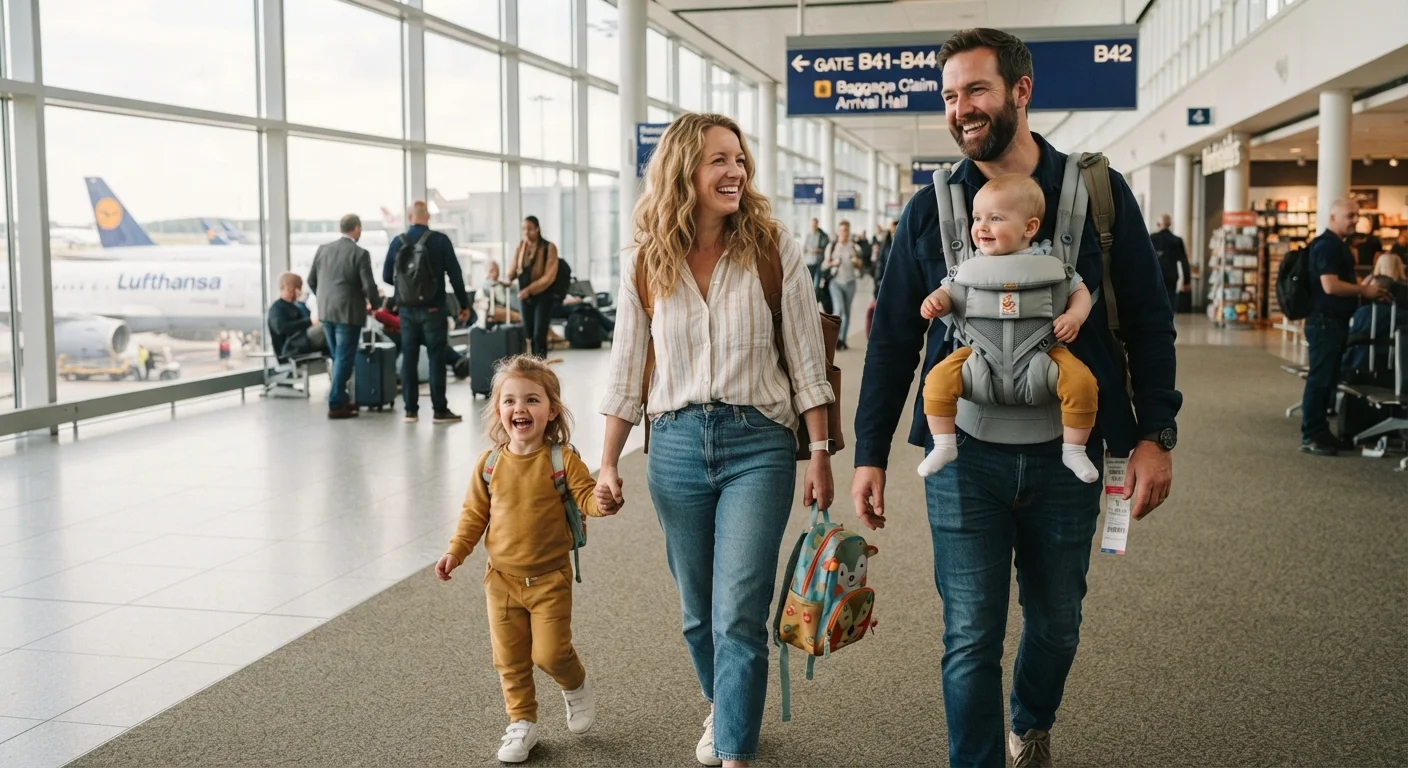
There's a wide gap between the idealized family vacation photo and the reality of navigating an airport with a diaper bag, a stroller, a car seat, and a toddler who just decided the floor is interesting. That gap isn't a reason to stay home — but closing it starts with an honest picture.
Travel with babies and toddlers operates on a fundamentally different rhythm than adult travel. Nap windows govern departure times. Feeding needs shape restaurant choices. Sleep environment unfamiliarity can flip a previously reliable bedtime routine inside out. The families who navigate this stage well aren't doing something magical — they're simply planning around the child's actual needs rather than hoping those needs will adapt to the itinerary.
For a broader look at how logistics shift at different ages, the age-by-age trip planning guide is a useful companion to this overview. And if you're considering the car-versus-flight question, weighing the real trade-offs between road trips and flying lays out the honest comparison.
The Genuine Advantages Worth Knowing
Before diving into the hard parts, it's worth naming what actually works in your favor when traveling with very young children.
Babies often travel free or at low cost
Children under two typically fly on a parent's lap at no charge on domestic routes, and at a fraction of the adult fare internationally. This can meaningfully reduce the overall cost of a family trip.
Young children adapt to new environments readily
Infants and toddlers are remarkably flexible sleepers and eaters when supported by consistent caregivers. A familiar routine carried into new surroundings often travels better than parents expect.
Slower pacing benefits everyone
Traveling with small children naturally forces a gentler itinerary — fewer rushed attractions, more time in parks and cafes — which often leads to richer, more relaxed experiences for adults too.
Builds parental travel confidence early
Each trip with a young child teaches families what they actually need, what they can skip, and how they function under travel stress — skills that compound with every subsequent trip.
Locals and fellow travelers are often welcoming
A baby or toddler can be a genuine social bridge. Many families find that traveling with young children invites warmth and assistance from strangers in ways solo adult travel rarely does.
The slower pace that small children require is frequently the thing adult travelers wish they had built into their trips anyway. And the cost advantage of lap-infant travel is real — particularly on domestic routes where the base ticket cost is already the primary expense.
The Real Challenges (and How to Think About Them)
No honest overview skips these. The good news: most of them are manageable with preparation, not eliminated — just managed.
Sleep disruptions are significant and persistent
Time zone shifts, unfamiliar sleep surfaces, and broken routines can unravel even the best sleepers. For context on what to realistically expect, see the jet lag recovery guide for children.
Gear and luggage requirements are substantial
Car seats, strollers, feeding equipment, and sleep gear add real weight and logistical complexity. Traveling carry-on only is possible but demands careful prioritization — see what families actually need to go carry-on only.
Cabin pressure causes ear pain in some infants
Young babies cannot voluntarily equalize ear pressure during ascent and descent. Nursing, a bottle, or a pacifier during pressure changes can help, but there is no guarantee of a comfortable flight.
Toddler meltdowns are unpredictable in public
Overstimulation, hunger, and fatigue stack up quickly in travel environments. Understanding that this behavior reflects normal development — not failure — helps parents respond calmly. The science behind toddler tantrums is worth a read before you go.
Feeding logistics require advance planning
Whether breastfeeding, formula-feeding, or navigating early solid foods, access to refrigeration, clean water, and familiar foods is not guaranteed. Families introducing solids face a particular challenge with unfamiliar textures and allergen exposure away from home.
Very young children won't form lasting memories of the trip
Children generally don't form retrievable autobiographical memories before age three or four. The trip is a meaningful experience for parents — but managing expectations about what children will 'get out of it' prevents disappointment.
Sleep is the thread that holds everything together on a trip with young children. When it unravels, everything else is harder. The stage-by-stage sleep reference for newborns through preschoolers can help you understand what your child's baseline looks like before you layer travel disruption on top of it.
Feeding is the second major variable. If your baby is transitioning to solid foods, the guide to starting solids offers useful context for what to carry, what to skip, and when flexibility is actually fine.
A Note on Feeding Supplies and Security
The TSA allows breast milk, formula, and juice for infants and toddlers in quantities exceeding the standard 3.4 oz liquid rule. These items must be declared separately at the security checkpoint. Rules and screening procedures can change, so verify current guidelines directly with the TSA or your airline before travel. Refrigeration availability at your destination is worth confirming in advance with your accommodation.
Setting Realistic Expectations Before You Book
The single most common mistake families make isn't underpacking or choosing the wrong destination. It's measuring trip success by adult standards — attractions covered, restaurants visited, hours at the beach — rather than by child-appropriate ones.
A successful trip with a one-year-old might be two days of a five-day itinerary going exactly as planned. That's not failure; that's the product. The other three days are relationship-building time, environmental exploration for the child, and recovery for the adults. Once families reframe success this way, the experience shifts substantially.
Safety planning is also worth building in early. The practical guide to keeping kids safe in unfamiliar places covers how to stay appropriately aware without letting caution overshadow the trip.
If international travel is on the horizon, the first-timer's introduction to international family travel addresses passports, entry requirements, and health prep — all of which take longer to arrange with a baby in the picture than most families anticipate.
The content provided on our blog site traverses numerous categories, offering readers valuable and practical information. Readers can use the editorial team’s research and data to gain more insights into their topics of interest. However, they are requested not to treat the articles as conclusive. The website team cannot be held responsible for differences in data or inaccuracies found across other platforms. Please also note that the site might also miss out on various schemes and offers available that the readers may find more beneficial than the ones we cover.