

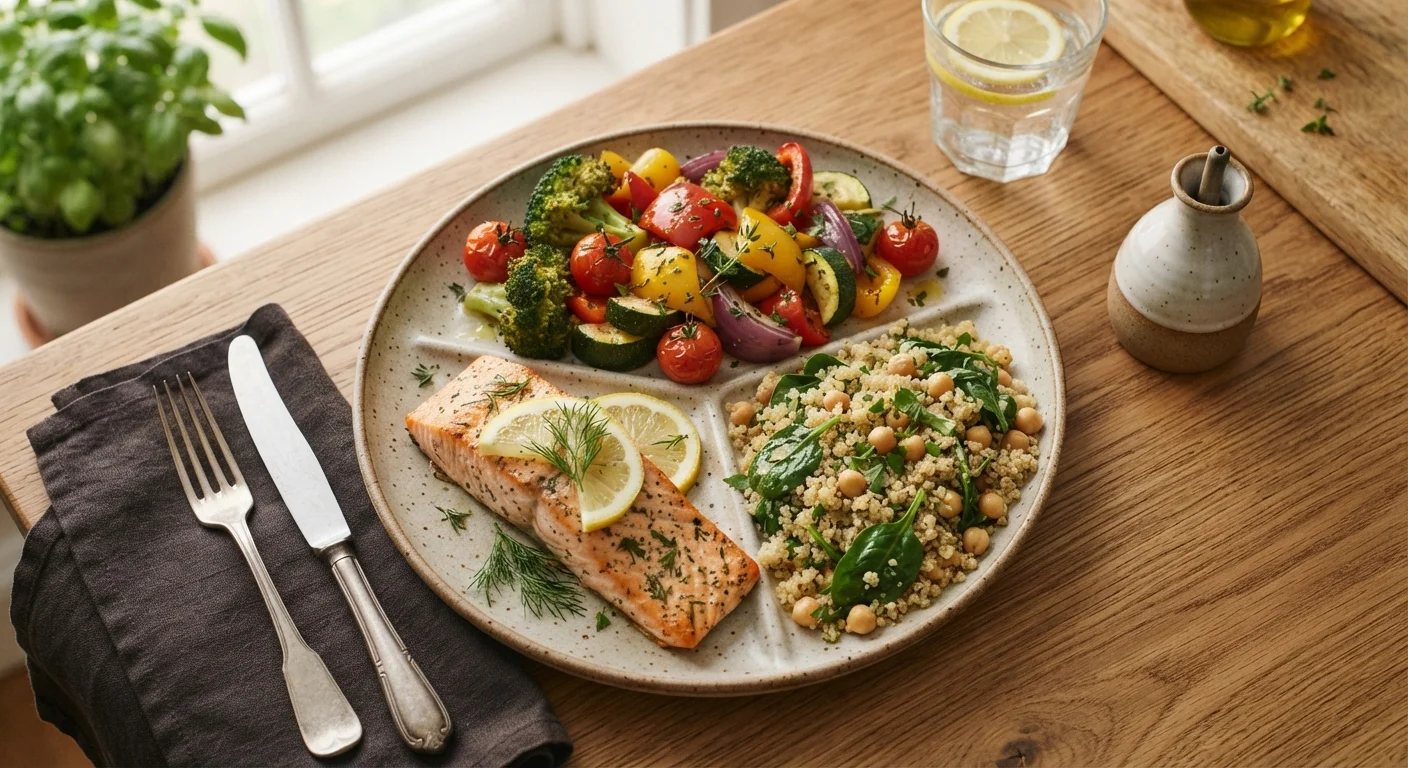
Why Visual Portioning Works for Most Families
Calorie counting works for some people in some contexts, but for many households it's time-consuming, easy to abandon, and can foster an anxious relationship with food. A simpler approach - dividing the plate visually into sections by food group - draws on the same underlying nutrition principles without requiring any tracking tools or math.
This method, broadly aligned with frameworks promoted by public health organizations like the USDA's MyPlate, emphasizes food group variety and proportionality rather than precise numbers. It's flexible enough to accommodate different cuisines, cooking styles, and family preferences, which makes it far easier to maintain over time.
If your household is newer to thinking about nutrition, our family introduction to everyday nutrition covers the foundational concepts that make plate-building strategies easier to understand and apply.
Your Hand Is a Built-In Measuring Tool
A rough palm-sized portion works as a practical guide for protein, a cupped hand for grains, and a fist for vegetables. These estimates aren't perfect, but they're far easier to apply consistently at the dinner table than any app or food scale - especially for busy families.
It's also worth knowing that common nutrition missteps that undermine family eating habits - like skipping meals or relying too heavily on packaged snacks - can erode the benefits of an otherwise balanced plate approach. Awareness of these patterns is part of building a sustainable routine.
This Is General Guidance, Not Medical Advice
The portioning strategies in this article are intended as general nutrition education for healthy adults. Individual needs differ based on age, health status, activity level, and medical history. If you have a chronic condition, food allergy, or specific health concern, please consult a registered dietitian or your healthcare provider before changing your eating patterns.
What You'll Need Before You Start
The good news is that balanced plate-building requires very little in the way of equipment or prior knowledge. Before working through the steps below, it helps to have a few practical items on hand and a general sense of what's already in your kitchen.
What you will need
Standard Dinner Plate (9-10 inches)
A moderately sized plate naturally limits portion volume and makes the visual halving and quartering method easier to apply.
Measuring Cups (one set)
Useful for an initial calibration of what a typical serving of grains or legumes looks like before you transition to visual estimation.
Nutrition Reference (e.g., MyPlate.gov)
A free, government-backed resource for understanding food group definitions and general serving guidance without purchasing any product.
For households looking to improve what comes home from the store in the first place, pairing this approach with smarter grocery shopping habits can reinforce the changes you make at the table.
Step-by-Step: Building a Balanced Plate
The following steps walk through the plate-building method in practical sequence. Each step can be adopted gradually - you don't need to overhaul every meal immediately. Small, consistent changes tend to stick better than dramatic overnight shifts.
Start With the Right Plate Size
Choose a standard dinner plate in the 9-to-10-inch range. Research consistently suggests that larger plates encourage larger portions without people necessarily noticing. You don't need to buy anything new - simply set aside oversized serving platters for everyday meals and use a regular dinner plate instead.
Fill Half Your Plate With Vegetables and Fruit
Before adding anything else, cover one full half of your plate with non-starchy vegetables - think leafy greens, broccoli, peppers, carrots, cucumbers, or tomatoes. Fruit can fill part of this half, particularly at breakfast or as a side. Variety in color generally signals variety in nutrients, so mixing different vegetables across the week is worthwhile.
This doesn't require anything fancy. Frozen vegetables are nutritionally comparable to fresh and are often more affordable and less wasteful - a meaningful advantage for families watching food budgets.
Dedicate One Quarter to Lean Protein
Reserve roughly one quarter of your plate for a protein source. This might be fish, poultry, eggs, legumes, tofu, or lean cuts of meat. Plant-based proteins like beans and lentils do double duty - they contribute both protein and fiber, which supports satiety.
Because protein needs shift across life stages, the exact amount that works for a teenager will differ from what suits an older adult. Use the quarter-plate guideline as a practical starting point, not a precise prescription.
Fill the Remaining Quarter With Whole Grains or Starchy Vegetables
The last quarter of the plate is well-suited to whole grains - brown rice, whole-wheat bread or pasta, oats, quinoa, or barley - or starchy vegetables like sweet potatoes or corn. Whole grains retain more fiber and micronutrients than their refined counterparts, which helps with sustained energy and digestive health.
Swapping refined grains for whole versions doesn't have to happen all at once. Mixing half white rice with half brown rice, for example, is a gradual transition many families find easier to stick with.
Choose Beverages Thoughtfully
What's in the glass matters alongside what's on the plate. Water is the most practical default beverage for most meals. Low-fat or unsweetened plant-based milk can contribute calcium and other nutrients, particularly for children and older adults. Sugar-sweetened drinks - sodas, many fruit juices, and flavored drinks - add calories with minimal nutritional benefit and can quietly offset an otherwise balanced meal.
Apply the Same Framework Flexibly Across Meals
Breakfast and lunch don't always arrive on a dinner plate, but the underlying logic transfers. A breakfast bowl might be mostly oats and fruit with a protein like eggs or yogurt on the side. A lunch wrap can be anchored by leafy greens and a lean protein. The goal isn't perfection at every single meal - it's a reasonable pattern across the day and week.
For a more structured approach, the weekly family meal planning checklist is a practical companion resource for auditing your household's overall variety and food group coverage before you shop.
Avoid Rigid Rules Around Food
Treating every meal as a pass-or-fail test can create unnecessary stress and, for some people, unhealthy relationships with food. These strategies are meant to be flexible guides, not strict laws. If you notice anxiety, guilt, or restrictive thinking around eating, speaking with a mental health professional or registered dietitian can be genuinely helpful.
This article is for general informational and educational purposes only and does not constitute medical or dietary advice. Please consult a qualified healthcare professional or registered dietitian for guidance specific to your individual health needs.
The content provided on our blog site traverses numerous categories, offering readers valuable and practical information. Readers can use the editorial team’s research and data to gain more insights into their topics of interest. However, they are requested not to treat the articles as conclusive. The website team cannot be held responsible for differences in data or inaccuracies found across other platforms. Please also note that the site might also miss out on various schemes and offers available that the readers may find more beneficial than the ones we cover.