

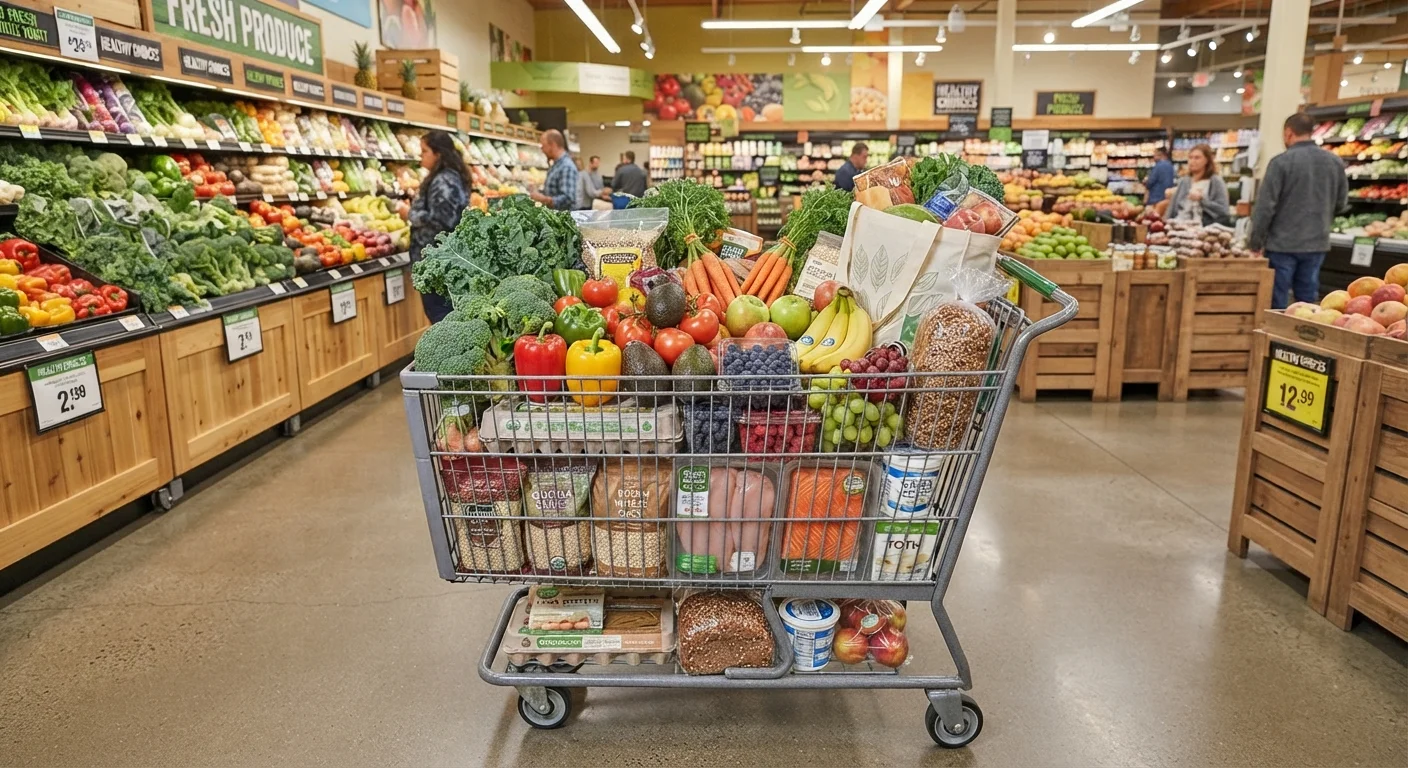
Start Before You Enter the Store
The most consequential nutrition decisions often happen before a single item goes into the cart. Spending ten minutes reviewing what your family will eat that week - and cross-referencing what's already in the pantry - sets a clear direction. Use our weekly meal planning checklist to audit for variety and common nutritional gaps before you write your list.
A written list isn't just a memory aid; research in consumer behavior consistently links list-based shopping to fewer unplanned, impulse purchases. Grouping list items by store section (produce, proteins, grains, dairy) further reduces wandering through less nutritious aisles out of habit.
Navigate the Store With Intention
Most grocery stores are laid out so that whole, minimally processed foods - fresh produce, meat and fish, dairy, and eggs - occupy the outer ring, while heavily processed products fill the center aisles. Starting your trip on the perimeter means your cart fills with nutrient-dense basics before you reach the packaged-goods sections.
This isn't a rule to follow rigidly. Staples like legumes, whole-grain pasta, canned tomatoes, and oats live in the center aisles and belong in any balanced cart. The point is to approach those aisles with a list in hand rather than browsing. As our guide on why meal variety matters more than any single superfood explains, rotating across food groups week to week covers more nutritional ground than any trending ingredient.
Read Labels Like a Nutritional Insider
Front-of-package claims - "high protein," "multigrain," "reduced fat" - are marketing language, not nutritional summaries. The ingredients list and Nutrition Facts panel tell a more complete story. A shorter ingredients list with recognizable whole foods generally indicates less processing.
On the Nutrition Facts panel, pay attention to serving size first - it anchors every number on the label. From there, fiber, protein, sodium, and added sugars are worth a glance for most households. You don't need to calculate anything; looking for patterns (high added sugar, very low fiber) over several products quickly trains your eye.
Nutrition Facts Panels: A Quick Orientation
The FDA requires a standardized Nutrition Facts panel on most packaged foods sold in the US. Serving size appears at the very top and defines all the values below it. "Daily Value" percentages (%DV) are based on a general 2,000-calorie reference diet and are a rough guide, not a personal target. For personalized guidance on how to interpret these figures for your household's needs, a registered dietitian is the most reliable resource.
If reading labels feels overwhelming at first, start with just one category - say, breakfast cereals or bread - and compare two or three options side by side. That single habit, practiced weekly, builds lasting label literacy without requiring any nutritional background.
Make Affordability and Nutrition Work Together
A common concern is that nutritious eating costs more. In practice, some of the most nutrient-dense foods - dried lentils, canned beans, frozen vegetables, whole oats, eggs - are among the most affordable items in the store. The balanced plate guide outlines how to aim for nutritional variety at mealtime without obsessing over numbers.
Frozen vegetables are harvested at peak ripeness and flash-frozen, preserving most of their vitamins and minerals. Canned produce (with no added salt or sugar) offers similar benefits. Keeping a stock of these options means nutritious choices are always within reach, even when fresh produce runs low mid-week.
Building grocery habits that stick also connects to broader financial routines. Consistent planning reduces food waste, which is one of the quieter drains on a household food budget. Our article on small daily habits for financial stability explores how low-effort routines - including planned shopping - quietly compound over time.
This article is for general informational and educational purposes only and is not a substitute for advice from a qualified healthcare professional or registered dietitian. Individual nutritional needs vary; please consult a professional for guidance tailored to your health circumstances.
The content provided on our blog site traverses numerous categories, offering readers valuable and practical information. Readers can use the editorial team’s research and data to gain more insights into their topics of interest. However, they are requested not to treat the articles as conclusive. The website team cannot be held responsible for differences in data or inaccuracies found across other platforms. Please also note that the site might also miss out on various schemes and offers available that the readers may find more beneficial than the ones we cover.