

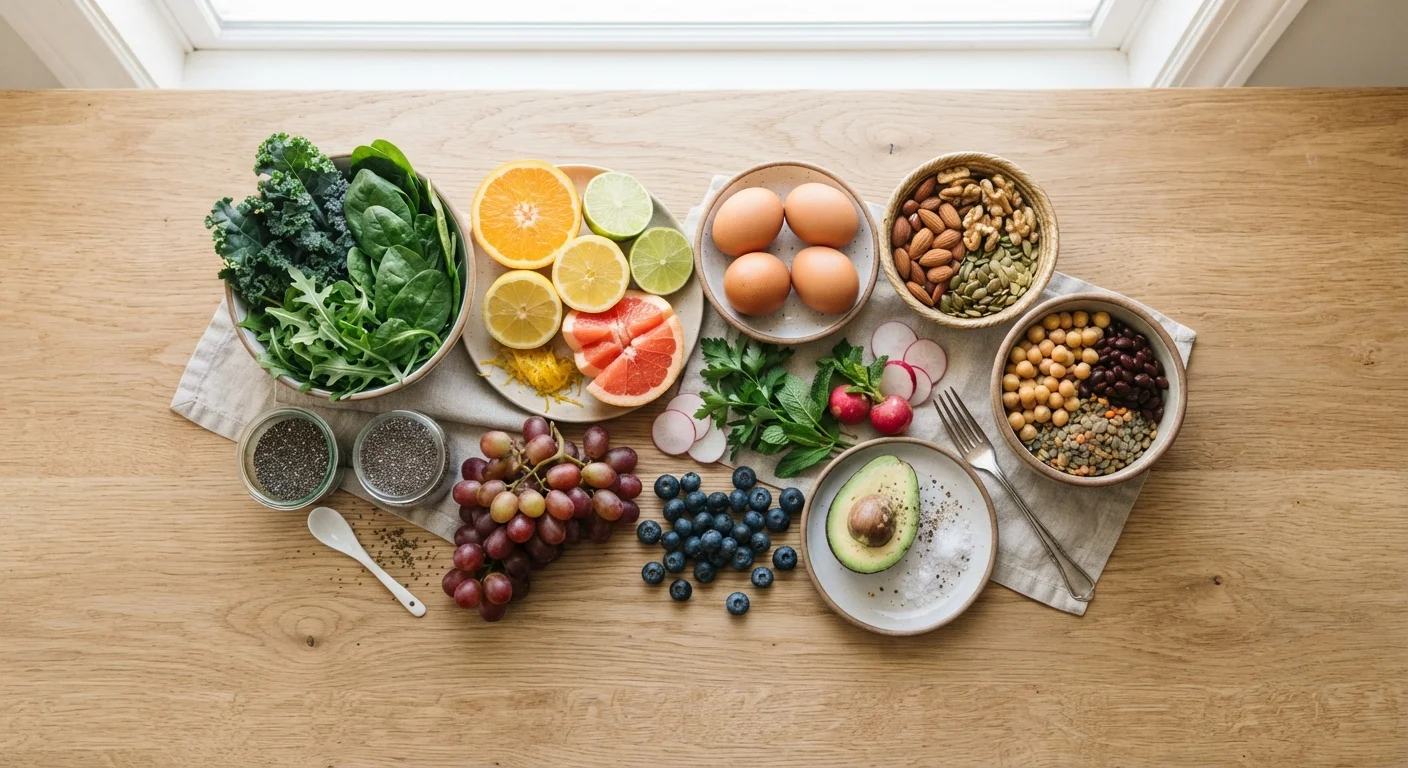
Why Vitamins and Minerals Matter at Every Meal
Vitamins and minerals are often called micronutrients - nutrients your body needs in relatively small amounts but can't do without. Unlike carbohydrates or fats, most micronutrients can't be manufactured in useful quantities by the body itself, so they must come consistently from food. If you're just getting started thinking about what goes into your family's meals, our foundational nutrition guide is a helpful first stop before diving into specifics.
Deficiencies rarely announce themselves dramatically. More often, they appear as low energy, slow wound healing, brittle nails, or recurring illness - signals that are easy to dismiss as stress or a busy schedule. Understanding what each nutrient does and where to find it is the first practical step toward closing those gaps through everyday food choices.
| Number of recognized vitamins | 13 essential vitamins (National Institutes of Health, Office of Dietary Supplements) |
| Essential dietary minerals | 16 recognized as essential (Linus Pauling Institute, Oregon State University) |
| Most common US micronutrient shortfall | Vitamin D, calcium, potassium, iron (especially in women of childbearing age) (2020-2025 Dietary Guidelines for Americans) |
| Fat-soluble vitamins | A, D, E, K |
| Water-soluble vitamins | Vitamin C and the 8 B vitamins |
| Vitamin C absorption boost for plant iron | Up to 3× improvement (American Journal of Clinical Nutrition (general finding)) |
Key Vitamins: What They Do and Where to Find Them
The vitamins below are among the most discussed in public health guidance, and for good reason - they collectively touch nearly every major body system.
- Vitamin A supports vision (especially in low light), immune function, and skin cell turnover. Find it in liver, eggs, dairy, and as beta-carotene in orange and dark green vegetables like sweet potatoes, carrots, and spinach.
- B vitamins (a family of eight) help convert food into energy and support nerve function. B12 in particular is found almost exclusively in animal products - meat, fish, eggs, and dairy - making supplementation worth discussing with a clinician for people following strictly plant-based diets. Folate (B9), vital for cell division and especially critical during pregnancy, is abundant in leafy greens, beans, and fortified grains.
- Vitamin C aids collagen production, supports the immune system, and helps the body absorb iron from plant foods. Citrus fruits, bell peppers, strawberries, and broccoli are excellent sources.
- Vitamin D enables calcium absorption and supports bone density and immune regulation. Few foods are naturally rich in it; fatty fish (salmon, sardines), egg yolks, and fortified dairy or plant milks are the main dietary sources. Sun exposure helps, but many households - especially in northern states or those with limited outdoor time - may not produce enough. Speak with a healthcare provider about whether testing makes sense for your family.
- Vitamin K plays a central role in blood clotting and bone metabolism. Leafy greens such as kale, collards, and spinach are the richest sources.
Micronutrient
Vitamins and minerals the body needs in small quantities to function properly. Unlike macronutrients (carbs, proteins, fats), most micronutrients must come from food or supplements because the body cannot produce adequate amounts on its own.
Fat-soluble vitamin
Vitamins A, D, E, and K dissolve in fat and are stored in the body's fatty tissues and liver. Because they accumulate rather than flushing out daily, excessive intake through supplementation can reach harmful levels over time.
Water-soluble vitamin
B vitamins and vitamin C dissolve in water and are not stored in significant quantities. Excess amounts are generally excreted in urine, making daily dietary intake important for maintaining adequate levels.
Heme iron
A form of iron found in animal proteins - meat, poultry, and fish - that the body absorbs more readily than the non-heme iron found in plant foods.
Bioavailability
The proportion of a nutrient that the body actually absorbs and uses after eating. Bioavailability varies by food form, preparation method, and what other nutrients are consumed at the same meal.
Recommended Dietary Allowance (RDA)
The daily intake level of a nutrient estimated to meet the needs of most healthy individuals in a specific age and sex group. Established by the National Academies of Sciences, Engineering, and Medicine.
Essential Minerals: From Bone Health to Energy
Minerals are inorganic elements sourced from the soil and water that food absorbs as it grows. The body uses them for everything from building bone to regulating heartbeat.
- Calcium is the most abundant mineral in the body and is critical for bone and tooth structure, muscle contraction, and nerve signaling. Dairy products are well-known sources, but fortified plant milks, canned fish with soft bones, tofu made with calcium sulfate, and dark leafy greens also contribute meaningfully.
- Iron carries oxygen in red blood cells. Heme iron from red meat and poultry absorbs more readily than non-heme iron from plant sources like lentils, beans, and fortified cereals. Pairing plant-based iron sources with vitamin C - for example, lemon juice on a lentil salad - improves absorption.
- Magnesium participates in over 300 enzymatic reactions, including those governing muscle function and blood sugar regulation. Nuts, seeds, whole grains, and dark chocolate are notable sources.
- Potassium helps regulate blood pressure and fluid balance. Bananas get the headlines, but potatoes, beans, dairy, and leafy greens are comparably rich sources. Most Americans fall short of recommended intakes.
- Zinc supports immune response, wound healing, and taste and smell perception. Meat, shellfish (especially oysters), beans, and pumpkin seeds are reliable sources.
- Iodine is essential for thyroid hormone production, which governs metabolism and development. Iodized table salt and dairy are the primary sources for most US households.
For a structured way to audit whether your weekly meals cover this range, our family meal planning checklist offers a practical framework. And because micronutrients rarely work alone - fiber, for instance, affects how minerals are absorbed - it's worth exploring how fiber fits into the picture as well.
Practical Takeaways for Everyday Households
No single food covers every micronutrient need, which is why dietary variety remains the most consistent guidance from nutrition researchers. A meal pattern built around a range of vegetables, whole grains, legumes, proteins, and dairy (or fortified alternatives) tends to cover the spectrum far better than any individual "superfood."
Supplements can fill genuine gaps - particularly for vitamin D, B12, iron, and folate in specific life stages or dietary patterns - but they work best when guided by a healthcare provider who knows your individual situation. Over-supplementing certain nutrients (fat-soluble vitamins like A, D, E, and K accumulate in the body) carries its own risks.
If patterns in your household's eating consistently skew away from whole foods, common nutrition missteps may help you identify where small changes could have the biggest impact. And if you want to understand how vitamins and minerals interact with the macronutrients in your meals, our plain-language macronutrient guide connects those dots.
This article is for general informational and educational purposes only and is not a substitute for professional medical advice. Consult a qualified healthcare provider before making changes to your diet, beginning supplementation, or addressing symptoms you're concerned about.
The content provided on our blog site traverses numerous categories, offering readers valuable and practical information. Readers can use the editorial team’s research and data to gain more insights into their topics of interest. However, they are requested not to treat the articles as conclusive. The website team cannot be held responsible for differences in data or inaccuracies found across other platforms. Please also note that the site might also miss out on various schemes and offers available that the readers may find more beneficial than the ones we cover.