

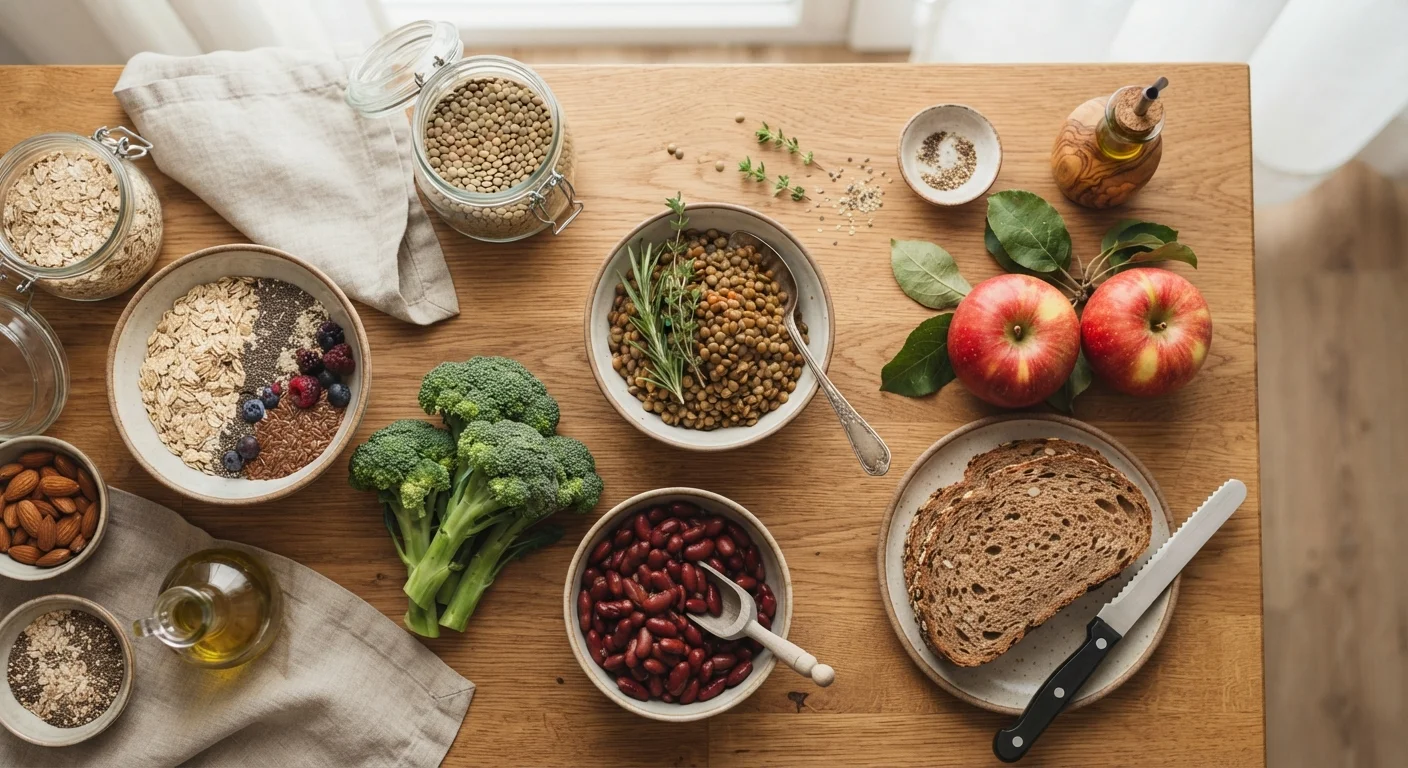
Why Fiber Keeps Getting Overlooked
Vitamins, protein, and omega-3s tend to dominate nutrition conversations, but fiber - one of the most consistently under-consumed nutrients in American households - rarely gets the same attention. According to data from the U.S. Dietary Guidelines Advisory Committee, most Americans eat significantly less fiber than recommended, a shortfall so common it's been described as a public health concern.
Part of the problem is that modern food environments tend to favor refined and processed products stripped of their natural fiber. White bread, white rice, packaged snack foods, and many convenience meals are all relatively low in fiber compared with their whole-food counterparts. The gap between what we eat and what our bodies benefit from is wide - but the good news is that closing it doesn't require dramatic dietary overhaul. It mostly requires knowing where fiber lives.
~10-15g
Average daily fiber intake for US adults
The U.S. Dietary Guidelines Advisory Committee has identified fiber as a nutrient of public health concern due to widespread under-consumption.
25-38g
Recommended daily fiber intake for adults
The Dietary Guidelines for Americans suggest 25g/day for women and 38g/day for men, with amounts varying by age.
95%
Americans not meeting fiber recommendations
Research published in nutrition literature consistently finds that the vast majority of US adults fall short of recommended fiber intake.
Soluble vs. Insoluble Fiber: Two Types, Two Jobs
Not all fiber works the same way, and understanding the distinction helps explain why variety in plant-food choices matters.
Soluble Fiber
Soluble fiber dissolves in water to form a gel-like substance in the digestive tract. This slows the absorption of sugar and helps lower LDL (low-density lipoprotein) cholesterol. Oats, barley, apples, citrus fruits, carrots, and legumes are all solid sources of soluble fiber. For people managing blood sugar levels, this type of fiber is particularly relevant - though anyone with a specific health condition should discuss dietary changes with their healthcare provider.
Insoluble Fiber
Insoluble fiber doesn't dissolve in water. Instead, it adds bulk to stool and helps food move more efficiently through the digestive system, supporting regularity. Whole wheat products, nuts, beans, and many vegetables - especially the skins - are rich in insoluble fiber. Most plant foods contain both types, just in different proportions.
For a broader look at nutrients that often go unmeasured in everyday eating, see our household reference for vitamins and minerals.
Everyday Foods That Help Close the Gap
You don't need specialty health foods to meaningfully increase fiber intake. The most fiber-dense options are generally whole, minimally processed plant foods that are already common in grocery stores.
- Legumes: Lentils, black beans, kidney beans, and chickpeas are among the highest-fiber foods available - often delivering 12-15 grams per cooked cup.
- Whole grains: Swapping refined grains for whole-grain versions (oats, whole wheat bread, brown rice, barley) is one of the more impactful single changes a household can make.
- Vegetables: Broccoli, Brussels sprouts, carrots, and peas are fiber-rich choices. Leaving edible skins on potatoes and other vegetables preserves more fiber.
- Fruits: Raspberries, pears, and apples (with skin) are particularly high in fiber. Whole fruit provides more fiber than juice, which typically removes much of the pulp.
- Nuts and seeds: Almonds, chia seeds, and flaxseeds add fiber alongside healthy fats and are easy to incorporate into meals or snacks.
Start Small and Build Gradually
If your household currently eats few fiber-rich foods, aim to add just one new source per week - such as swapping white rice for brown, or stirring beans into a soup. Small, consistent additions tend to stick better than dramatic overnight changes, and they give your digestive system time to adjust comfortably.
Making these swaps consistently - rather than perfectly - is what tends to produce meaningful change over time. Our grocery shopping habits guide offers practical strategies for putting more of these foods in your cart each week.
How to Increase Fiber Without the Discomfort
One reason people sometimes back off from fiber-rich eating is digestive discomfort - bloating, gas, or an unsettled stomach. This typically happens when fiber intake increases too quickly, giving gut bacteria a sudden surge of new fermentable material to process.
The practical solution is gradual change. Adding one or two higher-fiber foods per week, rather than overhauling the entire diet at once, gives the gut microbiome time to adapt. Staying well-hydrated is equally important - fiber needs water to move through the digestive tract efficiently.
“Dietary fiber is one of the most underappreciated components of a healthy diet. It feeds our gut microbiome, slows glucose absorption, and keeps our digestive system moving - yet most people consume far less than is recommended.”
— Walter Willett, Professor of Epidemiology and Nutrition, Harvard T.H. Chan School of Public Health
It's also worth recognizing that some fiber-related discomfort diminishes naturally as the body adjusts. If symptoms are persistent or severe, or if you have an existing digestive condition such as irritable bowel syndrome or Crohn's disease, consult a healthcare provider before significantly increasing fiber intake. This is general information, not personalized medical advice.
Curious about other common eating patterns that quietly affect dietary quality? Our article on nutrition missteps that undermine family eating habits explores everyday habits worth reconsidering.
This article is for general informational and educational purposes only and is not a substitute for professional medical or dietary advice. Always consult a qualified healthcare provider regarding your individual health needs.
Frequently Asked Questions
General dietary guidance suggests around 25 grams per day for adult women and 38 grams per day for adult men, though these figures vary by age. The average American adult currently consumes roughly 10-15 grams per day - well below those targets. A healthcare provider can help you determine what's appropriate for your situation.
Legumes (lentils, black beans, chickpeas), whole grains (oats, barley, whole wheat bread), vegetables (broccoli, carrots, Brussels sprouts), and fruits (apples, pears, raspberries) are all dependable everyday sources. These foods are widely available and tend to be among the more affordable items in the grocery store.
Increasing fiber too quickly - especially from a low baseline - can cause bloating, gas, or cramping. Gradually adding fiber-rich foods over several weeks and staying well-hydrated gives your digestive system time to adjust. If you have a digestive condition, talk with a healthcare provider before making major dietary changes.
Fiber supplements can help fill gaps, but whole foods deliver fiber alongside vitamins, minerals, antioxidants, and other beneficial compounds that supplements don't replicate. Most health professionals consider food-first approaches preferable. If you're considering a supplement, check with your doctor or a registered dietitian first.
Cooking can slightly soften fiber's structure but generally doesn't eliminate it. Most cooked vegetables, beans, and whole grains still deliver meaningful fiber. The bigger factor is whether you keep skins on (they're fiber-rich) and how processed the food is before or after cooking.
Yes - dietary fiber supports healthy digestion in children, and establishing fiber-rich eating habits early can have lasting benefits. Needs vary by age, so consulting a pediatrician or registered dietitian is the best way to understand appropriate intake for your child.
The content provided on our blog site traverses numerous categories, offering readers valuable and practical information. Readers can use the editorial team’s research and data to gain more insights into their topics of interest. However, they are requested not to treat the articles as conclusive. The website team cannot be held responsible for differences in data or inaccuracies found across other platforms. Please also note that the site might also miss out on various schemes and offers available that the readers may find more beneficial than the ones we cover.