

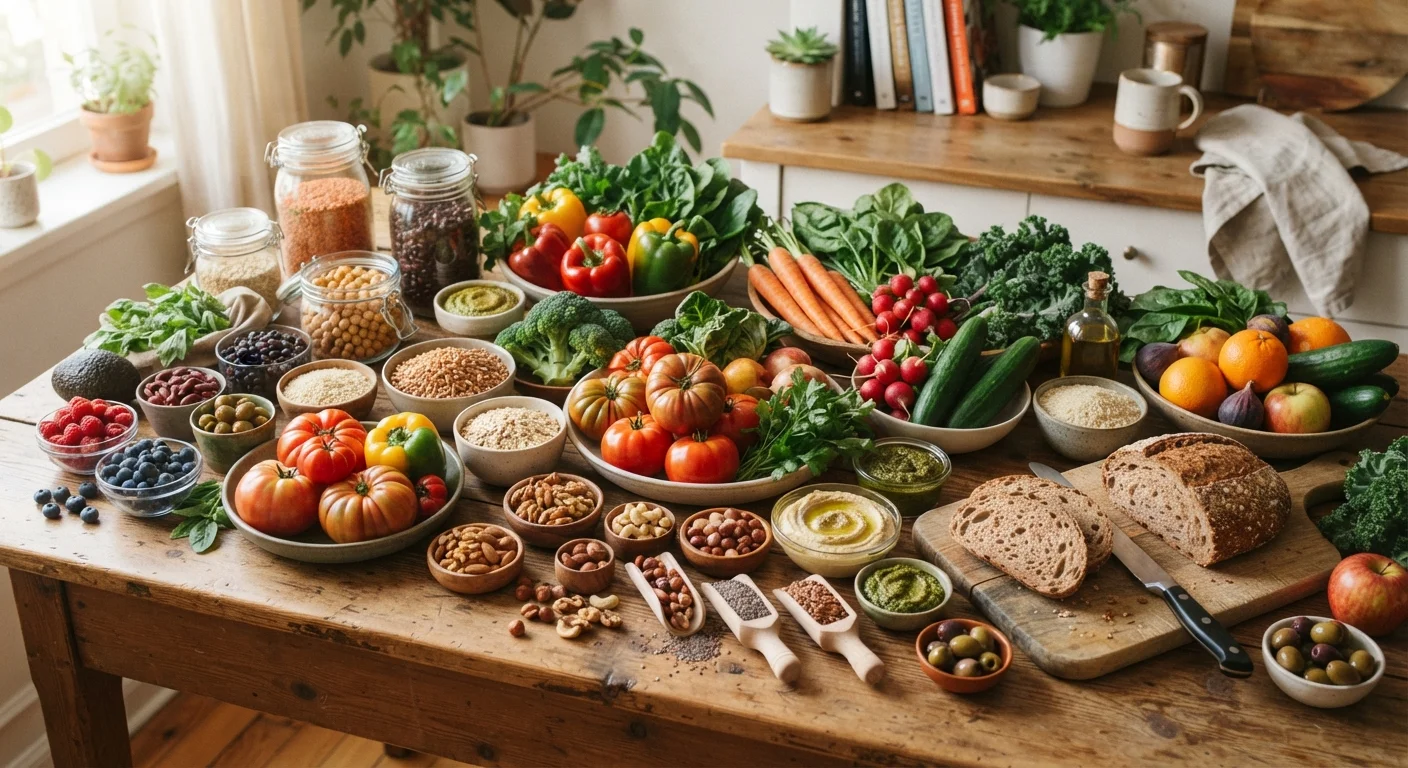
The Superfood Myth Worth Unpacking
Every few months, a new ingredient dominates headlines - matcha, moringa, sea moss, açaí. These foods often do contain meaningful nutrients, and there's no reason to avoid them. But the framing that any one food can anchor your health is misleading, and it quietly distracts families from a more powerful and far less expensive strategy: eating a wide variety of foods across the week.
Nutrition science consistently points to dietary patterns rather than individual ingredients as the strongest predictors of long-term health outcomes. If you're new to thinking about this, our introduction to everyday nutrition covers the foundational concepts worth understanding first.
“The overall dietary pattern is far more important than any single food or nutrient. Focusing on variety, balance, and moderation gives us more reliable guidance than chasing individual ingredients.”
— Walter Willett, Professor of Epidemiology and Nutrition, Harvard T.H. Chan School of Public Health
Why Variety Does What No Single Food Can
Different food groups supply different classes of nutrients - and even within a food group, individual items vary in their specific vitamin, mineral, and fiber profiles. Spinach and broccoli are both leafy greens, but they bring meaningfully different nutrients to the table. Lentils and black beans are both legumes, yet their amino acid and mineral compositions differ.
This matters for two reasons. First, rotating foods helps close nutritional gaps that a repetitive diet quietly creates. Second, it benefits gut health: research suggests that consuming a wider range of plant foods each week is associated with a more diverse gut microbiome, which plays a role in digestion, immunity, and metabolic health. The specific mechanisms are still being studied, but the general principle - variety feeds diversity - is well-supported.
30+
Different plant foods per week associated with microbiome diversity
Research published in Cell Host & Microbe found that people consuming more than 30 distinct plant foods weekly had more diverse gut microbiomes than those eating 10 or fewer.
~10%
Of US adults meet daily vegetable recommendations
CDC surveillance data has consistently found that fewer than one in ten American adults meets federal fruit and vegetable intake guidelines - a gap variety-focused eating directly addresses.
For households with children, this is especially relevant. Nutrient needs shift at different life stages, as our piece on nutrition for kids vs. adults explores in detail.
Best Practices for Building Variety Into Your Week
Expanding dietary variety doesn't require dramatic overhauls or specialty grocery runs. The practices below are designed for real households with real schedules and budgets.
Rotate your protein sources across the week rather than defaulting to the same one daily.
Different proteins - eggs, legumes, fish, poultry, tofu - carry different amino acid profiles, fats, and micronutrients. Relying on a single source means repeatedly getting the same nutritional package while missing others.
Aim to eat at least five different vegetables across a seven-day period, not just five servings of one.
Vegetable variety matters because different colors and types correspond to different phytonutrients and fiber types. Eating only one or two favorites limits what your body receives even if portions are generous.
Treat whole grains as a rotation, not a default - alternate between rice, oats, barley, and others.
Whole grains differ in their fiber types, B vitamins, and minerals. Oats, for instance, provide beta-glucan fiber that supports cholesterol management, while barley offers a different fiber profile. Variety across grain types broadens coverage.
Include at least one legume serving per week if you don't already eat them regularly.
Legumes - beans, lentils, chickpeas - are among the most nutritionally dense and affordable foods available, providing plant protein, soluble fiber, folate, and iron in a single serving. Many households underuse them.
Choose a different fruit each shopping trip rather than always buying the same one.
Fruits vary substantially in their vitamin C, potassium, antioxidant, and fiber content. Relying only on bananas or apples every week means consistently missing what berries, citrus, kiwi, or melons contribute.
Making It Stick: Quick Actions You Can Take This Week
The gap between knowing and doing is where most nutrition intentions stall. These starting points are low-effort and immediately actionable.
For a structured way to audit what your family is already eating and spot the gaps, our weekly meal planning checklist is a practical companion to this article. And when you're at the store, evidence-informed shopping habits can help you put variety into the cart more consistently.
It's also worth reflecting on patterns that work against variety. Over-relying on a handful of fortified snack foods or skipping entire food groups are common habits that quietly narrow nutritional range - our article on nutrition missteps that undermine family eating goes deeper on this.
This article is for general informational and educational purposes only and is not a substitute for personalized medical or dietary advice. Consult a qualified healthcare professional or registered dietitian for guidance specific to your health needs.
The content provided on our blog site traverses numerous categories, offering readers valuable and practical information. Readers can use the editorial team’s research and data to gain more insights into their topics of interest. However, they are requested not to treat the articles as conclusive. The website team cannot be held responsible for differences in data or inaccuracies found across other platforms. Please also note that the site might also miss out on various schemes and offers available that the readers may find more beneficial than the ones we cover.