

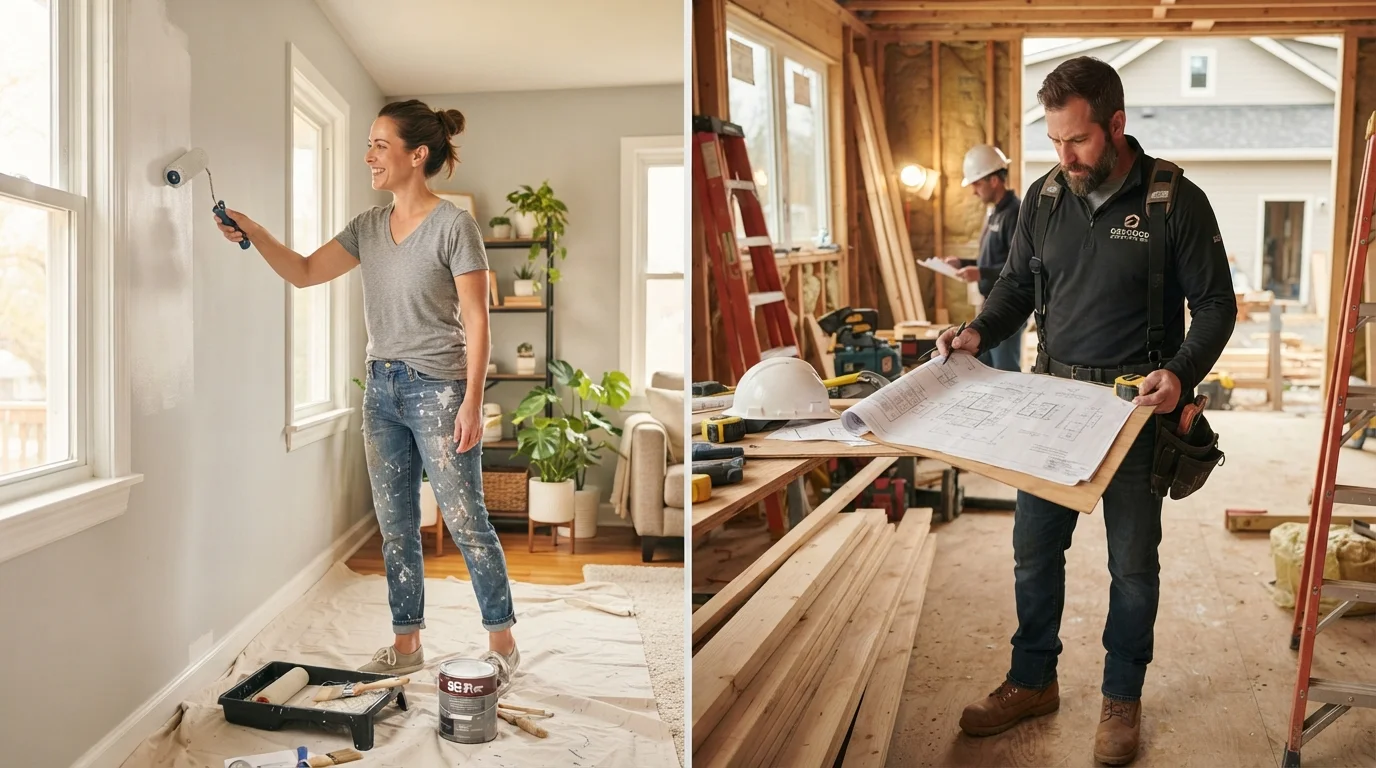
Our Verdict
DIY is genuinely rewarding and cost-effective for a wide range of cosmetic and low-risk maintenance tasks. However, projects involving structural integrity, electrical systems, gas lines, or work requiring permits carry real consequences if done incorrectly - consequences that fall entirely on the homeowner. The right choice depends on an honest assessment of your skill level, the stakes involved, and what local codes actually require.
Homeowners comfortable with tools and willing to research thoroughly will get the most value from DIY on low-risk projects, while those tackling larger renovations or hazardous systems should budget for professional help from the start.
The Core Question: What's Actually at Stake?
Before picking up a tool or calling a contractor, ask one question: what happens if this goes wrong? That answer should drive every other decision you make about who does the work.
Home projects fall into a rough spectrum. On one end are tasks like painting, caulking, installing shelving, or patching small drywall holes - work where a mistake is annoying but fixable. Our guide to patching drywall cleanly is a good example of a project most homeowners can tackle with basic tools and patience.
On the other end are projects where errors can cause injury, structural damage, fire, flooding, or failed home inspections. These include electrical panel upgrades, gas line work, load-bearing wall removal, and roof replacements. For those, the question isn't really whether you could do it - it's whether you should.
Two middle categories exist as well: projects that are technically manageable for a skilled DIYer but carry permit obligations or inspection requirements, and projects that look simple on video but involve hidden complexity in real homes. Both deserve extra scrutiny.
The Case for DIY
Taking on projects yourself offers real, tangible advantages - particularly when the task is well within your skill range and the risk profile is low.
Significant savings on labor costs
Labor typically accounts for 40-65% of a contractor's total project cost. Handling a task yourself eliminates that portion entirely, which can be substantial on multi-day jobs.
Flexible scheduling on your own timeline
You aren't waiting on contractor availability, which can stretch weeks or months in busy seasons. Small projects can be completed on weekends without coordinating around someone else's schedule.
Builds practical home maintenance knowledge
Successfully completing repairs teaches you how your home's systems work, making future maintenance easier and improving your ability to catch problems before they escalate.
Suitable for a wide range of cosmetic tasks
Painting, caulking, tiling backsplashes, installing hardware, and minor landscaping are all tasks where DIY errors are correctable and skill requirements are achievable with reasonable preparation.
~50%
Share of total project cost attributed to labor
Industry estimates from contractor and remodeling associations consistently place labor at roughly half of total project costs across common home renovation categories.
1 in 3
DIY projects requiring professional correction
Surveys of home improvement professionals suggest a substantial portion of DIY projects they're called in to fix involve work that was started - but not completed correctly - by homeowners.
Beyond money, there's a practical knowledge benefit. Homeowners who understand how their house works - how switches are wired, how a toilet flapper functions, how grout is applied - are better equipped to spot problems early, communicate with contractors, and make smarter decisions over time.
The Case for Hiring a Contractor
Professional contractors bring more than just labor. They carry licensing, insurance, and accountability - factors that matter enormously when things go sideways on a complex project.
Errors on complex projects can be costly
A poorly installed window, leaky plumbing connection, or miswired outlet may cost far more to fix than the original professional fee would have been. Mistakes don't always reveal themselves immediately.
Certain work is legally restricted to licensed trades
Electrical, gas, and structural work in most jurisdictions must be performed or overseen by licensed professionals. Performing that work yourself - or hiring an unlicensed individual - may be illegal and can void insurance.
Hidden hazards require professional assessment
Older homes may contain asbestos, lead paint, or outdated wiring that creates serious health and safety risks. Professionals are trained to identify and handle these materials safely and in compliance with regulations.
DIY timelines often underestimate project duration
Without professional tools, familiarity with the work, and a dedicated crew, tasks that a contractor completes in a day may take a homeowner an entire weekend or more, with living spaces disrupted throughout.
Unpermitted work can affect resale and insurance
Work done without required permits may need to be disclosed during a home sale, could require costly remediation, and may not be covered if something goes wrong under a homeowner's insurance policy.
If you're weighing whether a project needs a permit, that's another signal to consult a pro. Our overview of permits, inspections, and codes explains when permits are typically required and what's at risk if you skip them. Unpermitted work can complicate home sales and void homeowner's insurance claims.
When you do hire, do your homework. Learn what to ask contractors and which red flags to watch for before signing anything.
A Practical Decision Framework
When you're on the fence, work through these four questions:
- Skill and experience: Have you done this type of work before, or something comparable? Watching tutorials helps, but hands-on experience with similar tasks matters more.
- Safety risk: Does the project involve electrical wiring (beyond simple fixture swaps), gas lines, plumbing into the mains, load-bearing elements, or roofing? If yes, default to a licensed professional unless you have verified relevant experience.
- Permit and code requirements: Check with your local building department before starting. Many jurisdictions require permits for work beyond cosmetic updates. Unpermitted work can create serious problems when you sell or file an insurance claim.
- Project scope and hidden complexity: A project that looks straightforward may involve asbestos in older homes, knob-and-tube wiring, or moisture damage behind walls. Before any major renovation, review a pre-renovation safety checklist to surface hazards before demolition begins.
When 'I Can Figure It Out' Isn't Enough
Video tutorials make almost any project look manageable, but real homes vary enormously - in age, construction method, and hidden condition. A task that's straightforward in new construction can become a multi-day project in a 1960s home with non-standard framing or outdated systems. Always factor in what you can't see before committing to DIY on anything structural, mechanical, or electrical.
If cost is a primary concern, also explore home improvement financing options so that budget constraints don't push you toward unsafe DIY on projects that genuinely require professional work.
The content provided on our blog site traverses numerous categories, offering readers valuable and practical information. Readers can use the editorial team’s research and data to gain more insights into their topics of interest. However, they are requested not to treat the articles as conclusive. The website team cannot be held responsible for differences in data or inaccuracies found across other platforms. Please also note that the site might also miss out on various schemes and offers available that the readers may find more beneficial than the ones we cover.