

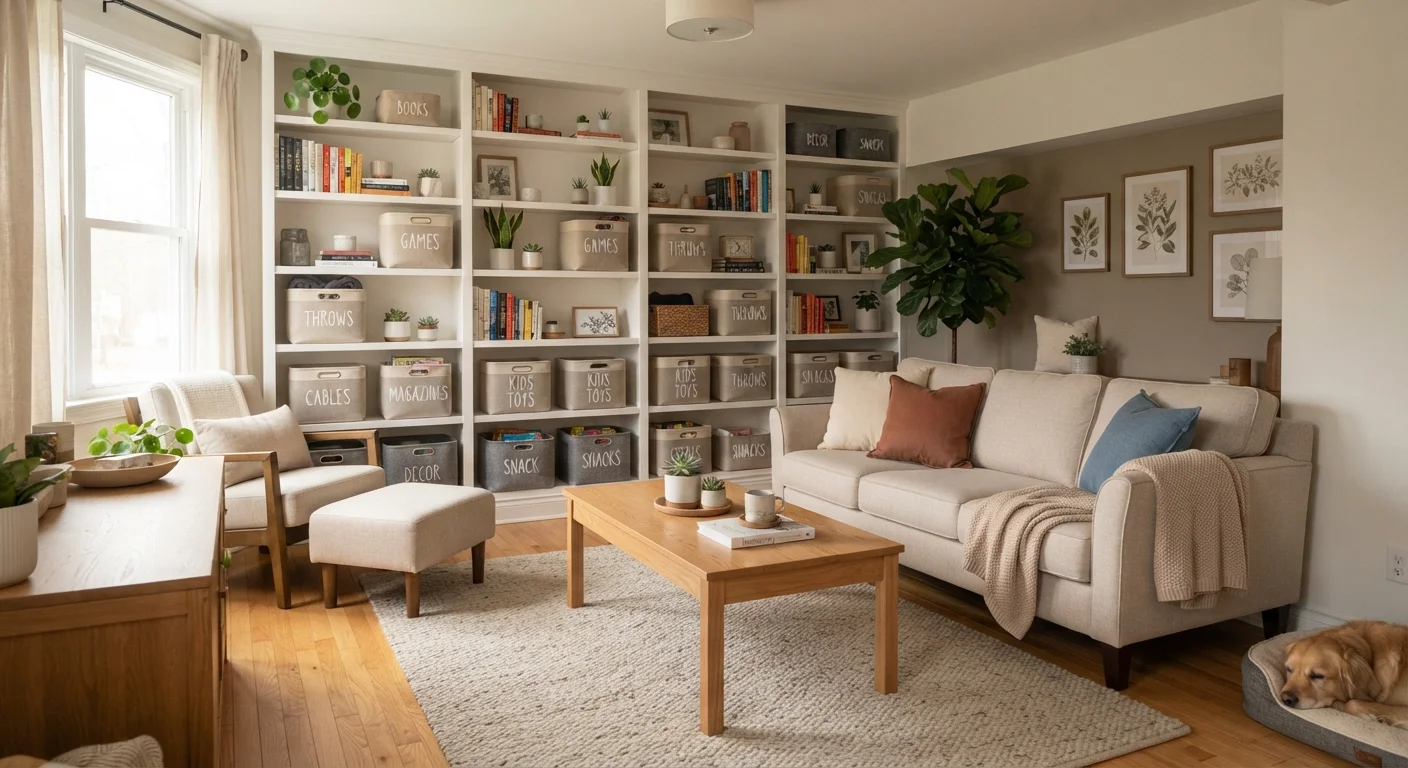
Why Organization Efforts Tend to Unravel
An organized home isn't a destination - it's an ongoing condition that requires maintenance. Most households recognize this in theory, but the practical reality often gets lost after the adrenaline of a big cleanout fades. The result is a slow slide back to clutter, usually accompanied by the belief that the household simply isn't the "organized type."
That belief is almost always wrong. The problem isn't willpower or personality - it's that the systems put in place didn't account for how the household actually functions. Organization strategies borrowed from social media or design magazines can look beautiful in a controlled photo shoot while being completely impractical in a home with kids, pets, or demanding schedules.
Understanding why organized spaces deteriorate is the first step toward building something that genuinely holds. The mistakes below aren't character flaws - they're predictable, fixable design errors.
Organizing everything at once in a single marathon session, then doing nothing to maintain it.
Why it happens: A big-clean-up feels satisfying and productive, so households treat it as the finish line rather than the starting line.
Creating storage systems that look great but don't match the household's actual behavior.
Why it happens: People organize for how they wish they lived, not how they actually live - placing laundry hampers in inconvenient spots, or filing systems no one uses.
Neglecting to declutter regularly, allowing slow accumulation to overwhelm existing systems.
Why it happens: Decluttering feels like a big event, so most households do it rarely - usually only when things become unmanageable.
Assuming that buying organizational products will solve the problem on its own.
Why it happens: Bins, dividers, and label makers are marketed as solutions, making it tempting to shop before thinking through the underlying system.
Not getting all household members on board with how the system works.
Why it happens: The person who organized the home knows where everything goes; everyone else is guessing - and eventually stops trying.
Treating paper clutter the same as physical clutter, without a dedicated processing system.
Why it happens: Paper arrives constantly and in small increments, so it's easy to set aside until it becomes an overwhelming pile.
How to Build Organization That Actually Lasts
The households that maintain orderly spaces over the long term typically share one trait: they've replaced one-time efforts with small, repeatable habits. This is similar in principle to how small daily habits build financial stability - neither result comes from a single dramatic action, but from consistent, low-effort behaviors compounded over time.
Systems Must Fit Real Life, Not Ideal Life
The most common reason organized homes revert to chaos is that the systems were designed for an idealized version of the household - not its actual rhythms, habits, and constraints. Before investing in storage products or a major overhaul, honestly assess how your family moves through each space. A system that requires perfect behavior to function will fail the moment life gets busy.
Start by conducting an honest audit of your current space. Walk each room and ask: where do things actually get dropped, set down, or shoved? That's where your storage should be. Then decide, specifically, who is responsible for maintaining each zone - vague shared responsibility tends to mean no responsibility.
If minimalism as a framework appeals to you but has felt discouraging in practice, it may help to revisit some of the common myths around minimalism that make decluttering feel harder than it needs to be. The goal isn't to own as little as possible - it's to own what you use, and to store it where you'll use it.
Avoid Buying Storage Before Decluttering
Purchasing bins, baskets, and organizers before reducing the volume of belongings is one of the most expensive and counterproductive organizing mistakes. You'll end up with neatly containerized clutter rather than a functional system. Declutter first, measure your remaining items, and then select storage that fits what you're actually keeping.
Finally, build in a regular reset. Even fifteen minutes per week of intentional tidying - returning items to their designated spots, processing the mail pile, wiping down surfaces - is enough to prevent the slow drift that leads back to chaos. The system doesn't have to be perfect; it has to be sustainable.
The content provided on our blog site traverses numerous categories, offering readers valuable and practical information. Readers can use the editorial team’s research and data to gain more insights into their topics of interest. However, they are requested not to treat the articles as conclusive. The website team cannot be held responsible for differences in data or inaccuracies found across other platforms. Please also note that the site might also miss out on various schemes and offers available that the readers may find more beneficial than the ones we cover.