

Why Minimalism Has a Reputation Problem
Scroll through any home organization account online and you'll likely see the same aesthetic: stark white rooms, empty counters, and nearly no visible possessions. It's striking - and for most households, completely unrelatable. That visual shorthand has given minimalism a reputation as something extreme, aspirational, and frankly impractical for anyone with children, hobbies, or a budget that doesn't allow starting fresh.
But that image isn't what minimalism actually requires. At its core, the philosophy is about keeping what genuinely serves you and releasing what doesn't - a concept far more flexible than the Instagram version suggests. The myths that have grown up around it are the real barrier for many households, not the decluttering itself.
If you've ever put off sorting through a closet because you felt you weren't committed enough to go full minimalist, these corrections are worth reading. And if you're just beginning, this guide for first-time declutterers offers a grounded place to start.
Myth
Minimalism means owning as few things as possible - ideally under 100 items.
Fact
Minimalism has no item count. It means keeping what adds genuine value to your life and letting go of what doesn't.
The "100 things" challenge was a media moment, not a rulebook. Minimalism as a design and lifestyle philosophy has never prescribed a specific number of possessions. A parent of three children, an avid home cook, or a hobbyist woodworker will naturally own more than someone who lives alone - and that's entirely consistent with minimalist principles. The question isn't how many things you own, but whether each thing earns its place in your space and life.
Myth
You have to declutter everything at once for it to make a real difference.
Fact
Incremental decluttering - one drawer, one shelf, one category at a time - produces lasting results and is far easier to sustain.
The all-or-nothing approach overwhelms most households and often leads to abandoned efforts midway through. Tackling one manageable area at a time lets you build decision-making momentum without the burnout. Category-based methods, like those described in the KonMari method overview, provide a structured sequence that prevents re-cluttering previously sorted areas - but even that approach can be paced over weeks or months.
Myth
Sentimental items are clutter and should be discarded.
Fact
Objects with genuine emotional meaning serve a real function and belong in any well-organized home - what matters is being intentional about which ones you keep.
Sentimental attachment is a legitimate reason to keep something. The problem arises when guilt, rather than genuine meaning, drives retention - holding onto items from a distant relative you didn't know well, or keeping every child's art project when a curated selection would be more meaningful. The goal is to be deliberate: keep what you'll actually look at, display, or return to with warmth. Store it thoughtfully rather than leaving it buried in a box that never gets opened.
Myth
A minimalist home looks cold, sterile, and uncomfortable to live in.
Fact
Intentional simplicity can coexist with warmth, color, texture, and personality - the aesthetic is a stylistic choice, not a requirement.
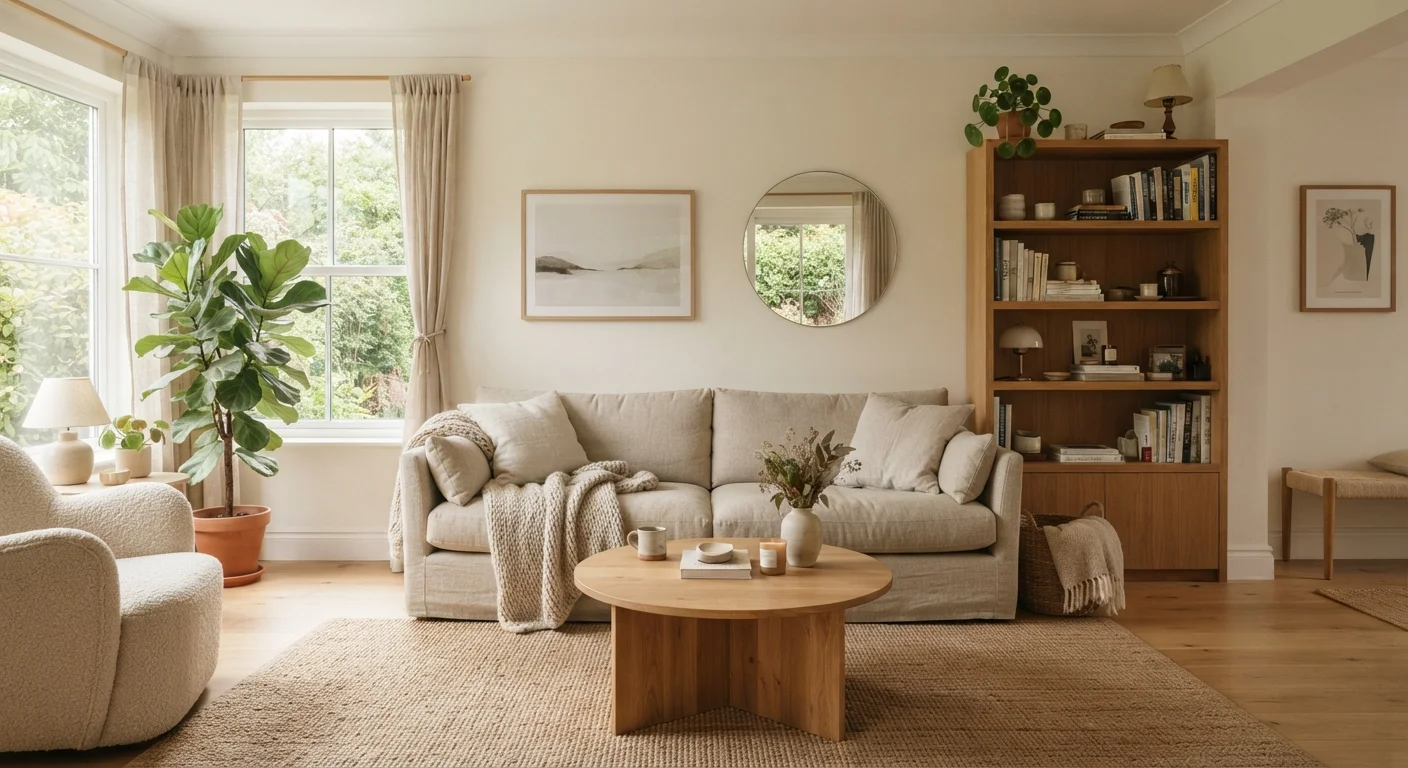
The sparse, all-white aesthetic associated with minimalism is one design expression of it - popular in certain corners of architecture and social media - but it isn't prescriptive. A home can have patterned textiles, houseplants, artwork, and well-loved furniture and still operate on minimalist principles if every element is there because it genuinely contributes to how the space looks and functions. Minimalism applied to organization is about reducing friction and excess, not stripping away comfort or character.
Myth
Decluttering is only worth it if you can donate or sell everything you remove.
Fact
The primary benefit of decluttering is the space and clarity it creates - what happens to removed items is secondary.
Waiting until you have time to list items online, find the right donation recipient, or organize a yard sale is one of the most common reasons decluttering stalls. Some items will have resale value; many won't. Recycling, responsible disposal, and straightforward donation to the nearest drop-off location are all valid outcomes. Don't let the perfect distribution plan prevent you from making progress. The value comes from what leaves your home, not from optimizing where it goes.
Myth
Minimalism requires spending money on storage systems and matching containers.
Fact
Organization doesn't require purchasing anything new - using what you already have is often just as effective.
The container and storage industry has done an effective job linking "getting organized" with buying new products. But repurposing shoeboxes, reusing grocery bags, or simply grouping like items together on an existing shelf can achieve the same functional result. Before purchasing organizers, complete a first pass of decluttering - you may find you need far less storage than you thought, and that existing containers or furniture are sufficient once excess items are removed. Just as financial myths can keep households from making real progress, spending to organize before decluttering often adds clutter rather than reducing it.
What Actually Makes Decluttering Stick
Correcting the myths is only half the work. Lasting organization depends on building systems that match how your household actually functions - not how you imagine it should function in theory.
One common reason people declutter and then re-clutter is that they treat it as a one-time event rather than an ongoing practice. Why organized homes don't stay that way explores this in depth, but the short version is that without a reliable system for where things go, items accumulate by default.
Another factor is choosing an organizational philosophy that fits your space. Whether you prefer dedicated storage zones or distributing items near where they're used, both approaches can work - and comparing these two methods can help you pick one suited to your home.
80%
Of home items rarely or never used
Professional organizers commonly estimate that the majority of household possessions are used infrequently, suggesting most homes have significant room to reduce without feeling the loss.
40%
Of housework attributed to excess clutter
Organizational research has suggested that clutter substantially increases time spent on cleaning and tidying, as items must be moved, sorted, and worked around repeatedly.
Paper is also one of the most underestimated clutter sources. Mail, school forms, receipts, and instruction manuals pile up fast. Managing paper clutter specifically often makes a dramatic difference in how controlled a home feels overall.
The goal isn't a showroom. It's a home where you can find what you need, feel comfortable in your space, and spend less time managing your surroundings. That's achievable without throwing everything out - and without buying into myths that make the whole project feel harder than it is.
Decluttering Isn't a One-Time Fix
Even after a thorough declutter, items will accumulate again without a system in place to manage incoming goods. This doesn't mean the effort was wasted - it means maintenance habits are just as important as the initial clear-out. Building simple routines around what comes into your home (and what leaves it) is what separates a temporarily tidy space from one that stays functional long term.
The content provided on our blog site traverses numerous categories, offering readers valuable and practical information. Readers can use the editorial team’s research and data to gain more insights into their topics of interest. However, they are requested not to treat the articles as conclusive. The website team cannot be held responsible for differences in data or inaccuracies found across other platforms. Please also note that the site might also miss out on various schemes and offers available that the readers may find more beneficial than the ones we cover.