

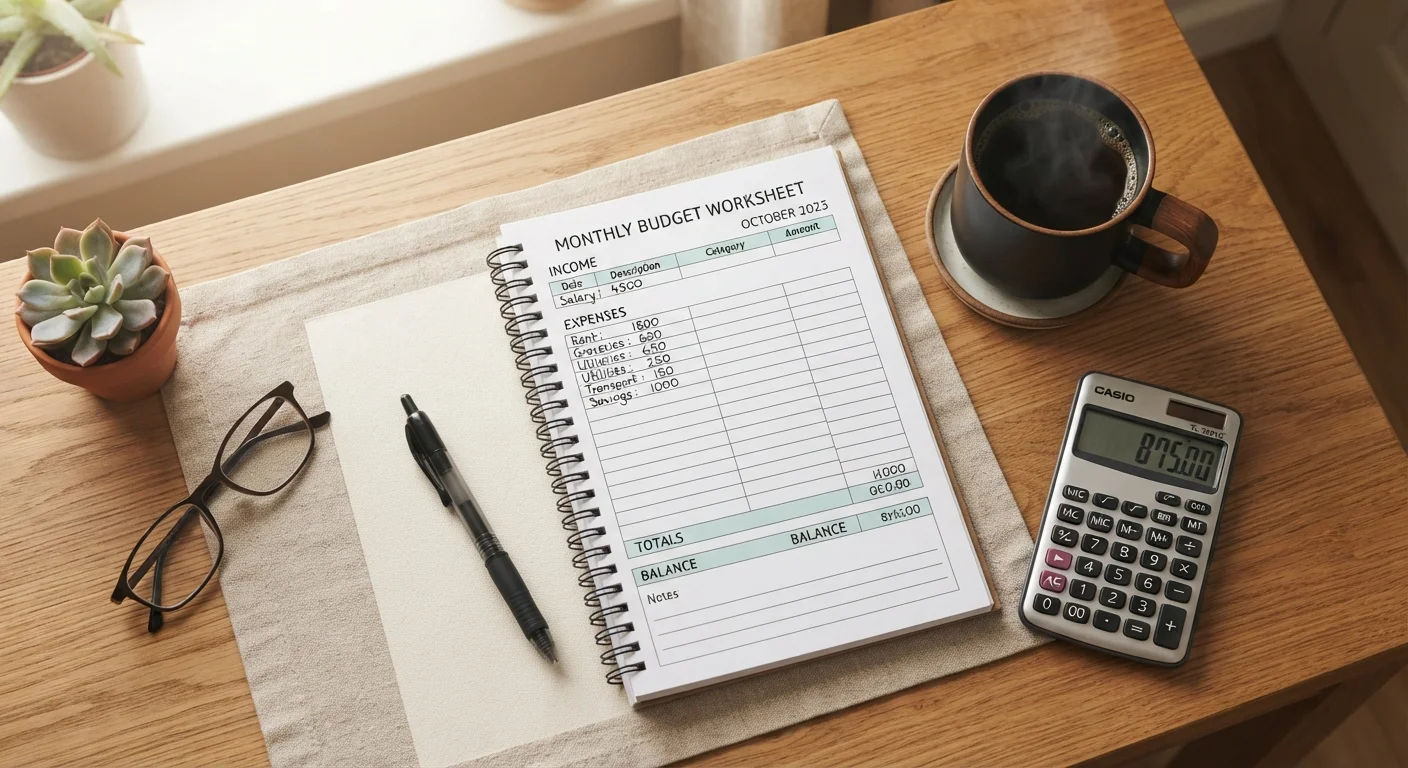
Summary
18 items · 30-60 minutes
Why a Monthly Reset Matters
Most budgets don't fail because the math was wrong - they fail because life keeps moving and the budget doesn't move with it. A one-time budget setup is a starting point, not a finished product. If you've never built one before, our beginner's budgeting guide covers the fundamentals.
A monthly reset is a short, structured routine - typically 30 to 60 minutes - where you close out the previous month, take stock of what actually happened, and configure your plan for the month ahead. Think of it less like a report card and more like a navigation check: you confirm where you are, then adjust your route.
This kind of regular review is what separates households that get traction from those who feel like they're always starting over. If your budget has a habit of falling apart mid-month, the reasons are usually predictable and fixable.
Close Out Last Month
Assess Savings and Debt Progress
Plan for the Month Ahead
Household Alignment and Follow-Through
Tools You'll Need
You don't need specialized software to run a monthly reset - a notebook and bank statements will get you through it. That said, having a few reliable tools in place makes the process faster and more consistent.
Bank and Credit Card Statements
Your primary source of truth for what was actually spent - digital access or paper printouts both work.
Budget Spreadsheet or Notebook
Used to record planned versus actual spending across all categories for each month.
Personal Finance App
Can automate transaction categorization and make month-over-month comparisons easier to see at a glance.
Calendar or Planner
Helps you map upcoming irregular expenses and schedule your next reset session.
Making the Reset Stick
Schedule your reset for the same time each month - last Saturday of the month, first Sunday, whatever fits your household. Treat it like a recurring appointment, not a chore you squeeze in when you remember. Fifteen minutes of prep (pulling up your bank account, grabbing your notebook) beforehand makes the session itself run smoother.
One area that catches most households off guard: irregular expenses. Car registration, annual subscriptions, medical copays, back-to-school supplies - these aren't monthly costs, but they hit the budget hard when unplanned. Our guide on irregular expenses and how to plan for them is worth reading alongside this checklist.
For a deeper dive into what to review at month's end - including savings progress and upcoming bills - pair this checklist with the end-of-month financial check-in. And if you want a bigger-picture view of debt and savings once a year, see the annual debt and savings health check.
Don't Skip Irregular Expenses
One of the most reliable ways a budget breaks down is treating every month as identical. Car maintenance, medical copays, gift-giving seasons, and annual renewals all show up unevenly throughout the year. If you don't actively scan for what's coming in the next 30 to 60 days during your reset, these costs will hit as surprises - and surprises usually come out of savings or go onto a credit card.
This article is for general informational and educational purposes only and does not constitute personalized financial advice. Consult a qualified financial professional for guidance specific to your situation.
The content provided on our blog site traverses numerous categories, offering readers valuable and practical information. Readers can use the editorial team’s research and data to gain more insights into their topics of interest. However, they are requested not to treat the articles as conclusive. The website team cannot be held responsible for differences in data or inaccuracies found across other platforms. Please also note that the site might also miss out on various schemes and offers available that the readers may find more beneficial than the ones we cover.