

What Envelope Budgeting Is - and Why It Still Works
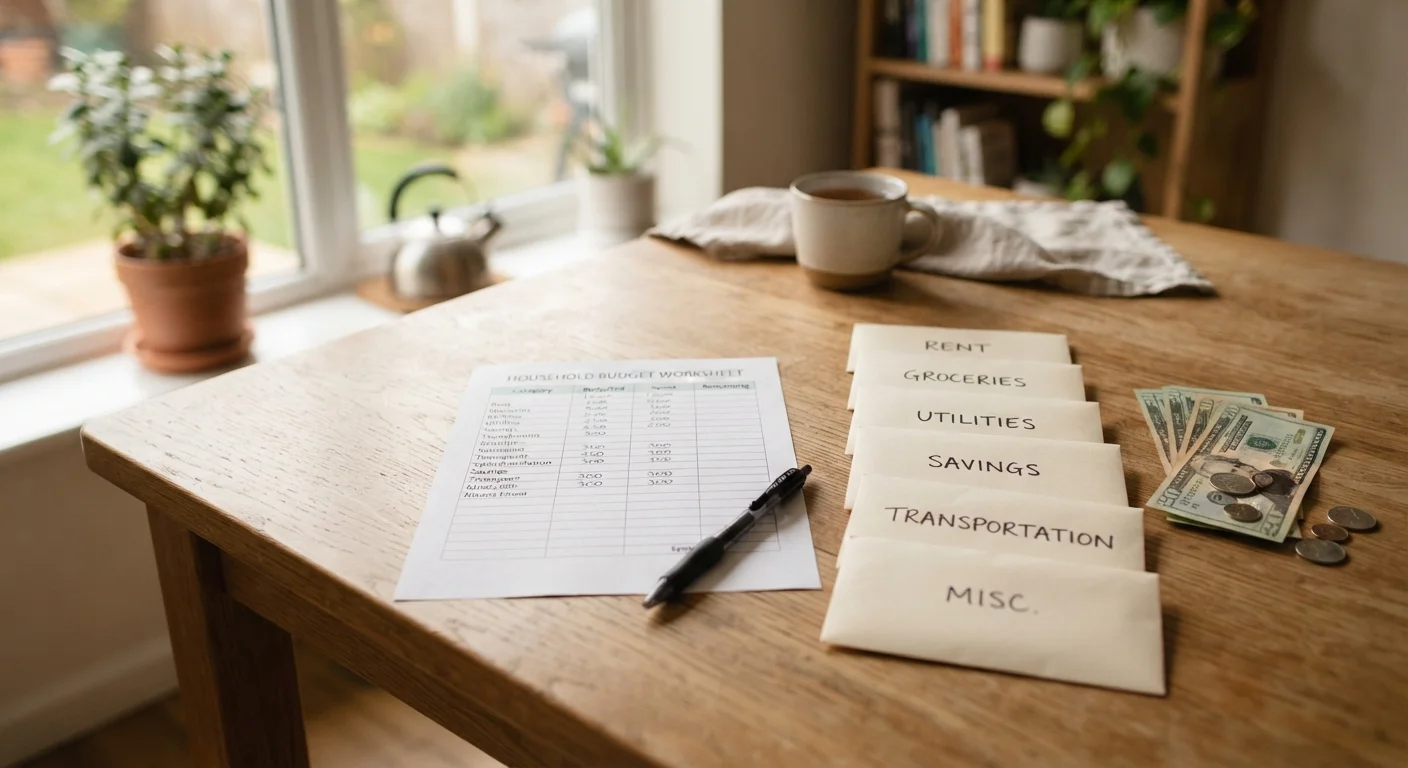
The envelope method is simple by design: you divide your take-home pay into categories - groceries, gas, dining out, utilities - and you only spend what you've physically (or digitally) set aside for each one. When an envelope is empty, spending in that category stops until the next pay period.
The original version used actual cash stuffed into labeled envelopes. That tactile limit - feeling the money thin out - is what made it effective for so many households. But a modern family running on debit cards, autopay, and streaming subscriptions needs to adapt the structure without losing the discipline behind it.
For a broader look at how this fits into an overall plan, see our complete household budgeting guide. If you're weighing this approach against zero-based budgeting, our side-by-side comparison can help you decide.
What You Need Before You Start
Before you build your envelopes, you need a clear picture of two things: what comes in each month, and what regularly goes out. Don't guess - pull the last two or three months of bank and credit card statements and average your actual spending by category.
What you will need
Physical cash envelopes
Provides a tangible spending limit for variable categories like groceries and dining out.
Spreadsheet (e.g., Google Sheets or Excel)
Lets you create and track digital envelopes without handling cash - useful for card-based spending.
Budgeting app with envelope or category features
Automates category tracking and sends alerts when you're nearing a spending limit.
Bank or credit card statements (2-3 months)
Used to set realistic spending limits based on actual household behavior rather than estimates.
How to Build and Run Your Envelope System
Follow these steps to set up a system that fits how your household actually spends money today - whether you prefer cash, a spreadsheet, or an app.
List every spending category your household uses
Start with fixed expenses - rent or mortgage, car payment, insurance premiums - then list your variable categories: groceries, gas, dining out, clothing, household supplies, entertainment, and personal spending money. Don't forget irregular costs like car maintenance, medical copays, or annual subscriptions. Each of these needs its own envelope.
Assign a dollar amount to each category
Use your statements from the past two to three months to set limits that reflect real spending, not wishful thinking. Add up your category totals and make sure they don't exceed your monthly take-home pay. If they do, you'll need to trim before moving on - not after the month starts.
Create a separate envelope for irregular expenses
Irregular expenses - car repairs, medical bills, holiday gifts, annual fees - derail more budgets than overspending on groceries does. Calculate your typical annual cost for these items, divide by 12, and set aside that amount each month in a dedicated category. This is sometimes called a sinking fund. When the irregular expense hits, the money is already there.
Choose physical cash, digital tracking, or both
If most of your variable spending happens at physical stores, cash envelopes can work well - the physical limit is a strong behavioral cue. If you rely on debit or credit cards, create digital envelopes in a spreadsheet or a budgeting app with category-limit features. Some households use cash only for the categories most prone to overspending (like dining out or personal spending) and track the rest digitally. For a fuller comparison of tracking tools, see our pen-and-paper vs. spreadsheets vs. apps guide.
Track spending throughout the month
Every time you spend from a category, record it - deduct from the physical cash or update the digital balance. This doesn't need to take more than a few minutes a day. The act of tracking is what creates awareness, and awareness is what changes behavior.
Reset and adjust at the end of each pay period
At the end of each month or pay cycle, review what happened in each envelope. Note which categories ran out early and which had money left over. Adjust limits where needed for the next cycle. Leftover money in variable envelopes can roll over, be moved to savings, or be redistributed - decide this rule upfront so it doesn't become a source of conflict.
For help accounting for irregular bills like car repairs or annual subscriptions, see our article on irregular expenses most households forget to plan for.
Making It Stick Over Time
The most common reason envelope budgets fail isn't the method - it's skipping the monthly reset. At the end of each pay period, sit down for 10-15 minutes, refill your envelopes, and adjust any categories that were consistently over or under. If groceries ran dry by week three every month, the limit was unrealistic, not your willpower.
Households with two incomes or shared finances benefit most when both people agree on category amounts before the month starts - not after one partner has already overspent. A quick weekly check-in (even just a glance at balances together) keeps small overruns from turning into a budget blowup.
For more practical daily money habits, explore our Everyday Money Tips hub. And if debt payoff or building savings is your next priority, our Saving & Debt hub offers concrete next steps.
Give Yourself a 'Flex' Envelope
Even the most disciplined household will hit unexpected small expenses - a birthday card, a last-minute school supply run, a parking meter. A small miscellaneous or 'flex' envelope (even $20-$40 per month) absorbs these without forcing you to raid another category. It's not a slush fund - it's a pressure valve that keeps the system from feeling punishing.
The content provided on our blog site traverses numerous categories, offering readers valuable and practical information. Readers can use the editorial team’s research and data to gain more insights into their topics of interest. However, they are requested not to treat the articles as conclusive. The website team cannot be held responsible for differences in data or inaccuracies found across other platforms. Please also note that the site might also miss out on various schemes and offers available that the readers may find more beneficial than the ones we cover.