

Summary
18 items · 20–40 minutes
Why Preparation Matters Before the Appointment
Vet appointments are typically short — often 20 to 30 minutes — and it's easy to forget important details once you're in the exam room. A little preparation beforehand means your vet gets the full picture faster, and you leave with clearer answers.
This checklist is organized into what to bring, what observations to share, and what questions to ask. Whether it's a routine wellness exam or a concern-driven visit, working through these items ahead of time makes every minute count. To understand what your vet is actually evaluating during that visit, see what a typical wellness exam covers.
Emergencies Require Immediate Action
This checklist is intended for routine and scheduled vet visits. If your pet is showing signs of an emergency — difficulty breathing, collapse, uncontrolled bleeding, suspected poisoning, or seizures — do not use this checklist as a preparation step. Contact a veterinary emergency clinic immediately. Time is critical in these situations.
What to Bring to the Vet
Having the right documents and supplies with you removes guesswork and helps your vet make informed decisions. This is especially critical if you're visiting a new clinic or a specialist.
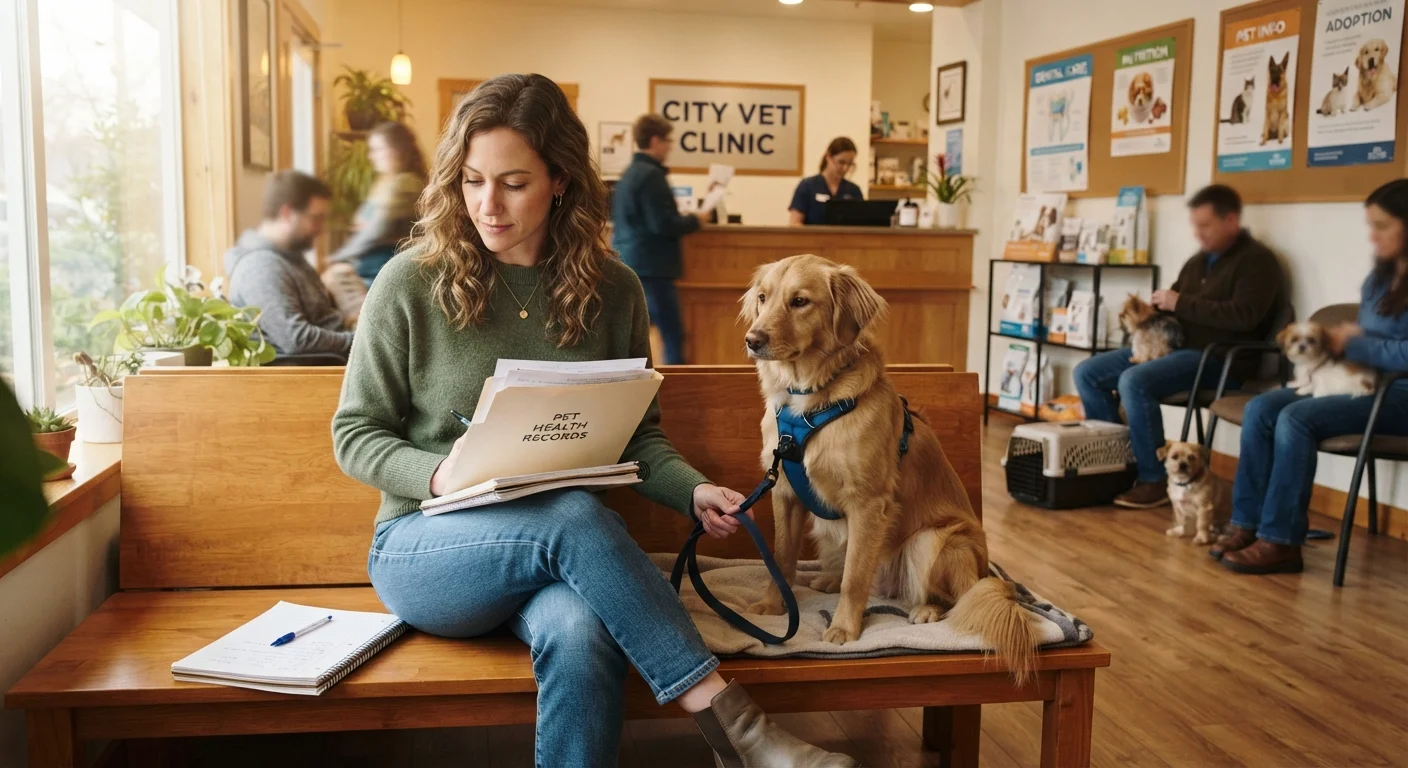
Pet health records folder
Keeps vaccination history, lab results, and past diagnoses organized and easy to hand over at the front desk.
Fecal specimen container
Required for intestinal parasite screening; many clinics provide these — call ahead to confirm.
Medication list (written or printed)
Ensures your vet has accurate dosage and frequency details for every product your pet is currently taking.
Smartphone or camera
Useful for showing photos or short videos of intermittent symptoms your pet may not display during the exam.
Notepad or notes app
Helps you record your vet's instructions and follow-up recommendations accurately during the appointment.
Checklist: Records, Observations, and Questions
Use the groups below to prepare in the days before your appointment. The observation items in particular benefit from notes kept over time — a few sentences jotted down across the week before the visit are more useful than trying to recall everything on the day.
For broader context on building good habits between visits, common home-care gaps to watch for is worth reviewing alongside this checklist. Parasite prevention is one area many owners overlook — learn about flea, tick, and heartworm prevention before your appointment so you can discuss your pet's current protocol confidently.
Documents and Records to Bring
Samples and Physical Items
Behavioral and Health Observations to Share
Questions to Ask Your Vet
Don't Wait Until the Visit to Recall Symptoms
Memory of intermittent symptoms fades quickly, especially for things that happen at night or only occasionally. Keep a simple running note on your phone whenever you notice something new — even a one-line entry with the date helps your vet identify patterns. If your pet seems distressed or a symptom is worsening rapidly, call the clinic before the scheduled appointment rather than waiting.
Preventive care looks different at each life stage. If you want a broader roadmap, preventive care from puppyhood to senior years outlines what to expect as your pet ages.
This article is for general informational purposes only and does not constitute veterinary or medical advice. Always consult a licensed veterinarian for guidance specific to your pet's health and needs.
The content provided on our blog site traverses numerous categories, offering readers valuable and practical information. Readers can use the editorial team’s research and data to gain more insights into their topics of interest. However, they are requested not to treat the articles as conclusive. The website team cannot be held responsible for differences in data or inaccuracies found across other platforms. Please also note that the site might also miss out on various schemes and offers available that the readers may find more beneficial than the ones we cover.