

More Than a Quick Once-Over
Many pet owners think of the annual vet visit as a formality — a quick weigh-in and a round of vaccines. In practice, a thorough wellness exam involves a systematic evaluation of your pet's major body systems, often covering ten or more distinct areas in a single appointment. Understanding what that exam includes helps you appreciate its value and participate more meaningfully in the conversation with your vet.
The exam typically begins with a review of your pet's history — medications, diet, activity level, and any changes you've noticed at home. This context shapes how the vet interprets everything that follows, which is why your observations matter as much as the physical findings. See our practical checklist for vet visits to prepare effectively before your next appointment.
~70%
Adult pets with some degree of dental disease
According to the American Veterinary Medical Association, periodontal disease is one of the most common conditions identified during routine wellness exams in adult dogs and cats.
2x
Recommended exam frequency for senior pets
Many veterinary organizations recommend twice-yearly exams for pets over age seven, given that health status can change significantly within a six-month window in older animals.
1 in 3
Pets diagnosed with a serious condition annually
Industry estimates suggest a substantial proportion of pets have an undiagnosed health condition at the time of their annual exam, underscoring the value of routine screening even in apparently healthy animals.
What the Physical Exam Actually Assesses
A standard wellness exam moves methodically from nose to tail. Here's what a vet is evaluating at each stage:
- Weight and body condition: Vets use a body condition score — a standardized scale — rather than weight alone to assess whether your pet is at a healthy size. Gradual weight changes that owners miss at home can signal metabolic, hormonal, or dietary issues.
- Eyes, ears, and nose: Signs of infection, discharge, cloudiness, or ear inflammation are assessed. These are often early indicators of allergies or systemic conditions.
- Mouth and teeth: Dental health is evaluated at every wellness visit. Periodontal disease affects the majority of adult pets and can have consequences beyond the mouth. For more on what's at stake, see our article on dental health in dogs and cats.
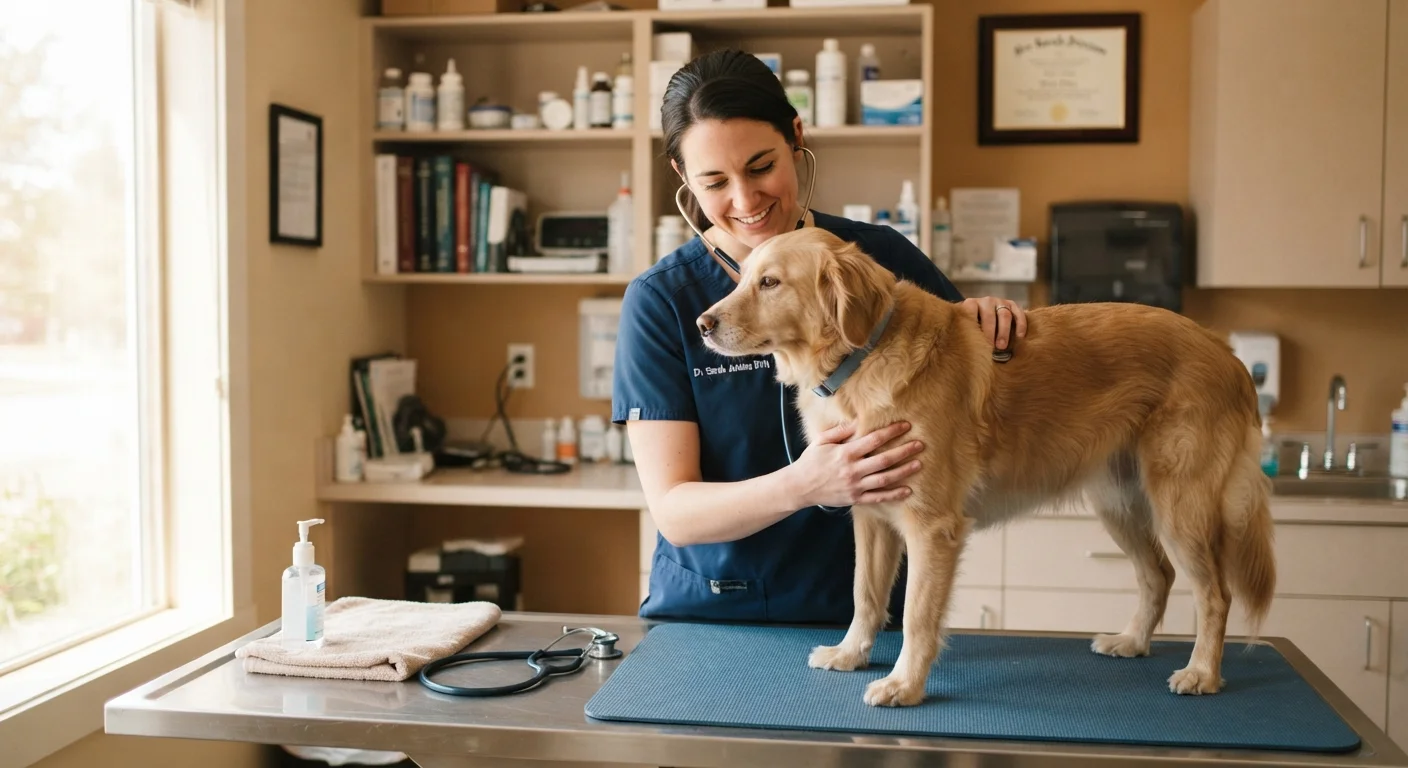
- Heart and lungs: The vet listens for murmurs, irregular rhythms, or abnormal breath sounds using a stethoscope. Early cardiac changes are often detectable before any symptoms appear.
- Abdomen: Manual palpation checks organ size and position, and can reveal tenderness, masses, or enlargement in the liver, spleen, or kidneys.
- Skin and coat: The texture, thickness, and condition of your pet's coat — along with any lumps, lesions, or parasites — are examined across the body.
- Lymph nodes and musculoskeletal system: Swollen nodes may indicate infection or immune activity; joint flexibility and gait observations catch early mobility changes, especially in older pets.
Take Notes Before the Appointment
In the week leading up to your pet's exam, jot down any changes you've noticed — eating habits, energy levels, unusual lumps, or changes in elimination. Even small observations give your vet useful context that a physical exam alone can't provide. A few written notes take two minutes to prepare and can meaningfully shape the conversation.
Screenings, Vaccines, and Preventives
Beyond the physical exam, your vet may recommend additional screenings based on your pet's age and risk profile. Blood panels — including a complete blood count and chemistry panel — establish organ function baselines and can reveal early signs of kidney disease, liver changes, or thyroid imbalance. Fecal testing screens for intestinal parasites even in pets that appear healthy.
Vaccines are reviewed and updated as needed, but the approach is individualized. Not every pet receives the same shots at every visit. Your vet considers your pet's lifestyle, location, and prior immunity when recommending what's due. For a deeper look at how those decisions are made, our guide on core vs. non-core vaccines explains the reasoning vets apply.
Parasite prevention — heartworm, fleas, ticks — is also reviewed. Recommendations may shift based on regional risk patterns, your pet's outdoor exposure, and whether they live with other animals.
How Exams Change Across Life Stages
What a vet prioritizes during a wellness exam shifts meaningfully as your pet ages. For puppies and kittens, the focus is on establishing a healthy start: a series of vaccines, parasite control, nutritional guidance, and early socialization conversation. Spay and neuter timing is also typically discussed during these early visits.
Adult pets in their prime years benefit most from the early-detection function of annual exams. Because pets age faster than humans and tend to mask discomfort, subtle changes in bloodwork or weight that appear minor in isolation can signal the beginning of a manageable condition — if caught early.
Senior pets — generally dogs and cats over seven, though this varies by breed and size — often benefit from twice-yearly visits. At this stage, vets may add joint assessments, more frequent bloodwork, blood pressure monitoring, and cognitive health observations. The stage-by-stage guide to preventive pet care outlines what to expect at each phase of your pet's life.
Getting the Most from the Appointment
The wellness exam is a two-way conversation. Vets rely on your observations to complete the picture that the physical findings provide. Changes in water intake, sleep patterns, appetite, or bathroom habits — even ones that seem minor — are worth mentioning. Many owners assume these details aren't important unless dramatic; in practice, they often are.
Between annual visits, consistent home care also plays a role in your pet's health trajectory. Common well-intentioned habits can quietly affect your pet's long-term wellbeing — our article on what pet owners often get wrong between vet visits covers those pitfalls in detail.
This article provides general educational information about veterinary wellness care and is not a substitute for professional veterinary advice. Always consult a licensed veterinarian for guidance specific to your pet's health needs.
Frequently Asked Questions
Most wellness exams last 30 to 60 minutes, depending on your pet's age, history, and any concerns you raise. Senior pets or those with complex histories may require more time. Arriving with notes about recent behavioral or dietary changes helps the visit run efficiently.
A wellness exam is proactive — it evaluates a seemingly healthy pet to establish baselines and catch early issues. A sick visit is reactive, addressing a specific symptom or condition. The two serve different purposes and are typically scheduled separately.
Yes. Indoor pets can still develop dental disease, weight problems, parasites, and organ conditions that have nothing to do with outdoor exposure. Regular exams ensure these issues are identified regardless of your pet's lifestyle.
Not necessarily. Vaccine schedules depend on your pet's age, prior vaccination history, lifestyle, and regional disease risk. Your vet will review what's due and recommend only what's appropriate — not every pet receives shots at every visit.
Many veterinarians recommend transitioning to twice-yearly exams for dogs and cats around age 7, though this varies by species, breed, and individual health status. Your vet can advise the right schedule for your pet specifically.
Bring any prior vaccination records, a list of current medications or supplements, and notes on recent changes in appetite, behavior, water intake, or elimination habits. A fresh stool sample may also be requested for parasite screening.
The content provided on our blog site traverses numerous categories, offering readers valuable and practical information. Readers can use the editorial team’s research and data to gain more insights into their topics of interest. However, they are requested not to treat the articles as conclusive. The website team cannot be held responsible for differences in data or inaccuracies found across other platforms. Please also note that the site might also miss out on various schemes and offers available that the readers may find more beneficial than the ones we cover.