

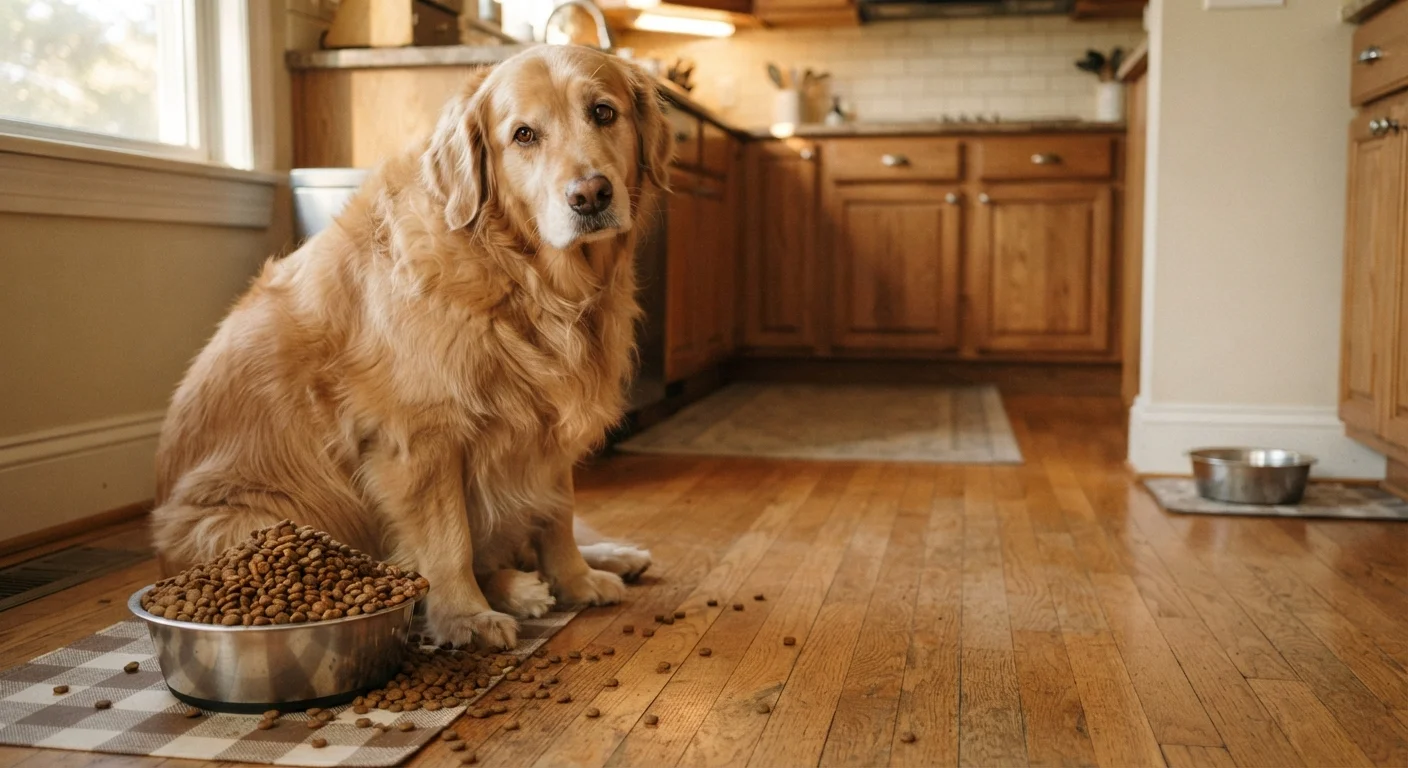
Why Pet Obesity Is More Common Than Most Owners Realize
Pet obesity has become one of the most widespread and underdiagnosed health concerns in American households. Veterinary organizations estimate that more than half of adult dogs and cats in the US carry excess body weight. Yet a significant number of their owners describe them as having a healthy or normal build — a gap that reflects how gradual and normalized weight gain can become.
Unlike sudden illness, obesity develops slowly. A pet that gains a pound or two each year may not look dramatically different month to month, but over several years that accumulation carries real consequences. Excess fat tissue is metabolically active, driving chronic low-level inflammation and placing additional stress on joints, the cardiovascular system, and organ function. Conditions such as osteoarthritis, type 2 diabetes in cats, and breathing difficulties in flat-faced breeds are all made meaningfully worse by excess weight.
Understanding why this happens — and learning to spot it early — is one of the most practical things an owner can do for their pet's long-term wellbeing. For a broader look at the home care habits that quietly affect pet health, see what pet owners often get wrong at home between vet visits.
59%
US dogs classified as overweight or obese
According to the Association for Pet Obesity Prevention's annual clinical surveys of veterinary patients across the United States.
61%
US cats classified as overweight or obese
The Association for Pet Obesity Prevention has tracked feline obesity rates through annual veterinary surveys conducted at clinics nationwide.
How to Assess Your Pet's Body Condition at Home
Veterinarians use a standardized tool called the Body Condition Score (BCS) — typically a 9-point scale — to evaluate a pet's weight relative to its frame. You don't need a clinical setting to apply its core principles. Two simple checks can give you useful information between vet visits.
The Rib Check
Place your hands flat on your pet's ribcage and apply gentle pressure. You should be able to feel individual ribs without pressing hard — similar to how knuckles feel when you make a loose fist. If you have to press firmly to find the ribs, or can't distinguish them at all, excess fat is likely present. If the ribs are sharply prominent with no padding, the animal may be underweight.
The Profile and Overhead View
Looking at your pet from the side, there should be a visible abdominal tuck — the belly rising up behind the ribcage rather than hanging level or drooping. Viewed from above, most healthy dogs and cats show a discernible waist between the ribcage and hips. A uniformly wide or oval shape from above is a common sign of excess weight.
These checks are informational starting points, not diagnostic tools. If your assessment raises concerns, your veterinarian can provide a precise BCS and guide next steps. Because overweight pets often move less and may mask discomfort, it's also worth reviewing the signs your pet may be in pain and what makes it easy to miss.
Common Mistakes That Lead to Pet Weight Gain
Most pet weight problems don't stem from negligence — they come from well-meaning habits that quietly add up over time. Recognizing these patterns is the first step toward changing them.
Free-feeding dry food throughout the day without measuring portions.
Why it happens: Many owners assume pets will self-regulate, or find it convenient to keep a bowl full at all times. Dry kibble is also calorie-dense, so even small overages add up quickly.
Treating treats as calorie-free rewards and giving them without tracking frequency.
Why it happens: Treats are associated with bonding and training, so owners understandably give them generously. The caloric contribution of treats is easy to overlook, especially when they seem small.
Using the current weight — rather than ideal weight — to calculate food portions.
Why it happens: Feeding guides on pet food labels are based on body weight, and owners naturally use the number they see on the scale today. For overweight pets, this sustains or worsens the problem.
Assuming a pet is at a healthy weight because they appear similar to other pets of the same breed.
Why it happens: When obesity is common in a breed or neighborhood, heavier builds start to look normal by comparison. Owners calibrate expectations visually against what they see around them.
Reducing exercise without adjusting caloric intake as pets age or become less active.
Why it happens: Activity levels naturally decline with age, after illness, or following spaying and neutering — but owners often continue feeding the same portions without realizing the caloric math has changed.
This article is for general informational purposes only and is not a substitute for professional veterinary advice. Always consult a licensed veterinarian for guidance specific to your pet's health needs.
The content provided on our blog site traverses numerous categories, offering readers valuable and practical information. Readers can use the editorial team’s research and data to gain more insights into their topics of interest. However, they are requested not to treat the articles as conclusive. The website team cannot be held responsible for differences in data or inaccuracies found across other platforms. Please also note that the site might also miss out on various schemes and offers available that the readers may find more beneficial than the ones we cover.