

Our Verdict
Neither group classes nor private sessions are universally superior — the right format depends on your dog's temperament, your specific goals, and your budget. Group classes build confidence in social settings and cost less overall, while private training delivers focused, customized support that reactive or fearful dogs often need. Many owners find the most lasting results by combining both across different training stages.
| Best for | Recommended |
|---|---|
| Puppies and dogs without behavioral concerns | Group Classes |
| Dogs with reactivity, fear, or specific behavioral issues | Private Training Sessions |
| Owners on a tighter budget who want structured guidance | Group Classes |
| Owners who want an individualized training plan and direct feedback | Private Training Sessions |
What Each Format Actually Involves
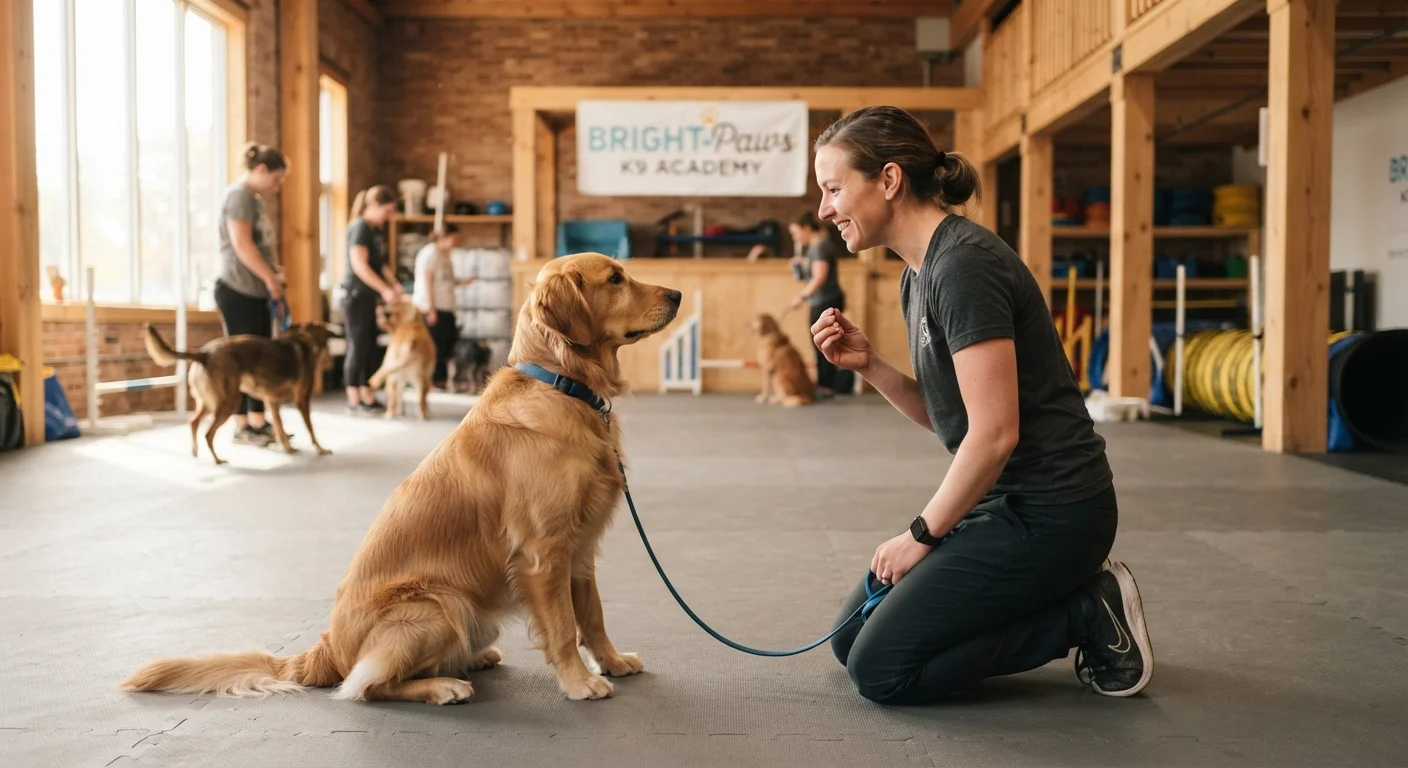
Group classes typically involve four to eight dogs and their handlers learning together under one trainer. Sessions follow a set curriculum — common topics include sit, stay, loose-leash walking, and recall — and usually run four to six weeks. The shared environment is part of the point: dogs practice behaviors around distractions, and owners can observe each other's approaches.
Private training sessions are one-on-one meetings between a trainer, the owner, and the dog. The trainer assesses your specific situation during the first session and builds a plan around it. Sessions can happen in your home, at a facility, or outdoors depending on what behavior you're working on. Because the trainer's full attention stays on your dog and handler team, pacing adjusts in real time.
Both formats can use positive reinforcement methods — rewarding desired behavior rather than punishing unwanted behavior — which is the approach most widely supported by animal behavior science. The format itself doesn't determine training quality; the trainer's knowledge, experience, and methods do.
Where Group Classes Have a Real Edge
Socialization is the clearest advantage of group training. Dogs learn to maintain focus and follow cues when other dogs, people, and sounds are present — a skill that transfers directly to real-world situations like walks, vet visits, and dog parks. Practicing in a controlled, structured setting with other animals helps dogs generalize their learning beyond the living room.
Cost is another meaningful factor. Group classes typically cost significantly less per hour of instruction than private sessions, making them more accessible for households managing tight budgets. If your dog is a puppy without significant behavioral concerns, a well-structured group class often delivers strong foundational skills at a reasonable investment.
Consider Starting Private, Then Graduating to Group
If you're unsure which format suits your dog, a common and effective approach is to start with a few private sessions to establish foundational behaviors, then transition into a group class once your dog can focus reliably around distractions. Many trainers recommend this progression for dogs with mild reactivity or confidence challenges. It gives your dog a scaffold before introducing the social complexity of a shared class environment.
Group classes also offer something easy to overlook: community. Sharing the experience with other owners navigating the same learning curve can reduce the isolation that comes with training challenges and give you a built-in support network.
Where Private Training Sessions Pull Ahead
When a dog has specific behavioral concerns — reactivity to other dogs or strangers, resource guarding, separation anxiety, or a history of trauma — a group environment can be counterproductive, even stressful. Private training lets the trainer meet the dog where they are, working at a pace the dog can handle without the added pressure of unfamiliar animals nearby.
Individualized feedback is the other significant advantage. In a group class, a trainer divides attention among several handler-dog pairs. In a private session, every mechanical cue, timing issue, and handler habit gets addressed. For owners who are new to training or working through a nuanced problem, that level of specificity can compress the learning curve considerably.
| Group Classes | Private Training Sessions | |
|---|---|---|
| Cost per session | Lower overall cost | Higher per-session investment |
| Socialization opportunity | Built-in, structured exposure | Minimal, controlled as needed |
| Individualized attention | Shared among multiple teams | Fully focused on one dog |
| Best for reactive/fearful dogs | Not recommended initially | Strongly preferred |
| Curriculum flexibility | Fixed, structured curriculum | Tailored to specific goals |
| Handler feedback quality | General, less immediate | Detailed, real-time feedback |
Private sessions also work well for dogs that have completed a group class foundation and are ready for more advanced work — things like off-leash reliability, complex tricks, or sport training — that a group curriculum doesn't typically cover.
Factors to Weigh Before Deciding
Consider your dog's current behavior profile first. A relaxed, curious dog who has had positive exposure to other animals is a natural fit for group classes. A dog who lunges, freezes, or becomes overstimulated around other dogs will likely struggle to learn in that environment and may need private sessions to build a foundation first.
Think about your own learning style, too. Some handlers absorb information better by watching others and asking questions in a shared setting. Others benefit from direct, immediate feedback on their own mechanics. Neither preference is wrong, but being honest about it helps you choose a format where you'll actually make progress.
Finally, evaluate the trainer's credentials and methods regardless of format. Look for trainers who use force-free or positive reinforcement-based approaches and hold certifications from established organizations in the field of animal behavior and training. Format matters less than the quality of instruction you receive within it. Just as students choose between different educational structures — a dynamic explored in discussions like homeschooling versus traditional school — dog owners benefit from matching the training structure to their specific needs rather than following a one-size-fits-all rule.
The content provided on our blog site traverses numerous categories, offering readers valuable and practical information. Readers can use the editorial team’s research and data to gain more insights into their topics of interest. However, they are requested not to treat the articles as conclusive. The website team cannot be held responsible for differences in data or inaccuracies found across other platforms. Please also note that the site might also miss out on various schemes and offers available that the readers may find more beneficial than the ones we cover.