

Our Verdict
Homeschooling and traditional schooling each make real demands and offer real rewards. Homeschooling can be a powerful fit for families with the time, resources, and commitment to tailor education to a child's individual needs. Traditional school offers structure, socialization, and professional instruction that many children thrive within. The decision is less about which path is objectively better and more about which aligns with your child's learning profile, your family's capacity, and your long-term educational goals.
Families weighing this decision who want an honest, balanced picture of both options - without pressure toward either direction.
Understanding What Each Path Actually Involves
Choosing between homeschooling and traditional school is one of the more consequential decisions a family can make - and it's rarely straightforward. Both options involve genuine trade-offs, and the right answer depends heavily on your child's learning style, your household's resources, and what you value most in education.
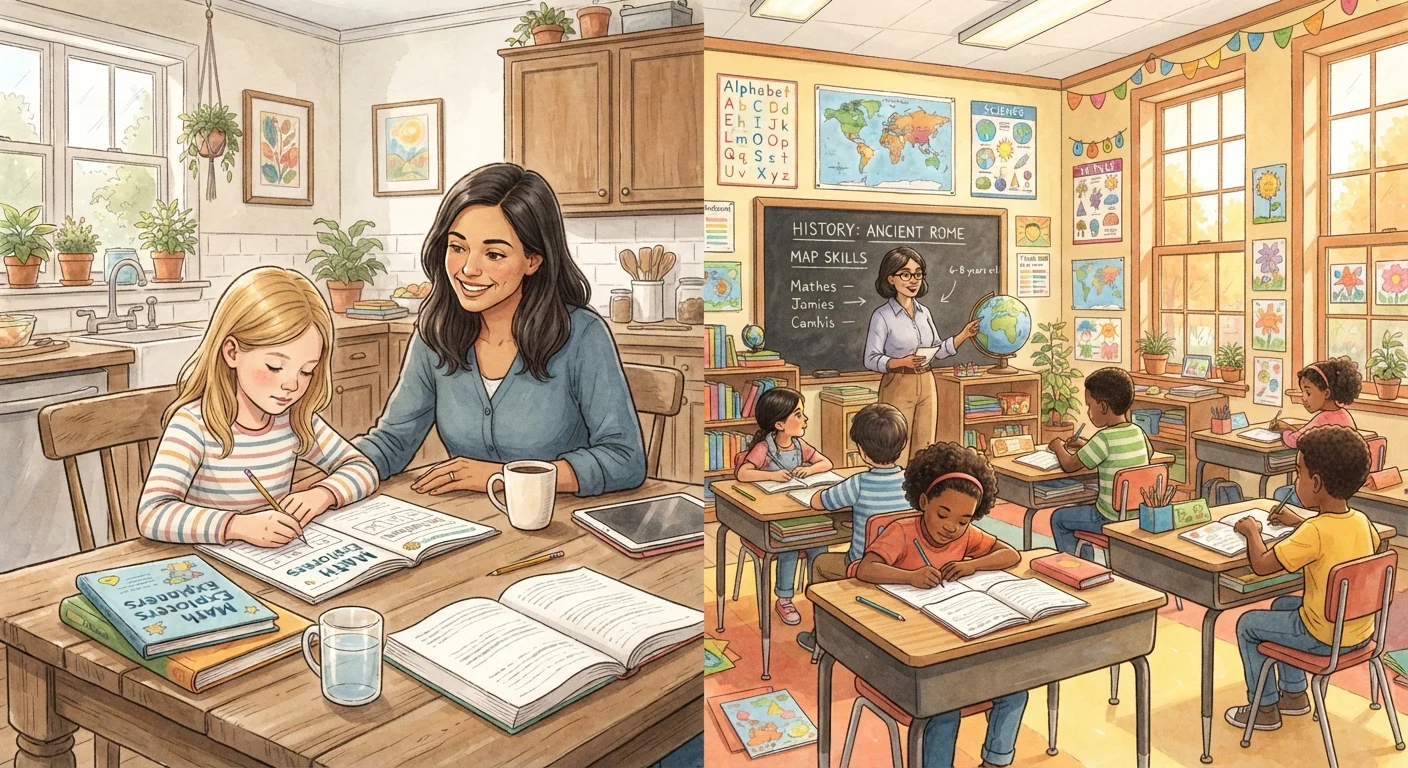
Traditional school - whether public, private, or charter - places children in a structured environment led by credentialed teachers, following a defined curriculum aligned to state standards. Homeschooling, by contrast, shifts primary educational responsibility to the parent or guardian, allowing families to choose curriculum, pacing, and daily schedule. For a closer look at how traditional school types compare among themselves, see how public, private, and charter schools differ.
Before diving into the pros and cons, it's worth noting that homeschooling is legal in all 50 states, but regulations vary widely - from states requiring almost no documentation to others mandating regular assessments or curriculum approval. Always check your state's specific requirements before beginning.
Homeschooling Laws Vary by State
Every US state permits homeschooling, but the requirements differ considerably. Some states require parents to notify the school district, submit curriculum plans, or arrange periodic standardized testing. Others have minimal oversight. Before beginning to homeschool, check your state's department of education website for current, official requirements - regulations can and do change.
The Case for Homeschooling
For some families, homeschooling addresses real gaps that traditional school cannot easily fill.
Curriculum tailored to individual learning style and pace
Homeschooling allows parents to match teaching methods and materials to how their child learns best, which can be especially valuable for children who learn faster, slower, or differently than a standard classroom accommodates.
Flexible scheduling reduces family stress
Families can structure the school day around a child's peak focus times, travel plans, or health needs - a flexibility traditional school calendars cannot offer.
Safe, low-distraction learning environment
For children who struggle with the social dynamics or sensory environment of a traditional classroom, learning at home can reduce anxiety and improve concentration.
Values and worldview can be woven into instruction
Families with specific religious, philosophical, or cultural priorities can integrate those perspectives throughout the curriculum in ways that most schools cannot.
More time for deep interests and project-based learning
Without a fixed period schedule, homeschooled students can spend extended time on subjects they're passionate about or pursue immersive, project-driven approaches.
Homeschooling also gives parents direct visibility into their child's academic progress every day - something that can help identify struggles early. That said, this level of involvement is a double-edged reality: it demands substantial, consistent parental time and energy that not every household can sustain.
The Case for Traditional School
Traditional schooling remains the path most US families follow, and for good reasons that go beyond simple convenience.
Structured daily peer interaction and socialization
Traditional school naturally provides daily contact with a diverse peer group, which supports the development of social skills, conflict resolution, and cooperation in ways that require deliberate effort to replicate at home.
Subject-specialist teachers for every discipline
Schools employ credentialed teachers with expertise in specific subjects - an advantage that becomes more significant in middle and high school when content complexity increases.
Access to extracurriculars, sports, and arts programs
Team sports, school bands, theater programs, and student clubs are embedded in the traditional school experience and can be harder to access outside of it.
No direct tuition cost for public school
Public school is funded through taxes and free at the point of use, allowing parents to remain in the workforce while their children receive structured instruction.
Established support systems for learning differences
Public schools are legally required to provide services for students with documented disabilities or learning differences under IDEA and Section 504, providing structured professional support that families must independently arrange when homeschooling.
It's also worth noting that traditional school schedules and homework loads can create their own friction at home. If nightly conflicts are a recurring issue, research on homework battles and routines offers useful perspective on why they happen and what tends to help.
Financial and Logistical Realities
Cost is a factor families often underestimate on both sides of this decision. Public school is tuition-free, though families may still pay for supplies, activities, and transportation. Homeschooling carries direct costs - curriculum materials, learning resources, and any outside classes or tutors - that can add up quickly. One parent typically needs to reduce or eliminate paid work hours to homeschool effectively, which represents a significant income trade-off.
Families considering homeschooling should build this into a realistic household budget. General guidance on building a workable household budget can help assess whether the financial model is sustainable for your situation.
~3.3M
Homeschooled students in the US
The National Center for Education Statistics estimated approximately 3.3 million homeschooled students in the US as of its most recent survey data.
$700-$1,800+
Estimated annual homeschool curriculum cost per child
Curriculum and materials costs for homeschooling vary widely by approach and grade level, with many families spending additional amounts on co-ops, tutors, and extracurriculars.
Some families find a middle path: enrolling children part-time in homeschool co-ops, community college dual-enrollment programs, or structured after-school enrichment programs that complement home-based instruction.
Planning Ahead: Curriculum, Credits, and High School
The stakes of curriculum choices increase significantly in the middle and high school years. Homeschooled students applying to college need to demonstrate academic rigor through transcripts, standardized tests, portfolios, or dual-enrollment coursework. Traditional school students benefit from structured course sequencing, but families still have important decisions to make. What families often overlook in high school course selection is a useful companion read for parents in either setting as students approach those critical years.
Whichever path you choose, staying engaged in your child's academic trajectory - understanding what they're learning, what's coming next, and where they may need additional support - remains one of the most consistent predictors of educational success.
This article is for general informational and educational purposes only. Homeschooling laws and requirements vary by state; consult your state's department of education for current, jurisdiction-specific guidance before making decisions about your child's schooling.
The content provided on our blog site traverses numerous categories, offering readers valuable and practical information. Readers can use the editorial team’s research and data to gain more insights into their topics of interest. However, they are requested not to treat the articles as conclusive. The website team cannot be held responsible for differences in data or inaccuracies found across other platforms. Please also note that the site might also miss out on various schemes and offers available that the readers may find more beneficial than the ones we cover.