

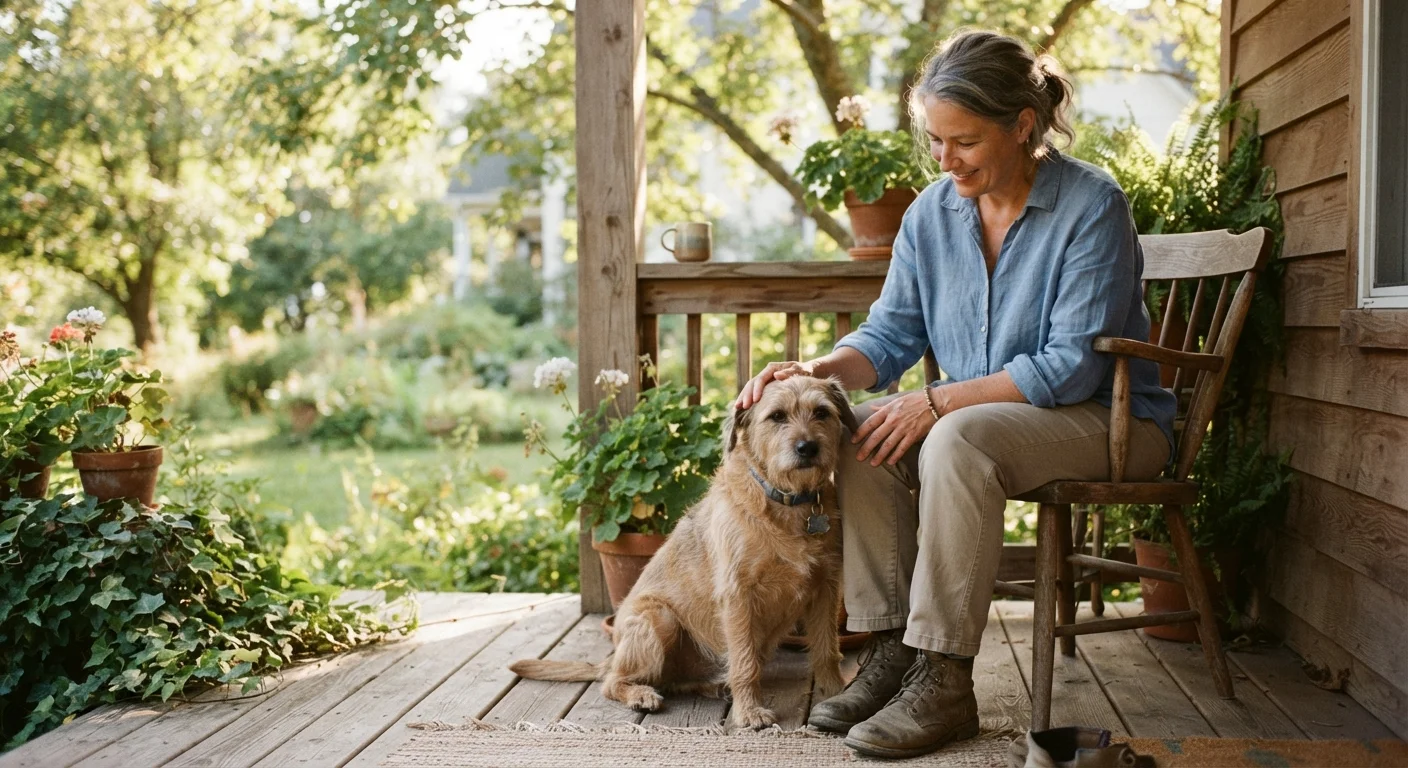
Why Rescue Dogs Need a Different Starting Point
When you adopt a rescue dog, you're working with incomplete information. Some dogs come from loving homes and arrived at the shelter through circumstance. Others may have experienced neglect, inconsistent handling, or limited exposure to everyday stimuli — traffic noise, strangers, other animals. You rarely know which situation applies to yours.
That uncertainty isn't a problem to solve; it's context to respect. Unlike raising a puppy, where you're building habits from scratch, training a rescue dog often means first identifying and working around existing fear responses, learned avoidance, or over-arousal patterns. The first 30 days at home look different for a rescue than for a puppy, and the earlier you accept that, the more effective your approach will be.
The goal in the early weeks isn't to teach commands — it's to help your dog discover that their new environment is safe and that you are predictable. Behavior built on that foundation is far more durable than behavior shaped by pressure or repetition alone.
Best Practices for Training a Dog with an Unknown History
The following practices are grounded in positive-reinforcement principles and adjusted specifically for the rescue context. Apply them in sequence where possible — trust precedes training.
Start with observation, not obedience
Before teaching any cue, spend the first several days simply watching your dog. Note what triggers hesitation, what they avoid, and what helps them settle. This information shapes every training decision that follows and prevents you from inadvertently pushing into fear zones too early.
Use low-pressure, high-value reward sessions
Rescue dogs often need to learn that interacting with a human produces consistently good outcomes before they're motivated to offer new behaviors. Short sessions — two to five minutes — using high-value food rewards build positive associations without fatigue or frustration.
Introduce commands one at a time, slowly
Dogs with unclear histories may have learned that commands precede unpleasant events, making them hesitant to respond. Introducing one cue at a time — and pairing it only with positive outcomes — helps rewrite that association before adding complexity.
Create a predictable daily structure
Unpredictability is one of the primary sources of stress for dogs who may have experienced chaotic environments. Consistent feeding times, walk schedules, and rest periods communicate safety more effectively than any command. A dog that anticipates what comes next can relax enough to learn.
Respect body language signals and stop before shutdown
Signs of stress — yawning, lip licking, turning away, tail tucked — indicate the dog is at or past their threshold. Continuing to train past these signals teaches the dog that their communication is ignored, which erodes trust and can escalate avoidance.
Socialize gradually and at the dog's pace
Many rescue dogs missed the critical socialization window as puppies — unlike the structured window described for early puppy socialization. Adult dog socialization is still possible but requires a slower, sub-threshold approach where the dog is never flooded with stimuli they can't yet handle.
Quick Wins You Can Start Today
You don't need a full training plan to begin making progress. A few small, consistent habits started on day one can meaningfully shift your dog's sense of safety.
For a structured pre-session framework, see the readiness checklist for training sessions, which helps you assess your dog's state before asking anything of them.
Understanding Fear Responses and Regression
Rescue dogs sometimes appear to be making great progress, then suddenly shut down or revert. This is not defiance — it is almost always a stress response. A new sound, a change in your schedule, or an unfamiliar visitor can temporarily overwhelm a dog whose nervous system is still recalibrating.
Regression Is a Signal, Not a Setback
When a rescue dog reverts to earlier behaviors — hiding, refusing food, losing previously learned cues — it almost always reflects a stress response rather than a training failure. Treat regression as information: something in the environment or routine has exceeded the dog's current comfort level. Reduce demands temporarily, return to basics, and give the dog more time in low-stimulus settings before resuming where you left off.
If your dog regularly struggles when left alone, that pattern deserves closer attention. What looks like bad behavior may be genuine distress. The article on separation anxiety in dogs can help you distinguish between anxiety and boredom-driven behavior, and outlines evidence-based approaches for each.
Similarly, if a dog who seemed to be learning suddenly stops responding to familiar cues, the cause is rarely about the training itself. Several common factors — health changes, environment shifts, inconsistency — can explain regression and guide your response.
Once your dog is showing consistent comfort and engagement, establishing a healthy daily routine will help lock in the stability that makes continued learning possible.
This article is for general informational and educational purposes. It is not a substitute for guidance from a certified professional dog trainer or veterinary behaviorist, particularly for dogs showing significant fear, aggression, or anxiety. Consult a qualified professional for individualized support.
The content provided on our blog site traverses numerous categories, offering readers valuable and practical information. Readers can use the editorial team’s research and data to gain more insights into their topics of interest. However, they are requested not to treat the articles as conclusive. The website team cannot be held responsible for differences in data or inaccuracies found across other platforms. Please also note that the site might also miss out on various schemes and offers available that the readers may find more beneficial than the ones we cover.