

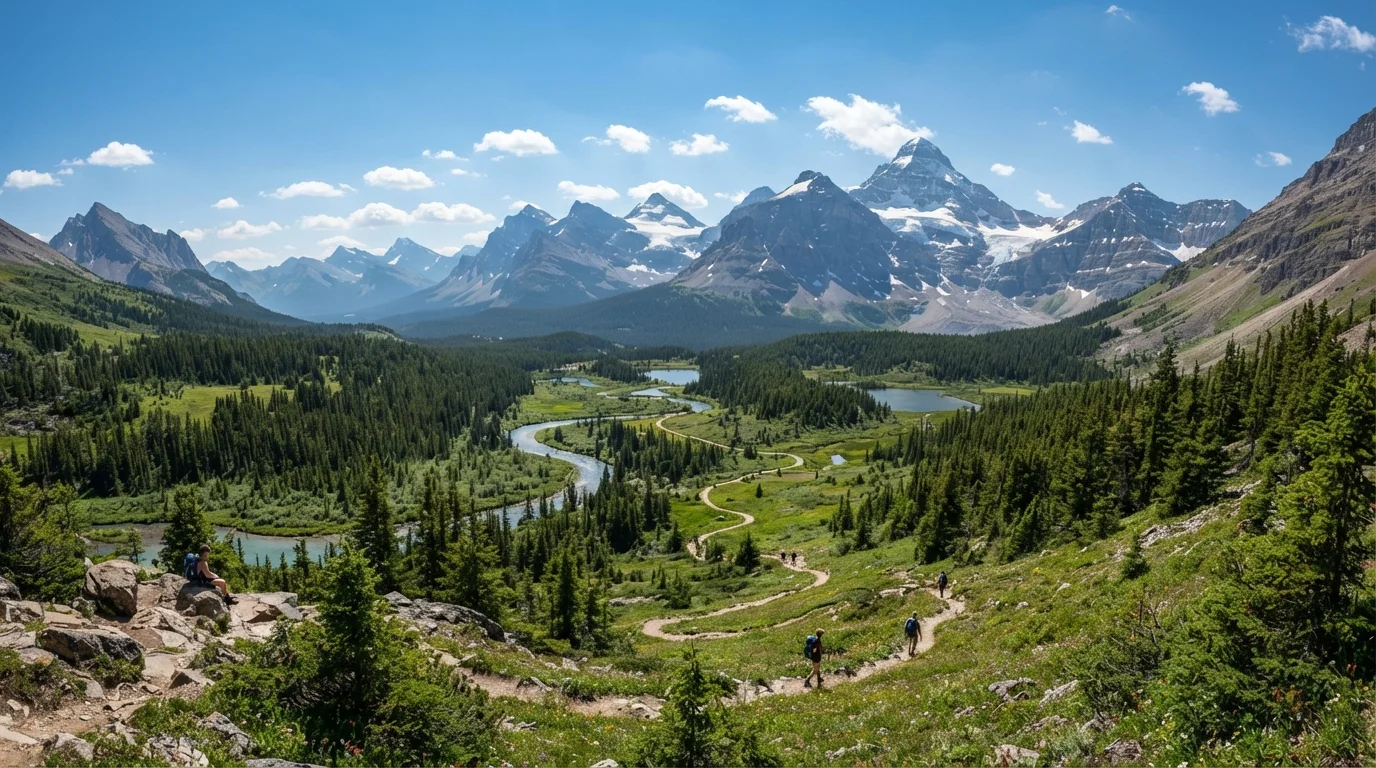
Option A
National Parks
The iconic, federally protected wilderness experience.
Best for: Travelers seeking world-class scenery, major landmarks, and once-in-a-lifetime natural wonders.
Option B
State Parks
The accessible, locally flavored outdoor escape.
Best for: Families wanting nearby nature with lower costs, fewer crowds, and a more relaxed pace.
Who Runs the Parks — and Why It Matters
The most fundamental difference between national and state parks is governance. National parks are managed by the National Park Service (NPS), a federal agency under the U.S. Department of the Interior. Their funding, rules, and preservation standards are set at the federal level and apply uniformly across all 63 designated national parks.
State parks, by contrast, are administered by each individual state — meaning policies, fee structures, and amenity quality can vary dramatically from one state to the next. A state park in California may offer full-hookup RV sites and interpretive rangers; one in a smaller state might be a simple trail system with a parking lot.
This governance gap also affects how land is protected. National parks operate under stricter conservation rules — no hunting, no resource extraction, no off-road vehicles in most cases. State parks often allow activities like hunting, horseback riding, and off-road use in designated zones, giving them a different recreational character.
| Criterion | National Parks | State Parks |
|---|---|---|
| Governing body | Federal (National Park Service) | Individual state agencies |
| Number of sites | 63 designated national parks | Over 10,000 across all 50 states |
| Typical vehicle entry fee | $15–$35 per vehicle | $5–$15 per vehicle |
| Annual pass | America the Beautiful pass (federal lands) | State-specific annual passes |
| Crowd levels | High at popular sites; reservations often required | Generally lower; easier last-minute access |
| Landscape scale | Very large; often millions of acres | Smaller; more localized ecosystems |
| Permitted activities | Hiking, camping, wildlife viewing (strict rules) | Broader mix including fishing, hunting, OHV |
| Advance planning required | Often months ahead for peak season | Typically weeks or less |
Access, Cost, and Crowds: The Practical Differences
For most US households, access and cost are deciding factors. National parks are concentrated in the West and vary widely in distance from population centers. Some — like Shenandoah in Virginia or Acadia in Maine — are reasonably accessible from major metro areas. Others, like Crater Lake or Great Basin, require significant travel investment.
Entry fees at national parks typically range from $15 to $35 per vehicle. The America the Beautiful annual pass covers entry to all federal lands for one flat fee — a strong value for families visiting multiple sites. State parks usually charge $5–$15 per vehicle for day use, and many states offer annual passes for under $50.
Crowds are a genuine concern at popular national parks. Sites like Zion and Yosemite now require timed entry reservations during peak season. State parks attract far fewer visitors on average, meaning you're more likely to find open campsites and uncrowded trails — especially on a spontaneous trip. If you're still deciding how to get there, our road trip vs. fly-and-stay guide can help you weigh driving against flying for your outdoor adventure.
325M+
Annual national park visits (pre-pandemic peak)
The National Park Service reported over 325 million recreational visits in 2019, reflecting the immense popularity of the federal system.
10,000+
State park and recreation areas nationwide
According to the National Association of State Park Directors, state park systems collectively host more than 800 million visits per year.
$80
America the Beautiful annual pass cost
The federal interagency annual pass covers entry to national parks and other federal lands for one flat fee, valid for 12 months from purchase.
Amenities, Camping, and the On-the-Ground Experience
National parks typically invest heavily in visitor infrastructure: staffed visitor centers, interpretive programs, accessible trails, and well-maintained campgrounds. That said, high demand means popular campgrounds like Yosemite Valley fill months in advance. Backcountry permits can be competitive lotteries.
State parks often punch above their weight on camping amenities. Many state systems have invested in upgraded facilities — electric hookups, shower buildings, and well-marked trail networks — while keeping nightly rates more affordable. Because fewer people are competing for spots, you're more likely to snag a reservation a few weeks out.
Activities also differ in breadth. National parks anchor their programming around their signature landscapes — geyser basins, canyon rims, glacier fields. State parks tend to offer a broader recreation mix: fishing, boating, mountain biking, and hunting alongside hiking. This makes them especially versatile for households with varied interests. For a different type of destination comparison, see our beach vs. mountain vacation breakdown for families.
Which Type of Park Is Right for Your Trip?
There's no universal answer — the right park depends on what your household values most. If your goal is to witness landscapes of genuine national significance, the federally protected parks deliver an experience that state parks simply can't replicate at scale. Planning ahead, booking early, and budgeting for travel are the trade-offs.
If you want reliable access, lower costs, and a relaxed outdoor experience without months of advance planning, state parks are remarkably underutilized. Most states have dozens — and many offer terrain and wildlife just as impressive as their federal counterparts, minus the lines.
A practical approach many families use: anchor a longer vacation around a national park, then weave in state parks as day trips or stopovers along the route. This hybrid strategy stretches your pass investments and gives you variety without doubling your budget. Consider pairing your park planning with thoughts about your broader trip format — our all-inclusive vs. independent itinerary comparison offers a useful framework for structuring family travel decisions.
Don't Overlook National Monuments and Forests
Beyond the 63 designated national parks, the U.S. also manages national monuments, national recreation areas, and national forests — all under different federal agencies. Many of these lands are less visited than flagship parks but offer comparable scenery and recreation. National forests, for example, generally allow camping outside of designated campgrounds (dispersed camping), which can be a cost-effective option for experienced campers. Always verify current rules with the managing agency before your trip.
The content provided on our blog site traverses numerous categories, offering readers valuable and practical information. Readers can use the editorial team’s research and data to gain more insights into their topics of interest. However, they are requested not to treat the articles as conclusive. The website team cannot be held responsible for differences in data or inaccuracies found across other platforms. Please also note that the site might also miss out on various schemes and offers available that the readers may find more beneficial than the ones we cover.