

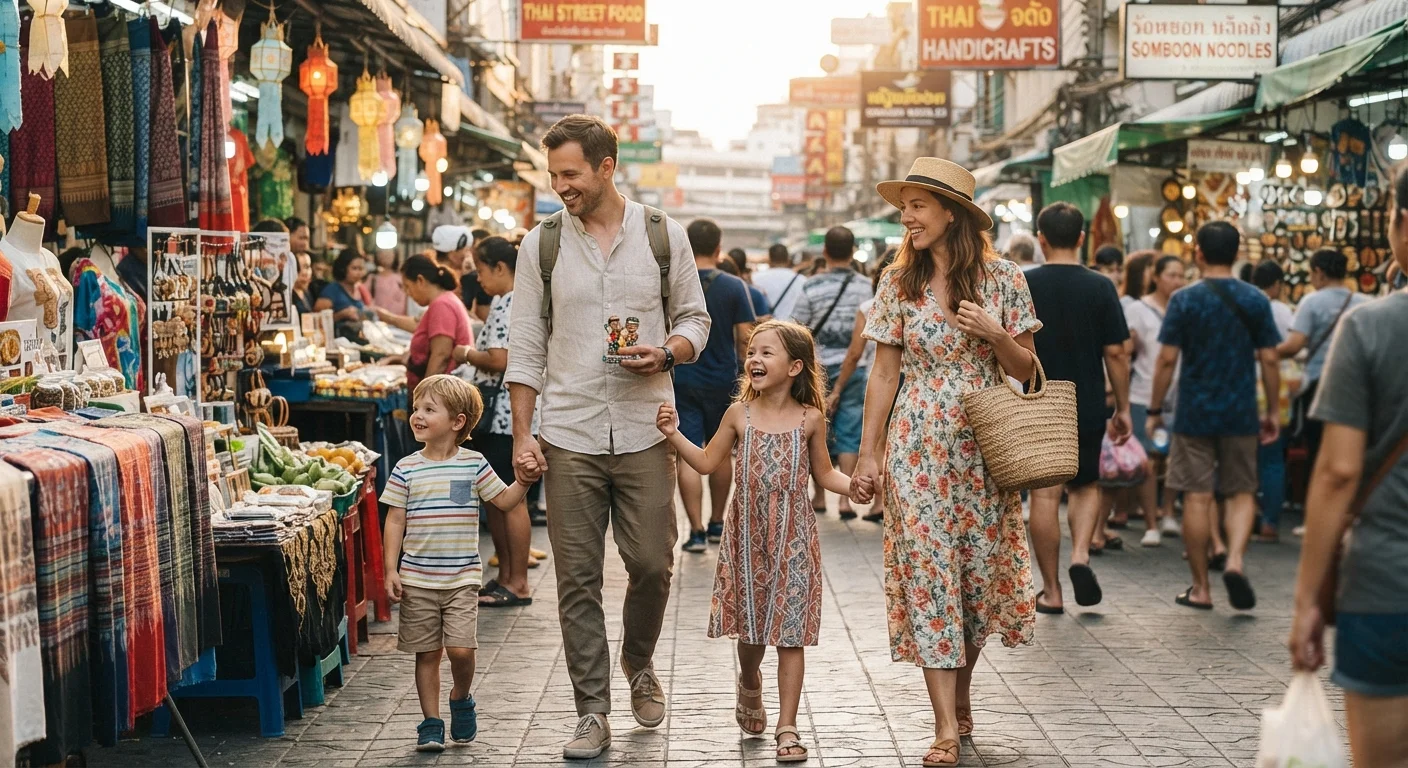
Why Safety Planning Is Really Trip Planning
A lot of families treat safety and fun as opposing forces — the more careful you are, the less enjoyment you'll have. That framing is worth tossing out entirely. The families who travel most confidently with kids aren't the ones who hover anxiously; they're the ones who did their homework before leaving home.
Understanding a destination's layout, knowing where your hotel sits relative to busy areas, and identifying a local emergency contact number takes maybe an hour of research. That one hour buys you days of relaxed exploration. If you're heading abroad for the first time with children, the ground-up planning guide for families covers that pre-departure groundwork in detail.
The goal isn't to eliminate risk — travel always involves some uncertainty — but to reduce the chance that a manageable situation becomes a scary one because you weren't prepared.
What Kids Actually Need to Know Before You Go
Safety conversations with children don't need to be alarming to be effective. Frame them as adventure preparation, not warnings. Before any trip to an unfamiliar place, run through a short, age-appropriate briefing with your kids.
For destinations where communication could be complicated — language barriers, limited cell service, crowded tourist sites — a small card in a child's pocket with the hotel name, address, and a local contact number is simple and reliable. Older kids can save a screenshot on a device. Younger children benefit from a bright, easy-to-spot piece of clothing so a separated child is easier to spot in a crowd.
How you talk about these situations matters just as much as what you say. The guide on talking to kids about difficult topics has useful framing principles that apply here: honest, calm, and matched to the child's developmental level.
Building Awareness Without Anxiety
Staying situationally aware is a skill — one adults model for children simply by practicing it themselves. Scan new environments when you arrive: note exits, identify a landmark you could use as a meeting point, and get a general feel for the rhythm of the place before diving in.
This kind of low-key attentiveness doesn't require narrating every observation to your kids or projecting nervousness. Children pick up on parental calm just as readily as they pick up on parental anxiety. If you'd like to understand how to evaluate a destination's safety environment without overreacting to headlines, the destination safety landscape guide is a practical resource.
Also worth remembering: pacing matters. Overtired, overscheduled kids (and parents) make worse decisions. Building breathing room into your itinerary directly supports safety — a rested family is an alert family.
Age-Appropriate Independence as a Safety Strategy
Counterintuitively, giving kids age-appropriate independence while traveling makes them safer, not more vulnerable. A child who has practiced finding a trusted adult, asking for help, or navigating a short distance on their own is far better equipped than one who has always been tightly supervised.
Start small: let a 10-year-old order at a café, or let a group of tweens walk ahead to the next street corner while you watch. These micro-moments build genuine competence and self-assurance. For families with younger children who need more hands-on strategies, traveling with babies and toddlers addresses the logistics that matter most at that stage.
Different ages bring different considerations. Age-by-age trip planning guidance can help you calibrate what's realistic for your specific kids on any given trip. Safety isn't a fixed protocol — it grows and shifts as your children do.
This article provides general travel information for educational purposes. Always verify current entry requirements, local laws, and safety advisories through official government sources before traveling.
The content provided on our blog site traverses numerous categories, offering readers valuable and practical information. Readers can use the editorial team’s research and data to gain more insights into their topics of interest. However, they are requested not to treat the articles as conclusive. The website team cannot be held responsible for differences in data or inaccuracies found across other platforms. Please also note that the site might also miss out on various schemes and offers available that the readers may find more beneficial than the ones we cover.