

Know the Rules Before You Pack
Medications are one of those travel details that families often leave to the last minute — and that's exactly when things go sideways. Whether you're flying domestically or heading abroad with kids in tow, understanding the ground rules for transporting medications is a smart first step. See our pre-departure checklist for a broader look at what to confirm before you leave.
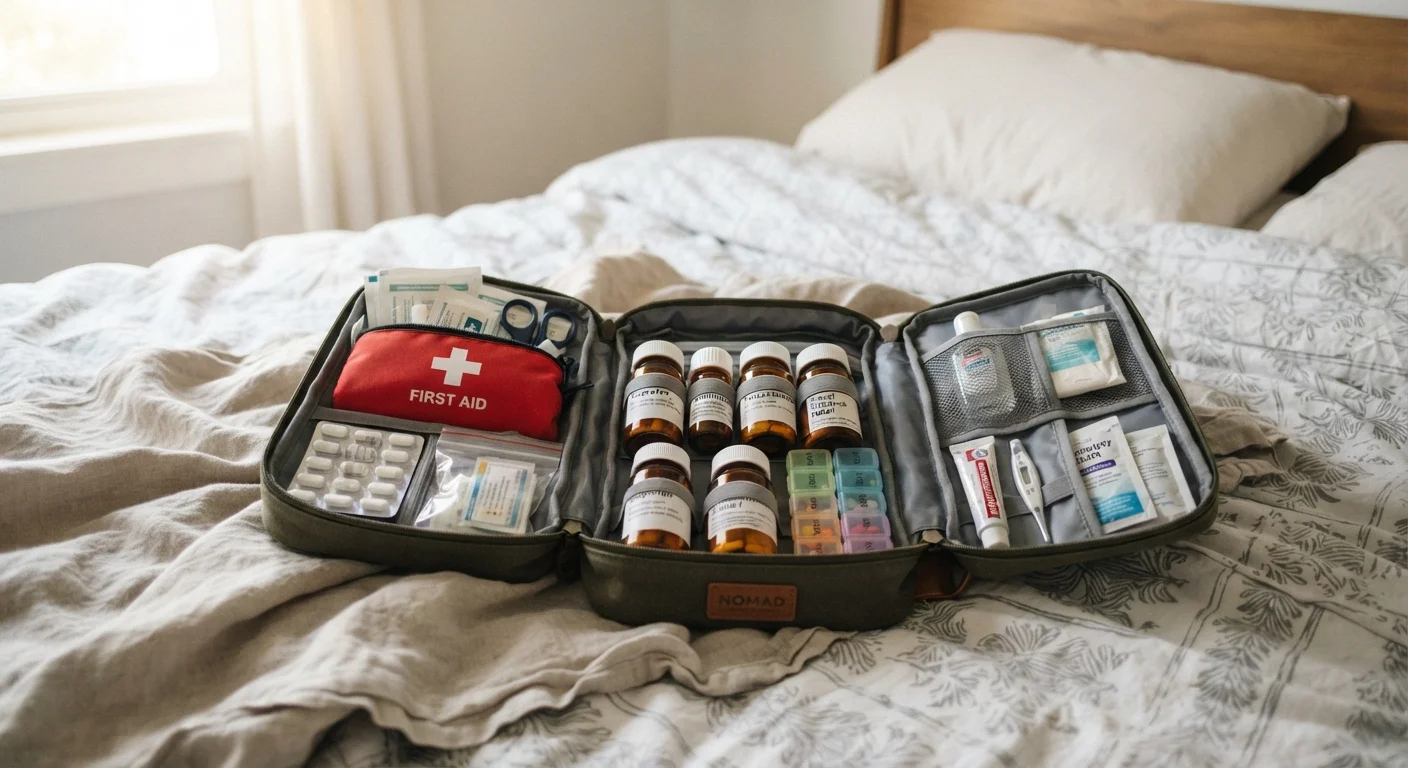
The TSA allows both prescription and over-the-counter medications in carry-on and checked bags. Liquid medications are generally exempt from the standard 3.4-ounce (100 mL) carry-on liquid rule, but you should declare them at the security checkpoint. It's a good practice to keep medications in their original, labeled containers to help screeners quickly identify what you're carrying and to reduce delays.
If a family member uses a medical device — such as an insulin pump, nebulizer, or auto-injector — notify the TSA officer before screening begins. Procedures may vary slightly by airport, so arriving with extra time is a reasonable precaution.
Prescription Medications: Documentation Matters
For prescription medications, carrying supporting documentation is strongly advisable — especially when traveling internationally. At a minimum, keep a copy of the original prescription or a letter from the prescribing physician that includes the patient's name, the medication name, dosage, and the medical reason for use. This documentation can be invaluable if a medication is questioned at a border or if a refill becomes necessary away from home.
Controlled Substance
A drug regulated by government law due to its potential for abuse or dependency. Examples include certain pain relievers, stimulants, and sedatives. Legal status varies significantly between countries.
Carry-On Liquid Rule
A TSA security policy limiting most liquids in carry-on bags to containers of 3.4 oz (100 mL) or less. Medications in liquid form are generally exempt but should be declared at screening.
Import Permit
An official document required by some countries to legally bring certain medications — especially controlled substances — across their border. Usually obtained in advance from the destination country's relevant health authority.
Temperature-Sensitive Medication
A medication that must be stored within a specific temperature range to remain safe and effective. Insulin and some biologics are common examples that require insulated travel cases.
Physician Travel Letter
A signed letter from a doctor confirming that a patient requires a specific medication for a documented medical condition. This document is often requested at international border crossings or airport security checkpoints.
Controlled substances — such as certain pain medications, stimulants used for ADHD, or anxiety medications — require extra attention. Many countries classify these drugs differently than the United States, and some may be outright prohibited or require advance import permits. Before any international trip, verify the destination country's regulations through its official embassy or consulate website. The U.S. State Department and the destination country's health ministry are reliable starting points for that research.
For families traveling abroad with children's medications, be aware that some pediatric formulations common in the US — including certain liquid antihistamines — have different legal statuses elsewhere. International travel for first-timers involves more regulatory homework than many people anticipate, and medications are one of the most frequently overlooked details.
Packing and Storage Strategies That Work
A practical rule of thumb: always pack at least a week's worth of extra medication beyond your trip length. Flight delays, missed connections, and extended stays are genuine possibilities. Splitting medications between your carry-on and a travel companion's bag adds another layer of protection against lost luggage.
Temperature-sensitive medications — like certain biologics or insulin — require insulated cases with appropriate cooling elements. Check the manufacturer's guidelines or ask your pharmacist about safe temperature ranges for storage. Some medications degrade quickly when exposed to heat, humidity, or direct sunlight, all of which are common travel conditions.
Label everything clearly, including the traveler's name and the prescribing physician's contact information. Pair this with the documentation resources outlined in our guide to documents and backups every traveler should carry. Keeping a digital photo of prescriptions and physician letters in cloud storage gives you a backup that's always accessible.
When to Consult Your Doctor Before You Go
Any family trip that involves prescription medications — especially for children, pregnant travelers, or anyone managing a chronic condition — warrants a pre-travel conversation with your healthcare provider. Your doctor can advise on dosage adjustments for time zone changes, flag any drug interactions that travel conditions might worsen, and write the travel documentation you'll need at borders.
If your destination involves altitude, extreme heat, or limited access to medical care, mention those specifics during the visit. Some medications behave differently under those conditions, and your provider may recommend alternatives or supplementary precautions.
For deeper guidance on planning trips with children at different health and developmental stages, our article on traveling with kids by age covers how medical and logistical needs shift as children grow. And if this is your family's first international adventure, the ground-up international trip planning guide is a smart companion resource.
This article is for general informational purposes only and is not medical or legal advice. Always consult a qualified healthcare professional before making decisions about medications, and verify entry regulations directly with official government sources before international travel.
The content provided on our blog site traverses numerous categories, offering readers valuable and practical information. Readers can use the editorial team’s research and data to gain more insights into their topics of interest. However, they are requested not to treat the articles as conclusive. The website team cannot be held responsible for differences in data or inaccuracies found across other platforms. Please also note that the site might also miss out on various schemes and offers available that the readers may find more beneficial than the ones we cover.