

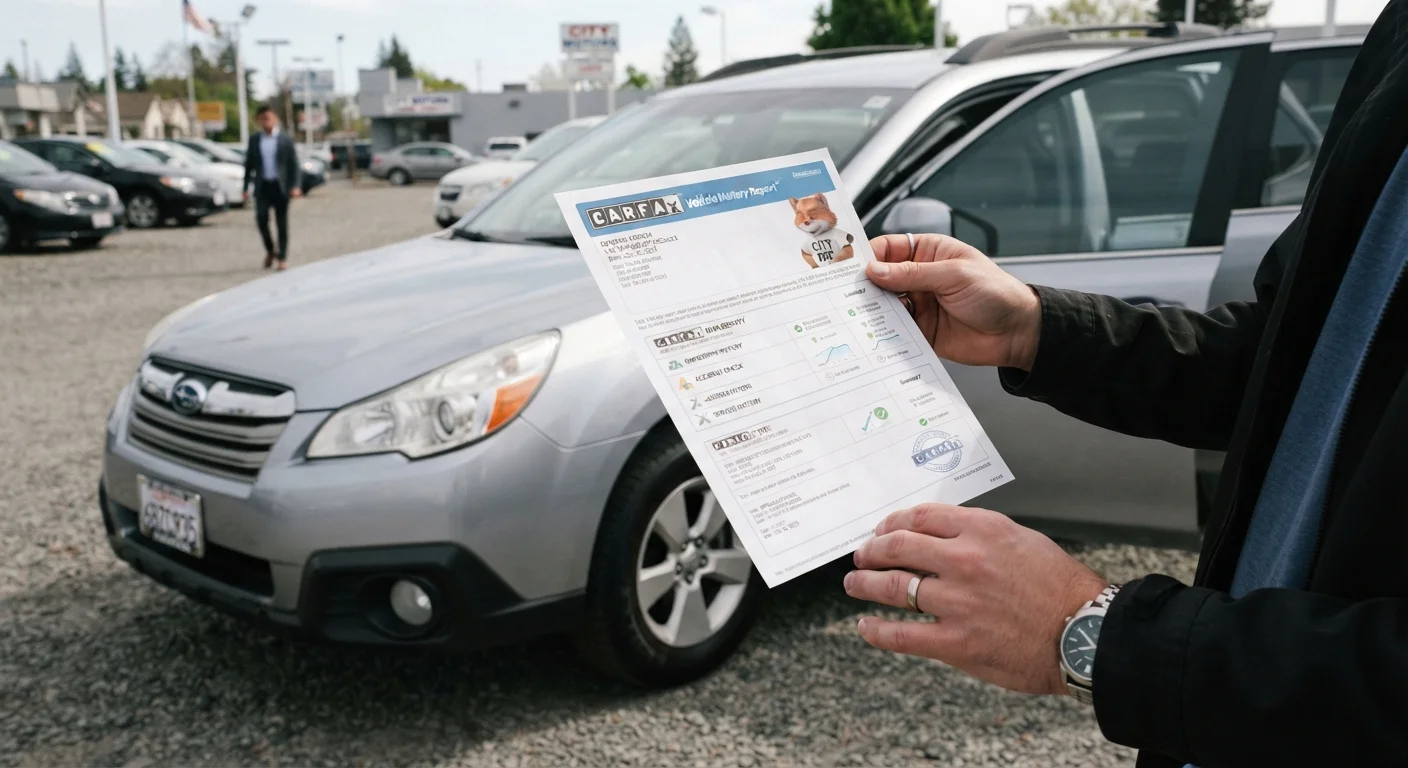
What the Report Actually Contains
A vehicle history report is organized around the car's VIN - a 17-character code that's unique to every vehicle. When you run a VIN through a history service, you get a compiled snapshot from multiple data streams. Here's what that typically includes:
- Ownership history: How many owners the vehicle has had and, in some cases, what type of entity owned it - individual, fleet, rental company, or dealer. Multiple prior owners in a short time span can be worth investigating.
- Accident and damage records: Collisions reported through insurance claims or police reports, along with damage descriptions when available. Note that severity and repair quality are not always detailed.
- Title status: This is one of the most critical sections. Look for designations like salvage, rebuilt, flood, lemon law buyback, or junk. Each signals a significant prior event that affects value and safety.
- Odometer readings: Historical mileage figures logged at inspections, auctions, or service visits. Large gaps or readings that go backward are red flags for odometer fraud.
- Service and maintenance records: Oil changes, recall repairs, and other work recorded by shops that report to the database. This section is often incomplete but can confirm routine upkeep.
- Open recalls: Some reports flag unresolved federal safety recalls tied to the VIN. You can also verify this independently at the NHTSA website using the VIN at no cost.
Before stepping onto any lot, it helps to understand what documents and research you should already have in hand - our pre-dealership checklist walks through that preparation.
Red Flags That Deserve a Closer Look
Not every entry in a vehicle history report is a dealbreaker, but certain findings warrant serious scrutiny before you commit.
1 in 5
Used vehicles with hidden damage history
According to Carfax data cited in automotive industry reporting, roughly one in five used vehicles carries undisclosed accident or damage history not disclosed by the seller.
~450,000
Flood-damaged vehicles entering the used car market annually
Industry estimates suggest hundreds of thousands of flood-damaged vehicles re-enter the used market each year, particularly following major weather events, making title checks critical.
Salvage or flood title: A salvage title means an insurer wrote the vehicle off as a total loss. A flood designation means the car was submerged - which can cause lasting electrical, mechanical, and corrosion problems that surface years later. Rebuilt titles indicate the car was repaired after a salvage designation, but quality of those repairs varies widely.
Odometer inconsistencies: If the mileage shown at a prior auction or inspection is higher than what the current seller is advertising, that's a serious concern. Odometer fraud is illegal and more common in private sales than at licensed dealers, but it occurs in both contexts.
Frequent ownership changes: A car that's changed hands three or four times in two years may have persistent problems that each owner gave up on. It's not automatic disqualification, but it's worth asking why.
Accident severity and airbag deployment: Some reports specify whether airbags deployed in an incident, which typically indicates a significant collision. Even after professional repair, a major structural impact can affect long-term alignment, frame integrity, and resale value.
Gaps in service history: Extended periods with no recorded maintenance - especially on high-mileage vehicles - may mean deferred upkeep. A consistent maintenance log is something well-cared-for vehicles tend to have.
What a Report Cannot Tell You
Understanding the limits of a vehicle history report is just as important as reading what's in it. Reports are only as complete as the data submitted to them. Private repairs, cash-settled accidents, and work done at shops that don't report to databases simply won't appear.
Always Verify Open Recalls Before Buying
Federal safety recalls are public record. Before buying any used vehicle, enter the VIN on the National Highway Traffic Safety Administration (NHTSA) website to check for open recalls that haven't been addressed. An unrepaired recall could affect your safety and may need to be resolved at your expense as the new owner.
A history report also won't tell you about current mechanical condition. Worn brakes, a slipping transmission, aging belts, or developing leaks are invisible on paper. That's why pairing your report review with a professional pre-purchase inspection is strongly recommended before finalizing any used car purchase. An independent mechanic can surface problems a test drive and a document review will both miss.
Think of the vehicle history report as a first filter - useful for eliminating obvious problem cars early, but not a substitute for hands-on evaluation. Used together, a solid report and a qualified mechanic's inspection give you the most complete picture available before signing anything.
When you're ready to move forward, understanding what you might be asked to sign at the dealership matters too. Our guide on common dealership add-ons at signing explains what those line items actually mean.
Frequently Asked Questions
No. Carfax is one commercial provider of vehicle history reports, but it is not the only one. Multiple services compile VIN-based histories from overlapping but not identical data sources. Reviewing a report from any reputable provider gives you useful data, though no single report is guaranteed to be complete.
A salvage title means an insurance company declared the vehicle a total loss at some point - typically due to a severe accident, flood, or theft recovery. A vehicle can be rebuilt and retitled, but it may carry ongoing safety, financing, and resale challenges. Proceed with extra caution and get a thorough mechanical inspection before considering a salvage-titled car.
Yes. Reports only include events that were reported to participating data sources. A minor fender-bender settled privately, or damage repaired without an insurance claim, may never appear. This is why a physical pre-purchase inspection remains essential even when a report looks clean.
You'll need the car's 17-digit VIN, found on the dashboard near the windshield, the driver's door jamb, or the vehicle title. Several commercial services offer reports for a fee, and some dealers provide them as part of the sales process. Some state DMVs also offer title and ownership lookups at no cost.
Not necessarily. A report reflects documented history, not the car's current mechanical state. Wear, deferred maintenance, and unreported damage won't show up. Always pair a history report with a professional pre-purchase inspection before finalizing any used car purchase.
The content provided on our blog site traverses numerous categories, offering readers valuable and practical information. Readers can use the editorial team’s research and data to gain more insights into their topics of interest. However, they are requested not to treat the articles as conclusive. The website team cannot be held responsible for differences in data or inaccuracies found across other platforms. Please also note that the site might also miss out on various schemes and offers available that the readers may find more beneficial than the ones we cover.