

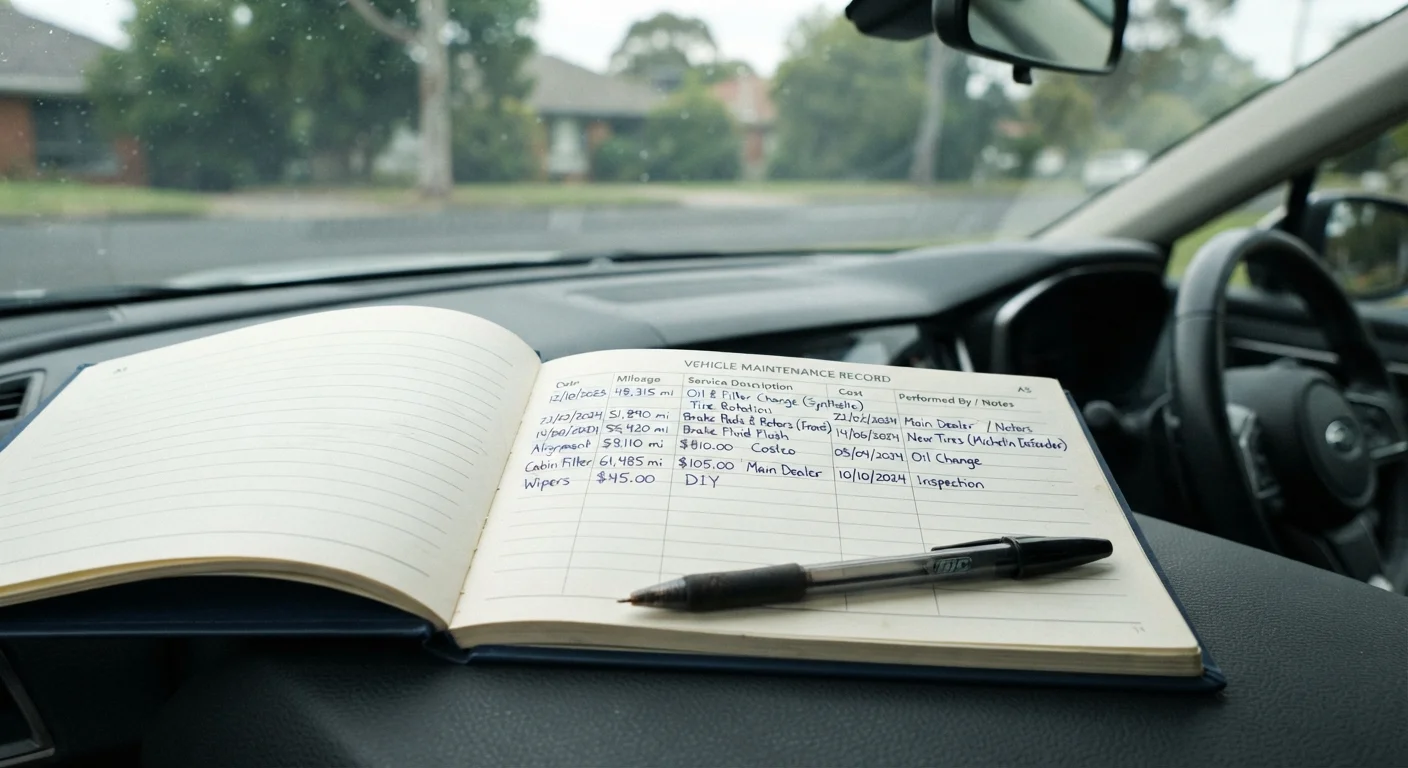
Why a Maintenance Log Deserves a Place in Every Glove Box
Most drivers know they should change the oil, rotate the tires, and replace the air filter - but far fewer keep a written record of when those tasks were actually done. That gap matters more than it might seem.
A maintenance log is simply a running record of every service, repair, and inspection your vehicle receives. When a mechanic asks whether you've had the coolant flushed, or a prospective buyer asks for proof of upkeep, a complete log answers those questions instantly. Without one, you're relying on memory - and memory is unreliable, especially across years of ownership.
From a practical standpoint, a documented service history helps technicians diagnose problems faster. Patterns that would otherwise stay hidden - say, the brakes needing attention every 18 months rather than the typical 3 years - become visible in a log. That can save both time and money at the shop. For more on habits that quietly damage vehicles over time, see our piece on maintenance habits that shorten a vehicle's life.
When you eventually sell the vehicle, a thorough log signals responsible ownership. Paired with a vehicle history report, your personal log fills in the finer details that third-party databases often miss - dealer oil changes, DIY fluid top-offs, and small but meaningful repairs.
Your Log Also Supports Your Budget
Tracking maintenance costs over time gives you a clearer picture of what your vehicle actually costs to own - beyond fuel and insurance. That visibility can help you plan for larger expenses like timing belt replacement or new tires. For broader household money management, the budgeting basics hub covers practical strategies worth pairing with this habit.
What to Record and How to Set It Up
The format you choose matters less than the habit itself. A small spiral notebook kept in the glove box works just as well as a smartphone app - pick whichever you'll actually use.
For each service entry, record at minimum:
- Date of the service
- Current odometer reading in miles
- What was done - be specific (e.g., "engine oil and filter replaced, 5W-30 full synthetic")
- Who did the work - shop name and city, or "DIY" if you did it yourself
- Cost - optional, but useful for budgeting future maintenance
Staple or clip the corresponding receipt behind the log entry whenever possible. A receipt is independent proof that the service occurred and removes any doubt about the quality of parts used.
If you prefer digital records, several free and low-cost apps are designed specifically for vehicle maintenance tracking. Cloud-based options keep your records accessible even if your phone is lost or replaced. Whichever route you take, make sure records are backed up somewhere.
What you will need
For a seasonal framework to pair with your log, our guide to seasonal car maintenance outlines the checks worth scheduling at each time of year.
Building the Habit: Steps to Get Started Today
Starting a maintenance log feels like a project, but it only takes about 20-30 minutes to set up properly. Here's how to do it.
Gather your existing records
Pull together any receipts, invoices, or inspection reports you already have. Check your email for digital receipts from shops. Even an incomplete history is a useful starting point - log what you can find, with dates and mileage where available.
Choose your format
Decide between a physical notebook, a printed log sheet kept in a sleeve, or a digital app. Physical logs are simple and always accessible in the car. Digital logs are searchable and harder to lose. There's no wrong answer - pick what fits your routine.
Create a baseline entry
On your first page or entry, note the vehicle's make, model, year, and current odometer reading. Then add all recovered historical records as back-dated entries, oldest first. Flag anything you're unsure about with a note like "approx. date" so future readers can gauge reliability.
Record every service going forward
From this point on, log every service immediately after it occurs - not days later when details fade. Include both shop visits and DIY tasks such as topping off fluids, replacing wiper blades, or checking tire pressure before a long trip.
Review the log at each service interval
Before each scheduled maintenance visit, scan your log to identify what's due and what was recently done. Bring it to the shop - a mechanic who can see your full history may catch patterns or upcoming needs that a quick inspection alone would miss.
Once your log is running, keep it honest. Skipping entries defeats the purpose. If you're unsure whether a task even needs doing, check your owner's manual first - and be aware that some popular maintenance advice is outdated. Our article on car maintenance myths that cost drivers money separates fact from fiction on common service intervals.
Don't Alter or Backfill Records Dishonestly
A maintenance log is only valuable if it's accurate. Fabricating entries or omitting known problems to improve a vehicle's appearance at resale is dishonest and can expose you to legal liability depending on your state's disclosure laws. Keep the log truthful - it protects you as much as it helps the next owner.
The content provided on our blog site traverses numerous categories, offering readers valuable and practical information. Readers can use the editorial team’s research and data to gain more insights into their topics of interest. However, they are requested not to treat the articles as conclusive. The website team cannot be held responsible for differences in data or inaccuracies found across other platforms. Please also note that the site might also miss out on various schemes and offers available that the readers may find more beneficial than the ones we cover.