

Why Small Habits Create Big Repair Bills
Most vehicle failures don't happen overnight. They develop slowly - the result of repeated small choices that individually seem harmless but accumulate into serious mechanical wear. Understanding which everyday habits accelerate that wear puts you in a much stronger position to avoid five-figure repair bills and keep your vehicle reliable for the long haul.
The mistakes below are common across all vehicle types and age groups. They aren't about skipping major service appointments - they're about the quieter, in-between habits that most drivers never think to question. Pairing this awareness with a seasonal maintenance routine helps catch problems before they escalate.
1 PSI/mo
Average monthly tire pressure loss
The U.S. Department of Energy notes that tires can lose about 1 PSI per month under normal conditions, making monthly checks an important habit.
~25%
Fuel economy loss from low tire pressure
The U.S. Department of Energy estimates that tires underinflated by just 1 PSI can reduce fuel economy by roughly 0.2%, with the effect compounding across multiple tires and months of neglect.
$1,200+
Typical head gasket repair cost
Industry repair data consistently places head gasket replacement among the most expensive engine repairs, often exceeding $1,200 in parts and labor - a consequence frequently linked to overheating from coolant neglect.
The Most Damaging Maintenance Habits - and How to Break Them
Each of the following mistakes has a clear mechanical consequence. Knowing why a habit causes damage makes it much easier to change.
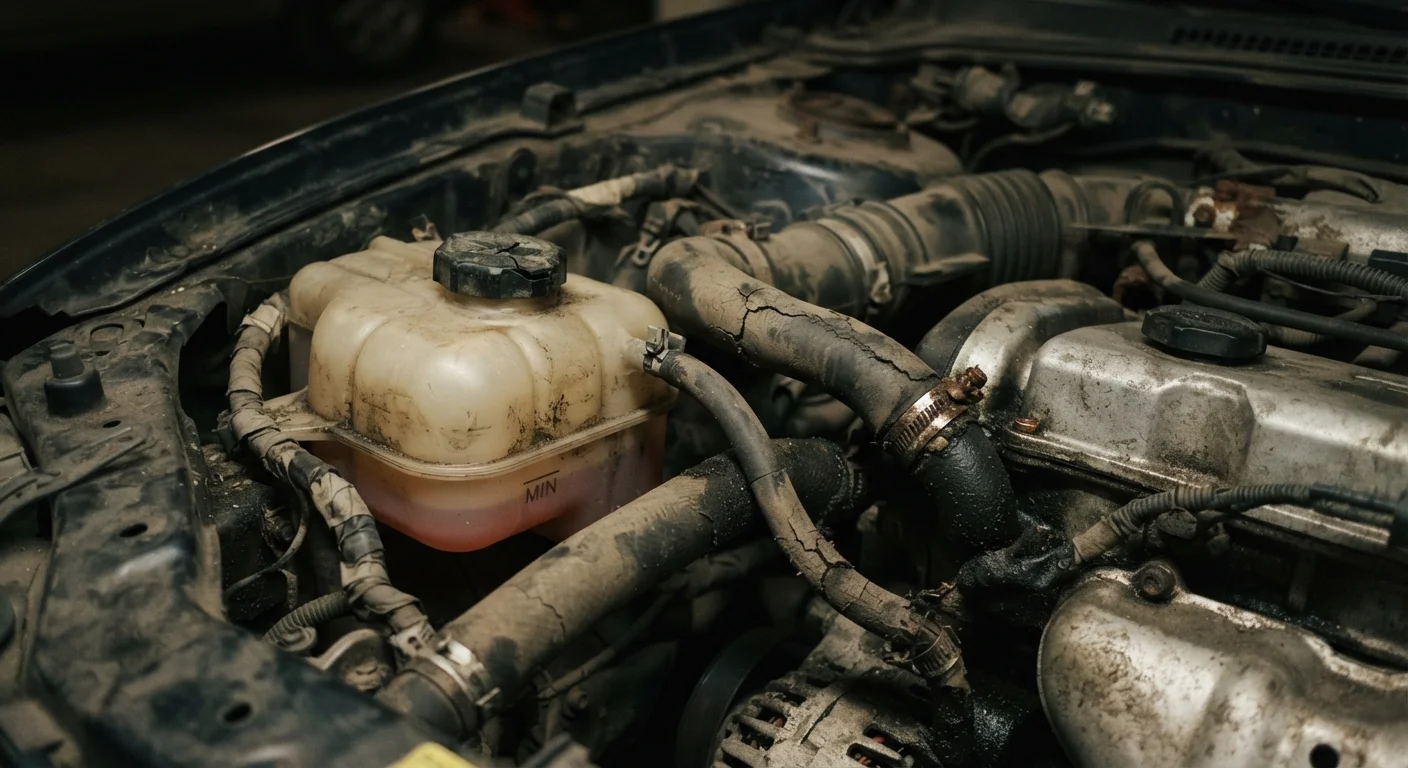
Ignoring coolant system maintenance, including skipping scheduled flushes and failing to top off the reservoir.
Why it happens: Coolant is invisible during normal driving, so many drivers assume it's fine unless the temperature warning light triggers - by which point damage may already be occurring.
Riding the brakes downhill instead of using engine braking to control speed.
Why it happens: Keeping a foot lightly on the brake feels intuitive on long descents, but continuous friction generates intense heat that glazes brake pads and warps rotors over time.
Skipping the parking brake on vehicles with automatic transmissions.
Why it happens: Many drivers believe that leaving an automatic in 'Park' is sufficient, not realizing the transmission's parking pawl - a small metal pin - bears the entire weight of the vehicle on slopes.
Driving consistently on underinflated tires without checking pressure monthly.
Why it happens: Tires lose air gradually - as much as one PSI per month under normal conditions - and the change is rarely visible to the naked eye until pressure is critically low.
Neglecting air filter replacement - both engine and cabin filters - well past their service interval.
Why it happens: Filters are out of sight and don't produce obvious symptoms until restriction becomes severe, so they're commonly deferred during routine service visits to save money in the short term.
Topping off the fuel tank repeatedly above the automatic shutoff point at the pump.
Why it happens: Drivers assume a fuller tank means fewer trips to the pump, but modern vehicles have an evaporative emissions system (EVAP) with a charcoal canister designed to absorb fuel vapors - not liquid fuel.
Low Oil Is the Fastest Way to Ruin an Engine
Operating a vehicle with consistently low or dirty oil is one of the most damaging habits a driver can develop. Oil lubricates, cleans, and cools internal engine components - without adequate clean oil, metal surfaces grind against each other and wear accelerates dramatically. Check your oil level monthly and follow your owner's manual for change intervals, not just mileage-based rules of thumb.
Keeping a vehicle maintenance log is one of the most effective ways to ensure none of these service items gets quietly overlooked. A simple record of what's been done - and when - removes the guesswork and gives any mechanic faster diagnostic context.
Never Ignore Your Temperature Gauge
If your engine temperature gauge climbs into the red zone, pull over safely as soon as possible and turn off the engine. Continuing to drive an overheating engine - even for a few minutes - can warp the cylinder head, blow a head gasket, or seize internal components. Have the vehicle inspected by a qualified mechanic before driving it again.
It's also worth cross-checking your habits against common maintenance myths - some well-intentioned practices (like warming up your engine for several minutes in winter) are outdated and can themselves contribute to unnecessary wear.
This article is for general informational purposes. For diagnosis, repair recommendations, or safety-related concerns, consult a qualified mechanic.
The content provided on our blog site traverses numerous categories, offering readers valuable and practical information. Readers can use the editorial team’s research and data to gain more insights into their topics of interest. However, they are requested not to treat the articles as conclusive. The website team cannot be held responsible for differences in data or inaccuracies found across other platforms. Please also note that the site might also miss out on various schemes and offers available that the readers may find more beneficial than the ones we cover.