

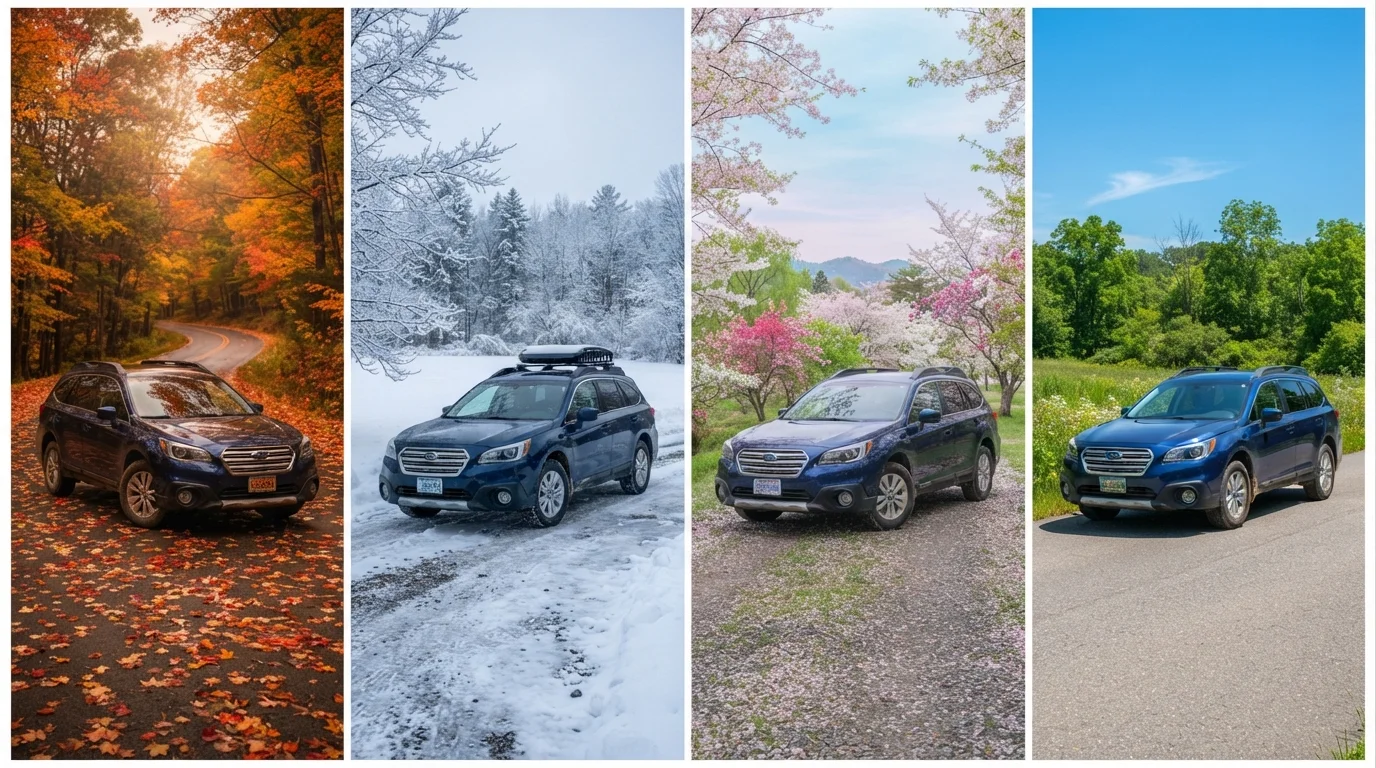
Why Seasonal Maintenance Matters
Most vehicle breakdowns aren't random - they follow predictable patterns tied to temperature swings, road conditions, and driving habits that shift with the calendar. A battery that struggles in July heat is the same one that fails to start on a January morning. Tires that were borderline in October become genuinely dangerous on an icy February road.
Seasonal maintenance isn't about performing unnecessary work. It's about timing the checks your vehicle already needs to match the conditions most likely to expose weak points. Done right, it catches small problems before they become expensive ones - and it keeps you safer year-round. Pairing these checks with the guidance in your owner's manual maintenance schedule ensures you're not duplicating effort or missing manufacturer-specific requirements.
~1 PSI
Tire pressure change per 10°F temperature shift
A widely cited rule of thumb from tire industry sources; both heat and cold affect inflation levels noticeably across seasonal swings.
3-5 years
Typical car battery lifespan
Industry guidance from automotive testing organizations suggests most batteries fall in this range, though heat accelerates degradation.
50%
Reduction in battery capacity at 0°F
Cold temperatures significantly reduce the cranking power a battery can deliver, making fall testing critical before winter sets in.
Spring: Shake Off the Winter Damage
Winter is hard on vehicles. Road salt accelerates rust, potholes open up frozen pavement, and cold thickens fluids. Spring is the window to assess that damage before it worsens.
- Inspect the undercarriage for rust. Road salt collects on brake lines, the exhaust system, and suspension components. A visual inspection - or a quick look from a shop - can catch early corrosion.
- Check tire condition and pressure. Cold air compresses tires; warmer spring temps require a pressure reset. Look for uneven wear patterns that signal alignment or suspension issues from winter potholes.
- Top up or flush fluids. Brake fluid absorbs moisture over time. Windshield washer fluid should transition to a warm-weather formula. Check engine coolant levels and condition.
- Test wiper blades. Winter wiper blades, if you used them, should come off in spring; standard blades perform better in rain.
- Wash the exterior thoroughly. Focus on wheel wells and the underside to remove salt before it continues to corrode.
Spring is also an ideal time to run through the pre-road-trip inspection checklist if you're planning any warm-weather driving.
Summer: Managing Heat Stress
High temperatures create their own category of stress. Engine coolant works harder, tire pressure climbs, and batteries - already weakened by winter - can fail in sustained heat.
Check tire pressure first thing in the morning before driving - that's your true 'cold' reading. Pressure measured after even a short drive will read higher and give you a false baseline.
Tire pressure specifications in your owner's manual are based on cold inflation levels. Checking after driving introduces heat-related pressure increase that skews the reading.
When topping up engine coolant in summer, use distilled water rather than tap water if you need to add fluid between services. Tap water minerals can accelerate corrosion inside the cooling system over time.
Mineral deposits from hard tap water can degrade coolant effectiveness and contribute to scale buildup in the radiator and hoses, particularly in high-temperature conditions.
- Cooling system check. Verify coolant level and mixture. A 50/50 blend of coolant and distilled water is the standard for most vehicles; check your owner's manual for specifics. Look for signs of leaks around hoses and the radiator.
- Battery load test. Heat degrades battery plates faster than cold does. If your battery is more than three years old, have it load tested. See Car Battery Basics for what that test actually measures.
- Tire pressure monitoring. For every 10°F rise in ambient temperature, tire pressure increases by roughly 1 PSI. Check cold pressure in the morning rather than after driving for the most accurate reading.
- Air conditioning system. Run the A/C and note whether it cools adequately. Weak cooling can indicate low refrigerant or a failing compressor - both are better addressed before a heat wave.
- Check belts and hoses. Heat causes rubber components to crack and harden. Look for visible cracking or bulging on coolant hoses and check serpentine belt condition.
Fall: Getting Ready for Cold
Fall is arguably the most important seasonal window for vehicle prep. It's the last comfortable opportunity to address issues before freezing temperatures remove your margin for error.
- Battery test - again. Cold weather dramatically reduces battery output. A battery that tests at 70% capacity in October may not start the car at 10°F in January. Replace borderline batteries in fall, not mid-winter.
- Switch to winter or all-season tires. In regions with regular snow or ice, dedicated winter tires provide significantly better traction than all-season options below 45°F. The general guidance is to make the switch when overnight temps consistently drop below that threshold.
- Check antifreeze protection level. A simple antifreeze tester (available at any auto parts store) checks the freeze point of your coolant. Most vehicles should be protected to at least -30°F.
- Inspect brakes. Fall is a natural checkpoint for brake pad thickness and rotor condition before roads become slippery and stopping distances matter more.
- Assemble a winter emergency kit. Ice scraper, jumper cables or a jump starter pack, a small shovel, and a blanket are practical items to keep in the vehicle from November onward.
Habits that seem minor - like skipping the parking brake or ignoring the coolant system - compound over time. The maintenance habits that shorten a vehicle's life are worth reviewing alongside your fall checklist.
Don't Wait for a Warning Light to Check Your Battery
Most vehicles don't give drivers advance notice of a failing battery - the first sign is often a car that won't start. If your battery is more than three years old, request a load test at any oil change or tire rotation appointment. Many shops perform this test at no charge. Replacing a marginal battery in fall costs far less - in time and money - than a roadside jump-start in January.
Winter: Cold-Weather Essentials
Once winter arrives, the focus shifts from preparation to monitoring. The checks are simpler, but consistency matters.
- Check tire pressure weekly. Pressure drops roughly 1 PSI for every 10°F decrease in temperature. Under-inflated tires reduce traction and fuel economy.
- Keep the fuel tank at least half full. This adds weight over the drive wheels (helpful on front- and rear-wheel-drive vehicles), reduces fuel line condensation risk, and ensures you have a buffer if you get stuck.
- Use winter-rated windshield washer fluid. Standard fluid freezes on contact with a cold windshield. Winter-rated fluid is rated for temperatures well below freezing and helps clear road spray and salt film.
- Monitor battery voltage. If your vehicle hesitates to start or the lights seem dim, have the battery checked promptly. Cold-weather battery failure is one of the most common roadside emergencies.
For every trip in challenging conditions, a brief pre-trip safety walkthrough takes less than two minutes and can catch issues - ice on windows, low tire pressure - before they become hazards on the road.
Year-Round Habits That Keep Costs Down
Seasonal checks work best when they sit inside a broader habit of routine attention. A few consistent practices make each seasonal transition easier and reduce the chance of surprise repairs.
- Log your service history. Tracking what was done and when helps you catch overdue items and gives mechanics useful context. Keeping a vehicle maintenance log is simpler than most drivers expect.
- Don't skip the owner's manual. Manufacturer-specified intervals for oil, transmission fluid, spark plugs, and other items are based on the actual engineering of your vehicle - not generic rules of thumb.
- Address warning lights promptly. A check-engine light that sits ignored for weeks often indicates a worsening issue. Early diagnosis is almost always less expensive than deferred repair.
- Question inherited assumptions. Some widely repeated maintenance advice is outdated or simply wrong. Car maintenance myths that cost drivers money breaks down several common ones worth reconsidering.
Consistent seasonal attention isn't about spending more on your vehicle - it's about spending predictably rather than unexpectedly. The drivers who avoid large repair bills are usually the ones who address small issues before they grow.
The content provided on our blog site traverses numerous categories, offering readers valuable and practical information. Readers can use the editorial team’s research and data to gain more insights into their topics of interest. However, they are requested not to treat the articles as conclusive. The website team cannot be held responsible for differences in data or inaccuracies found across other platforms. Please also note that the site might also miss out on various schemes and offers available that the readers may find more beneficial than the ones we cover.