

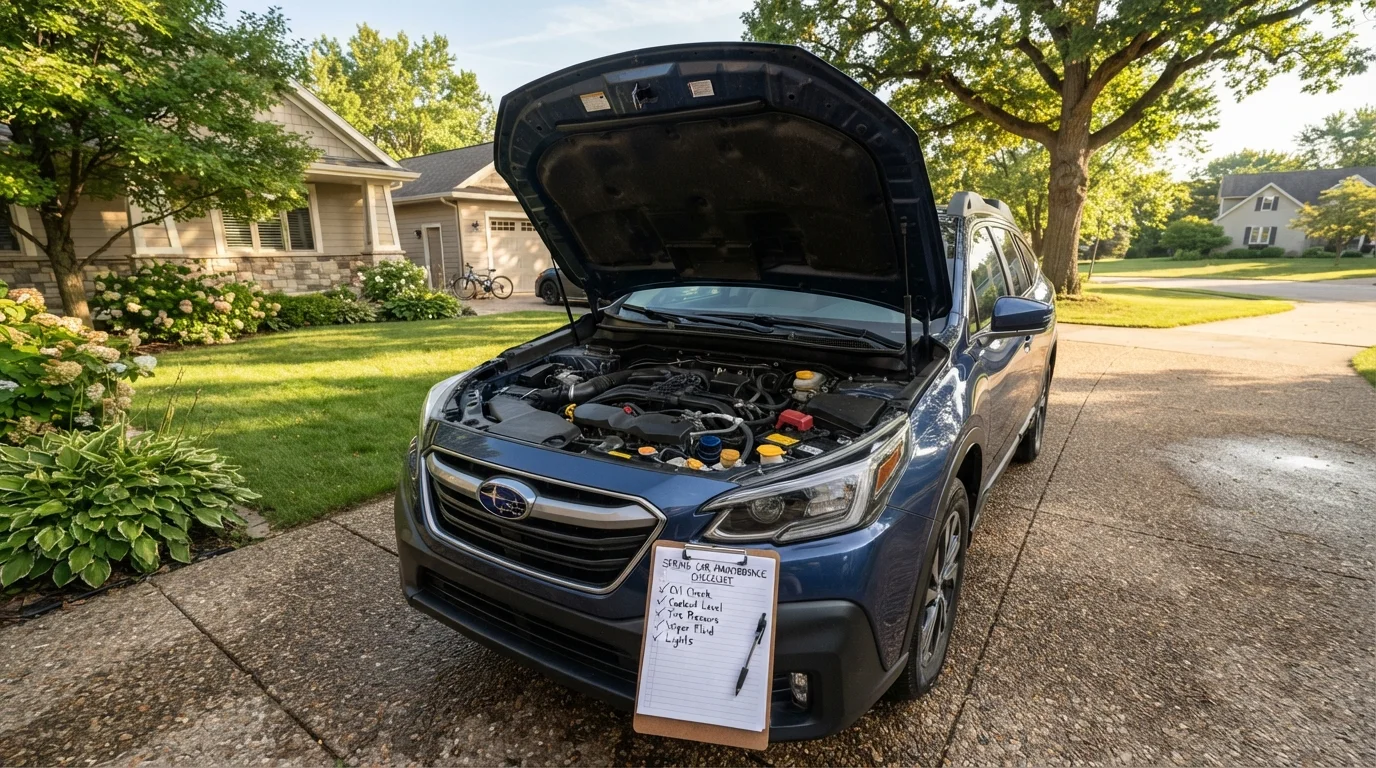
Summary
22 items · 30-60 minutes
Why a Pre-Trip Inspection Is Worth the Hour
Road trips test your vehicle in ways short daily commutes simply don't. Extended highway speeds, heavy loads, and driving far from home all raise the stakes if something goes wrong. A focused inspection before you leave doesn't require a mechanic's credentials-just enough time to work through each system methodically.
This checklist is designed for everyday drivers preparing for trips of roughly 200 miles or more. For shorter excursions, the quick walkthrough in our pre-trip safety check may be sufficient. For trips that involve weather changes across seasons, pair this checklist with seasonal car maintenance guidance to cover temperature-specific concerns.
Ideally, run through this checklist two to three days before departure. That gives you time to schedule a shop visit if you find something that needs professional attention before you hit the road.
Don't Confuse This With Scheduled Maintenance
A pre-road-trip inspection checks your vehicle's current condition-it doesn't replace oil changes, brake service, or other time- or mileage-based maintenance. If your next scheduled service is coming up within a few weeks, consider completing it before your trip rather than after. Refer to your owner's manual for your vehicle's specific service intervals.
Tools You'll Need
Most of these checks require nothing more than your eyes and a few minutes. A handful call for basic tools you likely already own.
Tire pressure gauge
Accurately reads PSI in all tires, including the spare.
Penny (for tread depth test)
Used to quickly check whether tire tread depth has dropped below a safe threshold.
Flashlight or work light
Helps you see clearly under the hood and inspect the underside of the vehicle.
Clean rag or paper towels
Needed to wipe the dipstick when checking oil and to clean fluid caps before opening.
Owner's manual
Specifies correct fluid types, capacities, and maintenance intervals for your specific vehicle.
Portable jump starter
Allows you to jump-start your vehicle without another car if the battery dies on the road.
The Full Inspection Checklist
Work through each group in order. The categories below follow a logical sequence-starting under the hood, moving to the tires and exterior, then covering the cabin and emergency supplies before you close everything up.
Under the Hood
Tires
Lights and Wipers
Brakes and Steering
Cabin and Emergency Supplies
If a Warning Light Stays On, Don't Ignore It
A check engine light, brake warning light, or tire pressure light that remains illuminated after startup is a signal that something needs attention. These lights are not always urgent, but driving several hundred miles with an undiagnosed fault can turn a minor issue into a serious one. Have any persistent warning light evaluated by a qualified mechanic before your departure date.
Don't Forget the Rest of Your Trip Prep
Vehicle readiness is just one piece of a safe road trip. If you're traveling with family, the pre-departure family checklist covers documents, emergency contacts, and logistics that go beyond the car itself. For trips to unfamiliar destinations, pre-trip destination research can surface entry requirements, safety advisories, and local considerations worth knowing before you leave.
More general road safety habits are covered in our safe driving hub-a useful reference if you're brushing up ahead of a long highway stretch.
This checklist provides general vehicle inspection guidance for informational purposes. It is not a substitute for professional mechanical inspection. If you identify a concern with your brakes, steering, tires, or any safety-critical system, have it evaluated by a qualified mechanic before driving.
The content provided on our blog site traverses numerous categories, offering readers valuable and practical information. Readers can use the editorial team’s research and data to gain more insights into their topics of interest. However, they are requested not to treat the articles as conclusive. The website team cannot be held responsible for differences in data or inaccuracies found across other platforms. Please also note that the site might also miss out on various schemes and offers available that the readers may find more beneficial than the ones we cover.