

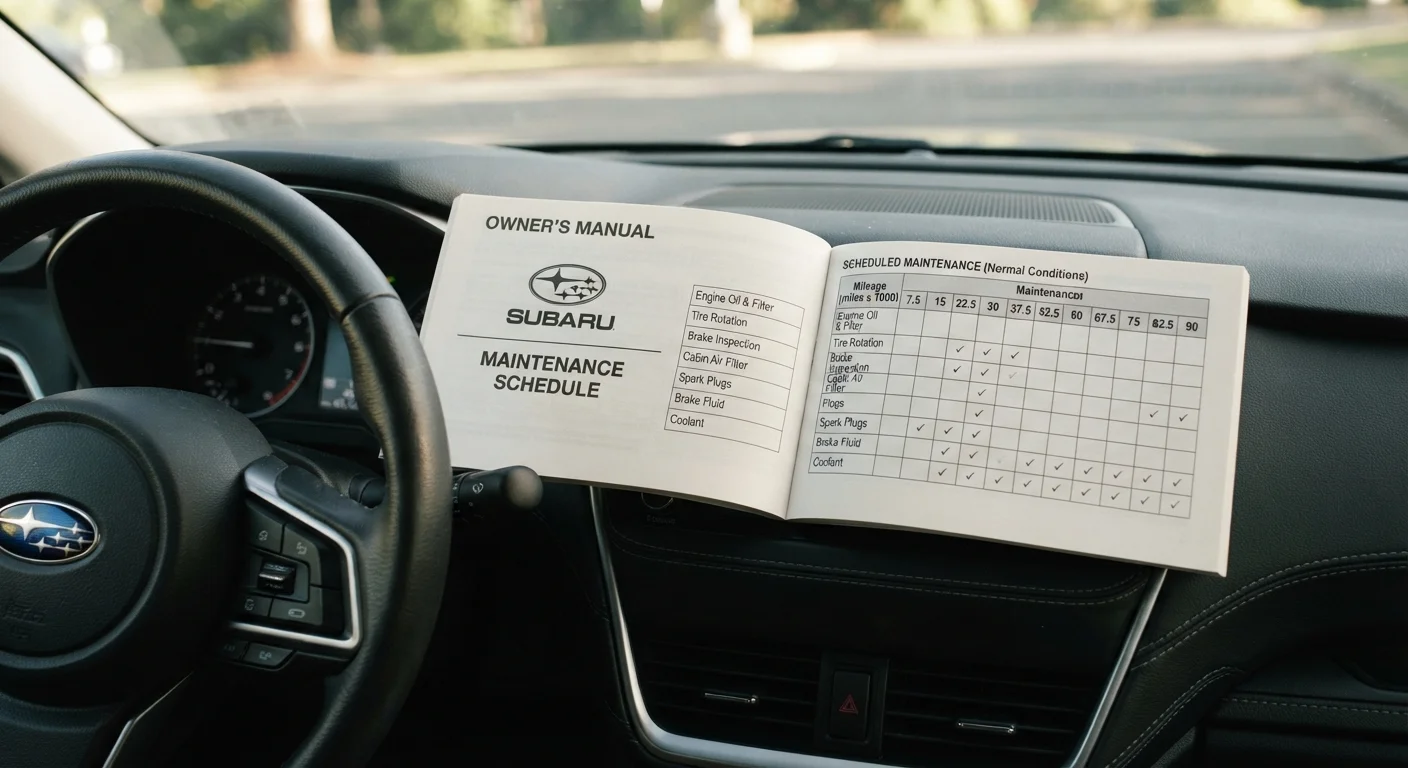
Why the Owner's Manual Is Your Most Reliable Source
Generic maintenance advice is everywhere - shop waiting rooms, online forums, well-meaning neighbors. Most of it is offered in good faith, but none of it accounts for your specific engine design, transmission type, fluid capacities, or the engineering tolerances your manufacturer tested over millions of miles. Your owner's manual does.
Every maintenance schedule in a factory manual is built around that vehicle's actual components. Interval recommendations for oil changes, spark plugs, coolant flushes, and timing belt replacements reflect the real wear patterns engineers observed during development - not a one-size-fits-all estimate. Before taking service advice from any outside source, it's worth checking what your manual actually says. You may find the advice aligns - or you may discover you've been servicing your vehicle more (or less) frequently than necessary. For a look at where common advice goes wrong, see our Car Maintenance Myths That Cost Drivers Money.
Reading the Schedule: Normal vs. Severe Duty
Most owner's manuals include two separate maintenance tracks: a normal schedule and a severe (or special operating conditions) schedule. The severe schedule calls for shorter service intervals and applies to drivers who regularly experience any of the following:
- Frequent short trips under five miles, especially in cold weather
- Towing, hauling heavy loads, or driving in mountainous terrain
- Stop-and-go city driving for the majority of miles
- Dusty, sandy, or unpaved road conditions
- Extreme heat or cold as the norm rather than the exception
A significant share of everyday US drivers - particularly those commuting in urban areas or living in regions with harsh winters - actually qualify for the severe schedule. Running on the normal schedule when severe applies can accelerate engine wear and void warranty coverage on related components.
One Condition Can Trigger the Severe Schedule
You don't need to meet every severe-duty criterion listed in the manual - qualifying on even a single factor typically moves that service item to the shorter interval. Read the conditions carefully; language like 'any of the following' is common. If you're unsure, your vehicle's dealership service department can clarify which schedule applies to your situation.
Check the severe-duty criteria in your manual's maintenance section, not just the interval table. Manufacturers define the triggering conditions precisely, and meeting even one may put you in the severe category for that service item.
How to Actually Use the Interval Table
Maintenance schedules list services by mileage and - critically - by time elapsed. For example, an oil change might be specified at every 7,500 miles or every 12 months, whichever comes first. The time component matters most for drivers who accumulate miles slowly. An oil that sits in an engine for 14 months has degraded from heat cycling, moisture absorption, and oxidation regardless of how few miles were driven.
Here's a practical approach to using the interval table:
- Find the schedule section - usually labeled "Maintenance Schedule" or "Scheduled Maintenance" in the index.
- Record your current mileage and the date of your last known service for each item.
- Mark upcoming intervals on a calendar or phone reminder, using whichever threshold - mileage or time - arrives sooner.
- Cross-reference your driving conditions against the severe-duty criteria before deciding which schedule applies to you.
Pairing this process with a written service log makes the whole system more useful over time. Our guide on keeping a vehicle maintenance log covers a simple approach that doesn't require special software.
Locate and bookmark the maintenance schedule section in your owner's manual before your next service.
Many drivers never consult their manual directly, relying instead on stickers or shop recommendations that may not match their vehicle's actual requirements. Having the schedule physically accessible makes it a usable tool rather than a forgotten document.
Identify which driving-condition category - normal or severe - applies to your daily routine.
Using the wrong schedule means either servicing your vehicle too infrequently (risking accelerated wear) or unnecessarily often (wasting money). The criteria are clearly defined in most manuals and take only a few minutes to evaluate.
Always apply whichever threshold - mileage or elapsed time - arrives first for each service item.
Oil and other fluids degrade chemically over time even in a low-mileage vehicle. Ignoring the time component can leave degraded fluids in your engine or coolant system far longer than the manufacturer intended.
Cross-check shop-recommended services against your manual's schedule before authorizing work.
Service intervals in shop management software are often generic estimates, not vehicle-specific data. Comparing recommendations to your manual helps you distinguish genuinely needed services from premature upsells.
Set calendar reminders tied to both mileage projections and fixed dates for every major service interval.
Without a reminder system, services get missed simply because daily life is busy. Proactive scheduling means you control when maintenance happens rather than reacting to warning lights or failures.
Getting the Most From Your Schedule
Sticking to your manual's schedule also supports informed conversations with mechanics. When a shop recommends a service, you can check whether it aligns with your manufacturer's interval - which helps you evaluate the recommendation on its merits rather than accepting it uncritically. Some services shops suggest, like fuel injector cleaning or transmission flushes, are genuinely useful at the right interval; others are offered earlier than your vehicle actually needs them.
For services like tire rotation and alignment - which many drivers lump together - your manual will specify the rotation interval. Understanding what each service actually does helps you respond to shop recommendations with confidence. See our tire rotation, balance, and alignment explainer for a clear breakdown.
Finally, some maintenance tasks listed in your manual are straightforward enough for a careful home mechanic; others genuinely require professional tools or expertise. Our article on DIY car maintenance helps you draw that line sensibly.
The content provided on our blog site traverses numerous categories, offering readers valuable and practical information. Readers can use the editorial team’s research and data to gain more insights into their topics of interest. However, they are requested not to treat the articles as conclusive. The website team cannot be held responsible for differences in data or inaccuracies found across other platforms. Please also note that the site might also miss out on various schemes and offers available that the readers may find more beneficial than the ones we cover.