

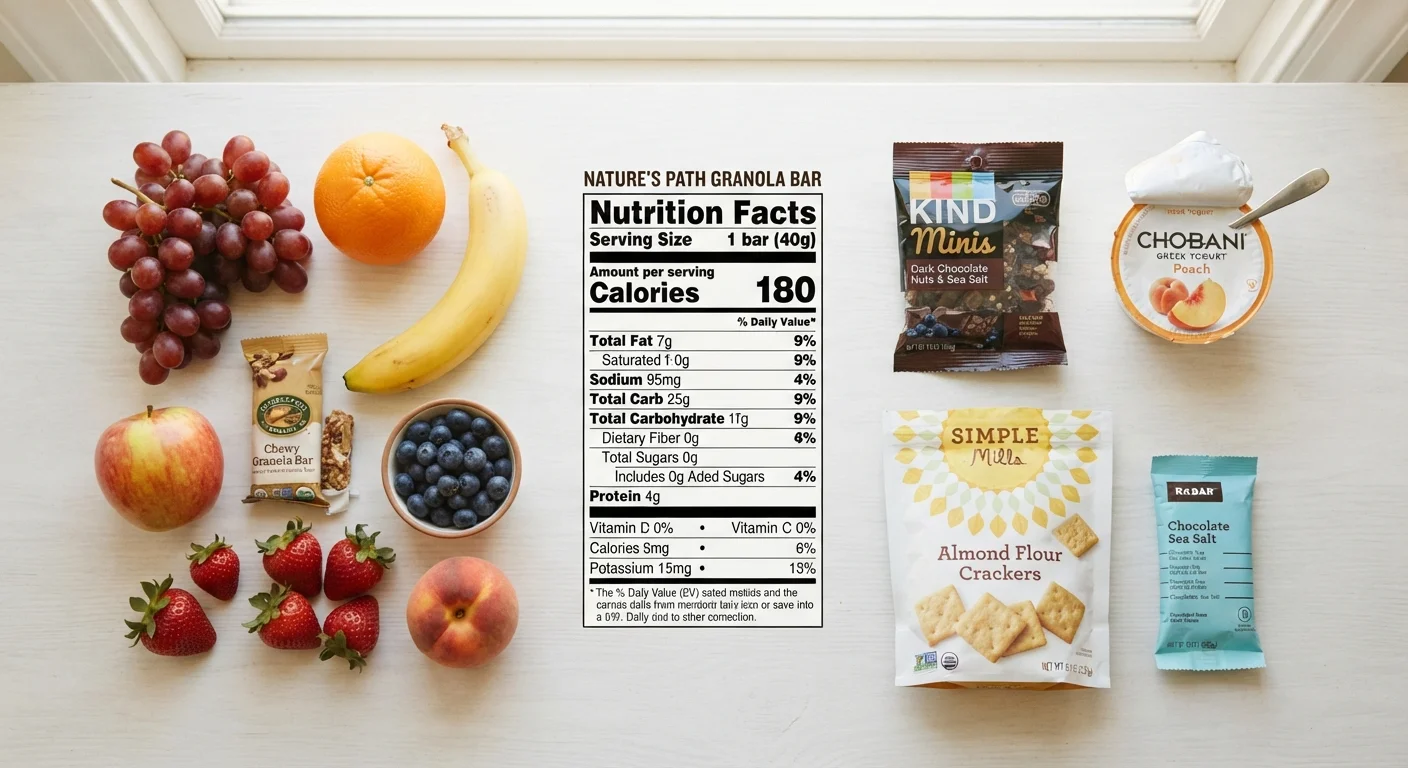
Option A
Natural Sugar
Sugar that arrives with the whole food package intact.
Best for: Understanding why fruit, dairy, and some vegetables contribute sugar without the same dietary concerns as processed foods.
Option B
Added Sugar
Sugar introduced during food manufacturing or preparation.
Best for: Identifying where excess sugar sneaks into everyday diets through sauces, drinks, and packaged snacks.
What Makes These Two Sugars Different
At the molecular level, a gram of glucose from a strawberry and a gram from a soft drink look nearly identical. What sets them apart isn't chemistry alone - it's context. Natural sugars exist within a food matrix: the fiber, water, protein, and micronutrients that surround them in whole foods. Added sugars arrive stripped of that matrix, typically during manufacturing, cooking, or food preparation.
Consider a cup of plain low-fat yogurt versus a flavored yogurt cup of the same size. Both contain sugar on the label under "Total Sugars." The plain variety's sugar comes almost entirely from lactose, the naturally occurring sugar in milk. The flavored version likely includes cane sugar, corn syrup, or fruit concentrate added during production - those are added sugars, and they push the total well above what the milk itself provides.
This distinction matters because how the body processes sugar is influenced by what accompanies it. The fiber in a whole apple, for instance, slows digestion and moderates how quickly glucose enters the bloodstream. A glass of apple juice - even unsweetened - delivers similar natural sugar but far less fiber, so the response differs. That nuance is why the source of sugar shapes its role in an overall eating pattern.
How the Nutrition Label Reflects This Difference
The U.S. Food and Drug Administration updated the Nutrition Facts label - a change phased in for most manufacturers - to require a dedicated line for Added Sugars, listed in grams and as a percentage of the Daily Value (DV). The Daily Value used for added sugars is 50 grams per day, based on a 2,000-calorie reference diet, aligning with federal dietary guidance recommending that added sugars make up less than 10% of daily calories.
| Criterion | Natural Sugar | Added Sugar |
|---|---|---|
| Origin | Inherent in whole foods | Added during processing or cooking |
| Common sources | Fruit, milk, plain vegetables | Soda, sauces, flavored yogurt, baked goods |
| Accompanies fiber/nutrients | Usually yes | Rarely |
| Shown separately on label | No - part of Total Sugars | Yes - dedicated "Added Sugars" line |
| Daily Value guidance | No specific DV set | 50g DV; under 10% of daily calories recommended |
| Primary dietary concern | Generally low for whole foods | Higher - linked to excess calorie intake |
When you scan a label, "Total Sugars" captures both natural and added sugars combined. "Includes X g Added Sugars" directly below it tells you how much of that total was put there intentionally. A plain oat packet might list 1g total sugars with 0g added; an instant flavored variety of the same size could list 12g total with 10g added. That single comparison illustrates why the separate line is so useful for everyday shopping decisions.
Just like hidden sodium can accumulate across a day's worth of meals - see our guide on where sodium hides in everyday food - added sugars can stack up across condiments, beverages, and snacks in ways that aren't obvious without reading labels carefully.
Where Added Sugars Hide Most Often
Many people associate excess sugar with obvious culprits: candy, soda, and desserts. But added sugars appear in a wider range of packaged foods than most shoppers expect. Tomato-based pasta sauces, salad dressings, flavored oatmeal, granola bars, bread, and even some savory crackers frequently contain added sugar to enhance flavor or extend shelf life.
17 tsp
Average daily added sugar intake for US adults
According to the Centers for Disease Control and Prevention, US adults consume roughly 17 teaspoons of added sugar daily - well above the recommended limit.
~40%
Share of added sugar from beverages
Federal dietary survey data suggest beverages, including sodas and sweetened coffees, account for a large share of added sugar intake among Americans.
50g
Daily Value for added sugars on US nutrition labels
The FDA set the added sugars Daily Value at 50 grams based on a 2,000-calorie reference diet, consistent with the Dietary Guidelines for Americans.
Sweetened beverages - sodas, energy drinks, sweetened coffees, and some fruit-flavored drinks - remain one of the most significant sources of added sugar for US adults and children, according to federal dietary survey data. Because liquids don't trigger the same fullness signals as solid food, they tend to contribute calories without proportionate satisfaction.
Reading the ingredients list alongside the Nutrition Facts panel adds another layer of clarity. Added sugars appear under many names: high-fructose corn syrup, cane juice, maltose, dextrose, agave nectar, honey, and molasses, among others. The presence of multiple sweeteners partway down the ingredients list - ingredients are listed by weight - often signals a meaningfully sweetened product even when no single sweetener tops the list.
Understanding how different nutrients are processed is a recurring theme in nutrition literacy. For context on how fat types are similarly distinguished, our breakdown of saturated vs. unsaturated fat follows the same framework of asking where a nutrient comes from and what surrounds it in the food.
This article provides general nutrition information and is not a substitute for personalized advice from a registered dietitian or qualified healthcare professional. Individual dietary needs vary - please consult a professional for guidance specific to your health situation.
The content provided on our blog site traverses numerous categories, offering readers valuable and practical information. Readers can use the editorial team’s research and data to gain more insights into their topics of interest. However, they are requested not to treat the articles as conclusive. The website team cannot be held responsible for differences in data or inaccuracies found across other platforms. Please also note that the site might also miss out on various schemes and offers available that the readers may find more beneficial than the ones we cover.