

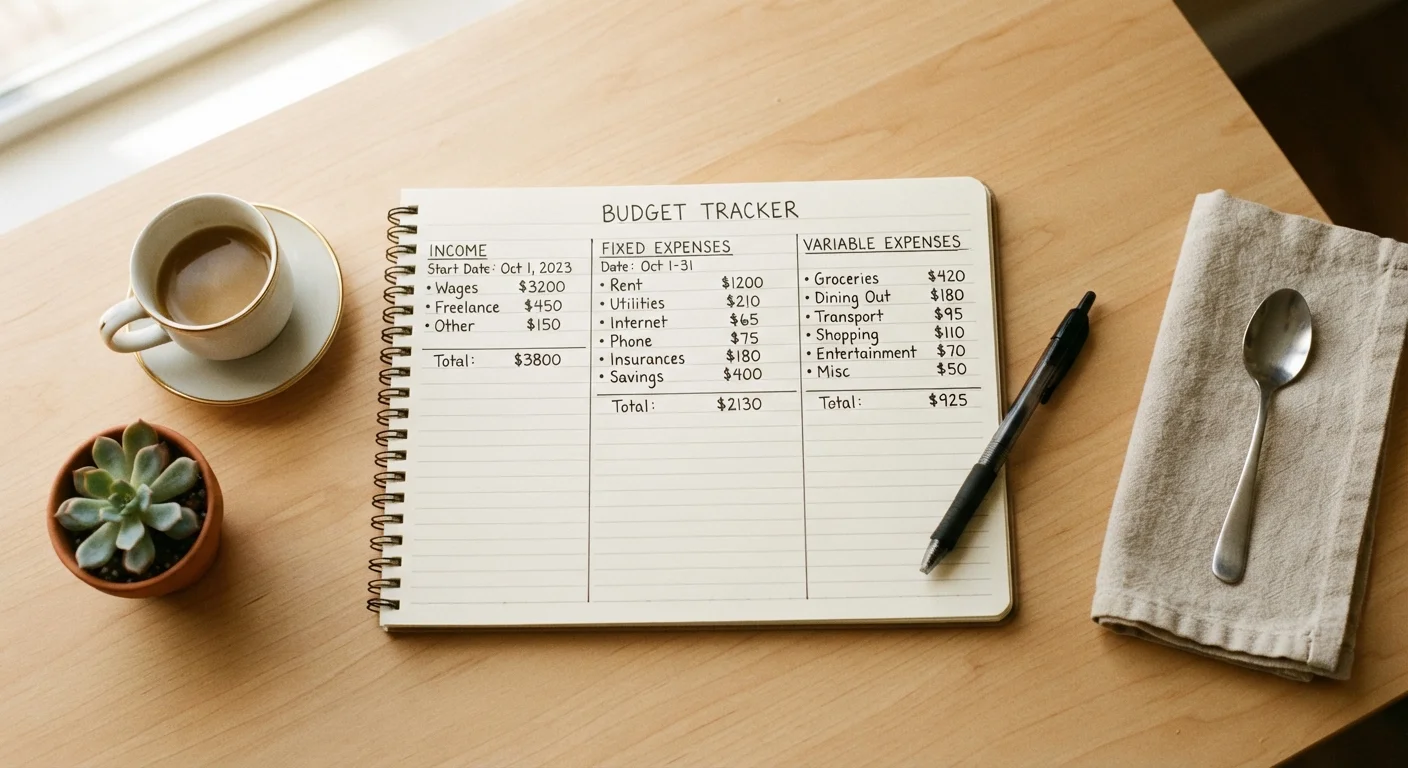
How the Three Buckets Work
The 50/30/20 rule starts with one number: your monthly take-home pay after taxes. From there, the math is straightforward.
- 50% — Needs: Essential, non-negotiable expenses. Rent or mortgage, groceries, utilities, health insurance, minimum loan payments, and basic transportation all belong here.
- 30% — Wants: Things that improve your life but aren't survival-level necessities. Dining out, streaming services, hobbies, clothing beyond basics, and vacations fit this bucket.
- 20% — Savings and debt repayment: Money directed toward your future. Emergency fund contributions, retirement savings, extra payments on debt, and investing all count here.
For a household bringing home $5,000 a month, that means roughly $2,500 for needs, $1,500 for wants, and $1,000 toward savings or debt. The percentages don't need to hit exactly every month — the goal is to keep your spending pattern roughly aligned over time.
For a deeper look at sorting your everyday expenses honestly, see how to distinguish needs from wants in your budget.
~35%
Average share of income spent on housing by US renters
According to U.S. Census Bureau data, many American renters spend well above the 30% housing-to-income benchmark, making the 50% needs cap a stretch for a large share of households.
57%
Americans unable to cover a $1,000 emergency from savings
A Bankrate survey found that more than half of U.S. adults could not pay an unexpected $1,000 expense from savings, underscoring why the 20% savings bucket matters.
$6,000+
Average US household credit card debt
Federal Reserve data indicates that the average American household carrying a credit card balance holds thousands of dollars in revolving debt — a key reason the 20% bucket often needs to prioritize debt paydown.
Where the Rule Works — and Where It Struggles
The 50/30/20 framework is genuinely useful for households with moderate, stable incomes and average fixed costs. It removes the paralysis of building a budget from scratch and creates enough structure to change spending habits without demanding obsessive tracking.
But it has real limitations worth knowing before you commit:
- High housing markets: In many U.S. cities, rent alone can consume 40–50% of take-home pay for middle-income earners, leaving almost nothing for other needs before wants or savings are even considered.
- Variable income: Freelancers, gig workers, and anyone with irregular pay find percentage-based budgets tricky when the base number changes every month.
- Heavy debt loads: If you're carrying high-interest credit card debt, allocating only 20% toward repayment may mean the debt grows faster than you're paying it down.
- Low income households: When income barely covers essentials, the 30% wants category may need to shrink to near zero until financial stability improves.
None of these challenges mean the rule is useless — they just mean you may need to adjust the percentages to fit your actual situation. A 60/15/25 split, for example, might make more sense for a family aggressively paying down debt.
Automate the 20% First
One of the most reliable ways to stick to the savings portion is to treat it like a bill. Set up an automatic transfer to a separate savings account on the same day your paycheck arrives. When the money moves before you see it, you're far less likely to spend it on wants by accident.
Putting It Into Practice
Getting started takes about 30 minutes and a recent bank statement. Here's a simple approach:
- Find your net monthly income. Use your actual take-home pay. If income varies, use a conservative average from the past three months.
- List last month's spending. Group every expense into needs, wants, or savings. Be honest — a gym membership you use twice a month is a want, not a need.
- Compare your actual split to 50/30/20. See where you're over or under. Most households find their wants category runs higher than 30% and their savings runs lower than 20%.
- Pick one adjustment to make this month. You don't have to overhaul everything at once. Cutting one recurring want or automating a small savings transfer is a real step forward.
From there, a monthly check-in keeps you on track. Our monthly budget reset checklist walks through a simple end-of-month review routine that pairs well with this framework.
The 50/30/20 rule is one piece of a larger budgeting picture. If you want to build on it, the complete household budgeting guide covers everything from setting up your first budget to making the habit stick long-term.
This article is for general informational and educational purposes only and does not constitute personalized financial advice. Consider speaking with a licensed financial professional about decisions specific to your household's situation.
Frequently Asked Questions
Needs are expenses you cannot reasonably go without: rent or mortgage, utilities, groceries, basic transportation, minimum debt payments, and health insurance. Subscriptions, dining out, and gym memberships are generally wants, not needs. The line can blur — our related article on <a href="/personal-finance/budgeting-basics/needs-wants-and-the-gray-area-in-between-making-honest-budget-decisions">needs vs. wants in budgeting</a> covers the gray areas in more detail.
Use net income — your take-home pay after taxes and any pre-tax deductions like a 401(k) contribution. Gross income overstates what you actually have available to spend and save. Basing your budget on net pay keeps the math grounded in reality.
That's common, especially for households in high-cost areas or those with lower incomes. If your essentials consistently run above 50%, focus first on reducing what you can — refinancing debt, finding lower-cost housing alternatives — and accept that the 30/20 split may need to shift temporarily. The framework is a target, not a pass/fail test.
Yes. The 20% category covers both building savings (like an emergency fund or retirement contributions) and paying down debt beyond the minimum payment. Many financial educators suggest prioritizing high-interest debt within this bucket before focusing heavily on savings.
It works well as a starting framework but isn't one-size-fits-all. Families with significant debt, very low income, or unusually high fixed costs may need a different split. Think of it as a flexible guide rather than a strict prescription.
Start by listing last month's expenses and sorting each one into needs, wants, or savings. Many banking apps and budgeting tools allow custom category grouping. A monthly check-in — reviewing your actuals against each bucket — helps you catch drift early.
The content provided on our blog site traverses numerous categories, offering readers valuable and practical information. Readers can use the editorial team’s research and data to gain more insights into their topics of interest. However, they are requested not to treat the articles as conclusive. The website team cannot be held responsible for differences in data or inaccuracies found across other platforms. Please also note that the site might also miss out on various schemes and offers available that the readers may find more beneficial than the ones we cover.