

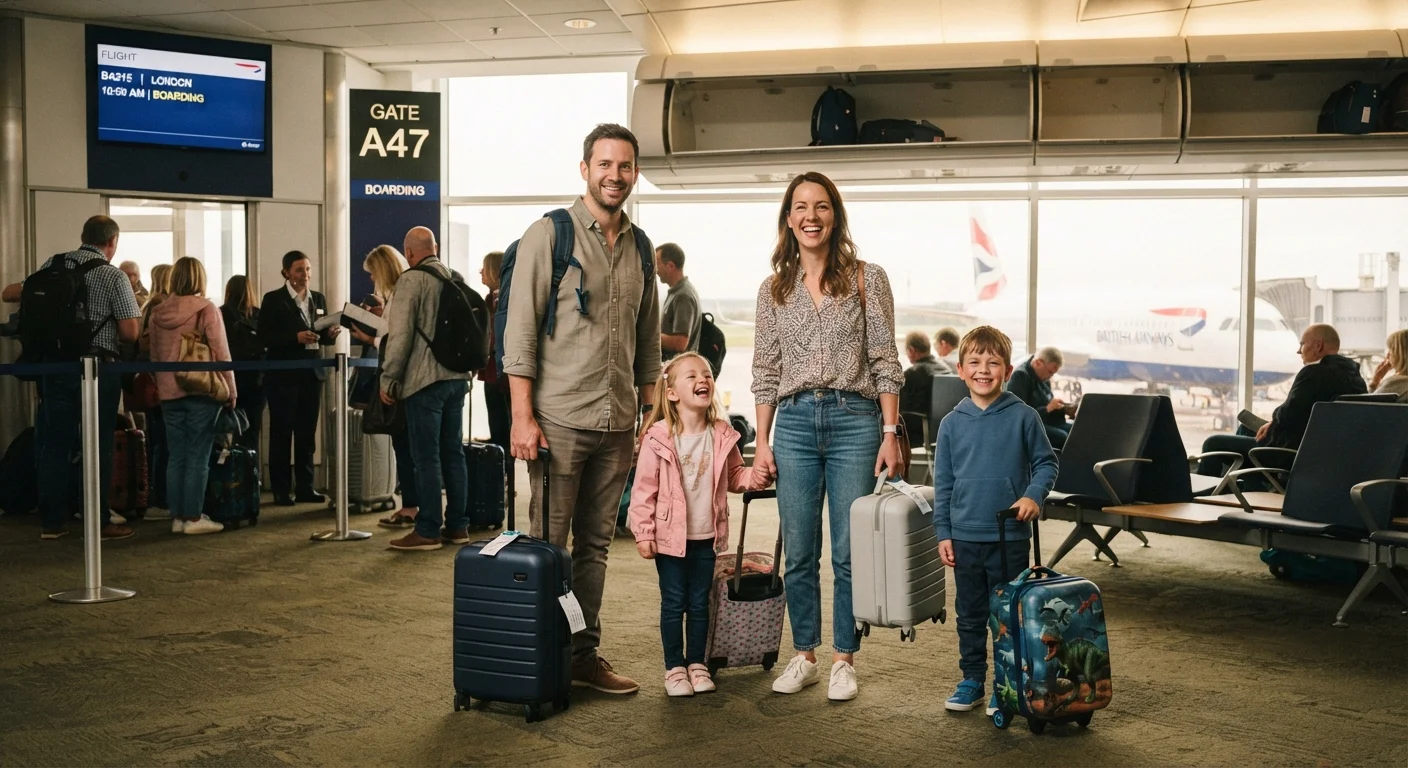
Why Carry-On Only Is Worth the Effort for Families
Checked bag fees have risen steadily, and for a family of four, those charges can add up to a meaningful chunk of a vacation budget before you've even boarded. Beyond the cost, checked luggage introduces friction at every stage: long check-in lines, anxious waits at baggage claim, and the occasional nightmare of a lost bag in a foreign city. As our guide to hidden travel costs explains, these expenses catch many families off guard.
Going carry-on only removes all of that. You walk off the plane and straight to your destination. Kids are easier to manage when you're not juggling oversized rolling bags. And the discipline of packing light tends to make the whole trip feel less cluttered and more adventurous. The trade-off is real — you'll make choices — but most families who try it once don't go back.
Skip the Gear — Rent It There
Strollers, car seats, beach gear, and even hiking equipment can often be rented at popular family destinations. Before packing bulky items 'just in case,' check whether rental options exist locally. This alone can eliminate the temptation to check a bag entirely.
What You Actually Need to Pack (And What to Leave Home)
The biggest mental shift is moving from what might I need? to what will I definitely use? Most families overpack out of a desire to be prepared for every scenario. In practice, you wear a fraction of what you bring.
Clothing Strategy
Aim for a 1-2-3 rule per person: 1 outfit worn on travel day, 2 bottoms, 3 tops for trips up to five days. For longer trips, add one outfit per additional three days — but only if your destination lacks easy laundry access. Quick-dry fabrics are key. Many travelers wash a few items in the hotel sink overnight and find them dry by morning. Dark, neutral colors mix and match easily and hide travel grime.
Kids' Clothing
Children's items are where families tend to add the most unnecessary weight. Pack for realistic conditions, not worst-case spills. One or two extra sets for toddlers is reasonable; for school-age kids, treat them much like adults. See our age-by-age considerations for traveling with kids for nuances by developmental stage.
Toiletries and Gear
Toiletries should fit within TSA's 3-1-1 liquid rules (3.4 oz containers, one quart-sized bag per person). Solid shampoo bars, concentrated detergent sheets, and multi-use balms save significant space. For baby and toddler families, check our overview of traveling with young children — many destinations offer formula, diapers, and wipes locally, reducing what you need to carry.
Bulky "just in case" gear is often unnecessary and, as explored in why overpacking can actually reduce safety, can create new problems of its own.
What you will need
Choosing and Fitting the Right Bags
Not every carry-on is created equal. Airlines publish specific dimension limits — typically around 22" x 14" x 9" for most major US carriers, but this varies and changes, so always verify directly with your airline before packing.
Carry-on spinner or rolling bag
Primary luggage for adults; must meet airline overhead bin dimensions.
Personal item backpack or tote
Fits under the seat; holds in-flight essentials and overflow items.
Children's daypack (age-appropriate size)
Gives each child ownership of their own gear and distributes family load.
Packing cubes (set of 3–4)
Compresses clothing and keeps bag contents organized by category.
Quart-sized clear zip bag (per person)
Required for TSA security screening of liquids, gels, and aerosols.
Travel detergent sheets
Lightweight and compact; enables sink laundry mid-trip to reduce clothing packed.
One underused strategy: give every child their own small backpack. Kids as young as four can manage a personal item containing a change of clothes, snacks, and entertainment. This distributes the load and gives children a sense of ownership over their travel experience. Just keep the weight appropriate to their size.
Pack your bag, then try lifting it and walking briskly for five minutes. If it's uncomfortable, remove items until it isn't. You'll be moving through terminals, potentially on public transit, and up stairs — weight matters more than you expect.
Step-by-Step: How to Make the Switch
The process of going carry-on only works best when approached systematically rather than as a last-minute edit. Follow the steps below on your next trip, and use our pre-departure checklist to catch anything you might miss before leaving home.
Research your airline's carry-on policy
Before you pack a single item, look up the carry-on dimensions and weight limits for every airline you'll fly — including any connecting carriers. Budget airlines often have stricter limits than major US carriers. Note whether your ticket tier includes a full-size overhead bin bag or only a personal item.
Build a master packing list before you open a bag
Write down every item you think you need, person by person. Then go through the list and cross off anything you haven't used on a previous trip, anything available at your destination, and any item serving only one purpose. What's left is your working list.
Choose your bags and test the fit
Select bags that are confirmed to meet your airline's dimensions — measure them yourself, not just their listed specs. Assign each family member their own carry-on or personal item appropriate to their size. Kids' backpacks should be proportional; a heavy pack on a small child causes real discomfort on long travel days.
Pack using the rolling and bundle method
Roll soft clothing items tightly to minimize wrinkles and maximize space. Use packing cubes to keep categories organized and make security screening easier. Heavier items go closest to the wheels (or at the base of a backpack near your back). Fill shoes with socks to use every inch efficiently.
Do a full dress rehearsal 48 hours before departure
Pack everything, zip the bags, and lift them. Walk around your home for a few minutes. If anything feels too heavy or bulky, now is the time to remove it — not at the airport. Check that liquids are within limits and accessible for screening. Confirm that each child can manage their own bag independently.
Plan for laundry at your destination
Carry-on travel works best when you treat laundry as part of the trip rather than an afterthought. Identify whether your accommodation has in-room laundry, a shared laundry facility, or whether a nearby laundrette is accessible. Packing a small travel-size detergent sheet makes sink washing simple for small loads. Many travelers do one mid-trip laundry session and find it takes under an hour.
The content provided on our blog site traverses numerous categories, offering readers valuable and practical information. Readers can use the editorial team’s research and data to gain more insights into their topics of interest. However, they are requested not to treat the articles as conclusive. The website team cannot be held responsible for differences in data or inaccuracies found across other platforms. Please also note that the site might also miss out on various schemes and offers available that the readers may find more beneficial than the ones we cover.