

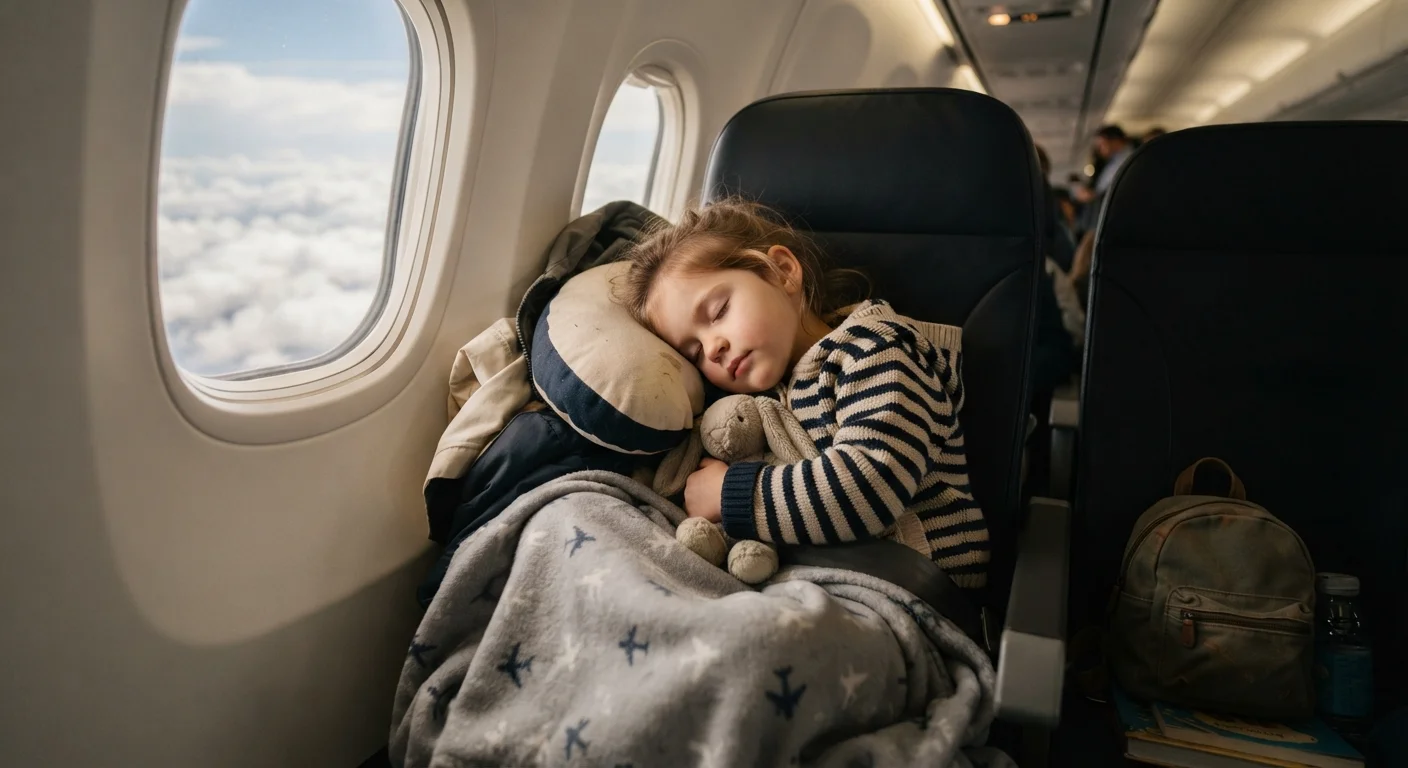
Why Kids Get Hit Harder Than Adults
Adults are often frustrated by jet lag, but children — especially toddlers and school-age kids — can experience it more acutely and for longer. The reason comes down to how children's circadian rhythms work. Children tend to have stronger, more rigid sleep-wake cycles, which is great for predictable bedtimes at home but a real liability when crossing six time zones.
Infants under three months old don't yet have a consolidated circadian rhythm, so their disruption looks different — more scattered waking, less predictable hunger. Toddlers and preschoolers, who thrive on routine, are often the most visibly affected: expect crankiness, tearful resistance at bedtime, and wide-awake energy at 3 a.m. Older children and teenagers tend to recover somewhat faster, though not as quickly as adults.
Direction of travel matters too. Eastward flights — say, from the US West Coast to Europe — require the body clock to advance, which most people (and kids) find harder than delaying it. Westward journeys allow a more natural drift, which is why a flight from New York to Hawaii often feels gentler on the sleep schedule than a return trip.
Eastward vs. Westward: Why Direction Matters
The human circadian rhythm naturally runs slightly longer than 24 hours, which means delaying sleep (westward travel) feels easier than advancing it (eastward travel). For families, this means a transatlantic trip to Europe is typically harder to recover from than a flight to Hawaii, even if the number of time zones crossed is similar.
Realistic Recovery Timelines
A commonly cited benchmark is one day of adjustment per time zone crossed, though real-world experience suggests children often need slightly longer. A family flying from the US East Coast to Western Europe — a roughly five- to six-hour time difference — should realistically plan for four to seven days of some sleep disruption before a child is fully settled.
~1 day
Estimated recovery per time zone crossed
This rule of thumb is widely cited by travel medicine professionals as a general baseline, though children often need slightly longer than adults.
5–7 days
Typical full adjustment for a 5-hour time shift
Families crossing a five-hour time difference (e.g., US East Coast to Western Europe) generally report near-full adjustment in children within five to seven days.
Eastward
Direction that causes more severe jet lag
Research on circadian disruption consistently finds that advancing the body clock (eastward travel) is harder for most people than delaying it (westward travel).
The first two nights are typically the roughest. Early-morning waking (often between 3 and 5 a.m.) is the most reported symptom for families traveling eastward. Appetite disruptions — not wanting to eat at mealtimes, feeling hungry at odd hours — frequently accompany the sleep issues and can amplify irritability.
For traveling with very young children, recovery can feel especially non-linear: two good nights followed by a rough one is common. Setting realistic expectations before you depart is genuinely one of the best things you can do for your own sanity.
Before You Fly: Preparation That Actually Helps
A few days before departure, gradually shifting your child's bedtime and wake time by 20 to 30 minutes in the direction of your destination can meaningfully reduce jet-lag severity. It's a modest change that doesn't upend home life but gives the body clock a head start.
Keeping children well-hydrated during the flight and limiting sugary snacks — which can cause energy spikes and crashes — also supports more stable sleep on board. Overnight flights where children can sleep through much of the journey tend to work better for eastward travel, when you want them to sleep at the destination's nighttime.
For broader age-by-age trip planning considerations, timing your flight well and building buffer days into the itinerary are practical moves that reduce pressure to perform at peak energy immediately on arrival.
Build a Buffer Day Into Your Itinerary
Arriving one day before any must-do activities — a theme park, a family event, a guided tour — gives your child time to begin adjusting without the pressure of performing. A low-key arrival day spent outdoors and eating at local mealtimes sets a much better foundation than hitting the ground running immediately.
At the Destination: Resetting the Clock
The single most effective tool for resetting a child's circadian rhythm is natural light. Getting outside in the morning — a walk, playground time, even breakfast on a terrace — signals to the brain that the day has started. Keeping curtains open in the morning and avoiding blackout conditions during the day helps reinforce the new time cues.
Mealtimes are an underrated tool. Eating at local mealtimes, even if your child isn't hungry, helps anchor the body clock through digestive rhythms. Keep meals light the first couple of days to avoid compounding stomach upset with sleep disruption.
Naps are a judgment call. For toddlers who still nap, a single short nap (no more than 45 minutes) in the early afternoon can prevent overtiredness without pushing bedtime too late. Longer or later naps tend to backfire, making the night harder. Older children who don't typically nap are usually better served by staying engaged and active until local bedtime, even if that first night is a rough one.
Parents managing layovers en route may also find it useful to review strategies in our guide to airport layovers with children, since a long stopover can be an opportunity to begin adjusting meals and rest to the new schedule.
This article is for general informational purposes and does not constitute medical advice. Consult your child's pediatrician before using any supplement, including melatonin, or if your child has underlying health conditions that may affect sleep.
Frequently Asked Questions
A commonly used rule of thumb is roughly one day of recovery per time zone crossed, though children's individual responses vary. A five-hour time-zone shift might mean three to six days of disrupted sleep. Toddlers and infants often take longer than older children to fully adjust.
Eastward travel tends to be harder because it requires advancing the body clock — going to sleep earlier than it naturally wants. Westward travel, which delays the clock, typically aligns more easily with how children's rhythms naturally drift. That said, large time-zone jumps in either direction will cause some disruption.
Melatonin is sometimes discussed as a jet-lag aid, but its use in children is not universally endorsed and appropriate dosing varies by age and weight. Always consult your child's pediatrician before using melatonin or any supplement for sleep support during travel.
Morning light exposure, outdoor activity, and eating meals on the local schedule are among the most practical strategies. Keeping naps short and encouraging outdoor play in daylight can help reset the body clock more quickly than simply waiting it out indoors.
Yes. Infants under about three months don't yet have a fully established circadian rhythm, so disruption can be more unpredictable but sometimes less severe in the classic sense. Older babies and toddlers, who have stronger sleep routines, often show more pronounced and frustrating jet-lag symptoms.
Most travel experts and sleep specialists suggest switching to the destination schedule as soon as possible, even on the first day. Keeping a child on home time for multi-day trips can prolong adjustment and make the return trip harder as well.
The content provided on our blog site traverses numerous categories, offering readers valuable and practical information. Readers can use the editorial team’s research and data to gain more insights into their topics of interest. However, they are requested not to treat the articles as conclusive. The website team cannot be held responsible for differences in data or inaccuracies found across other platforms. Please also note that the site might also miss out on various schemes and offers available that the readers may find more beneficial than the ones we cover.