

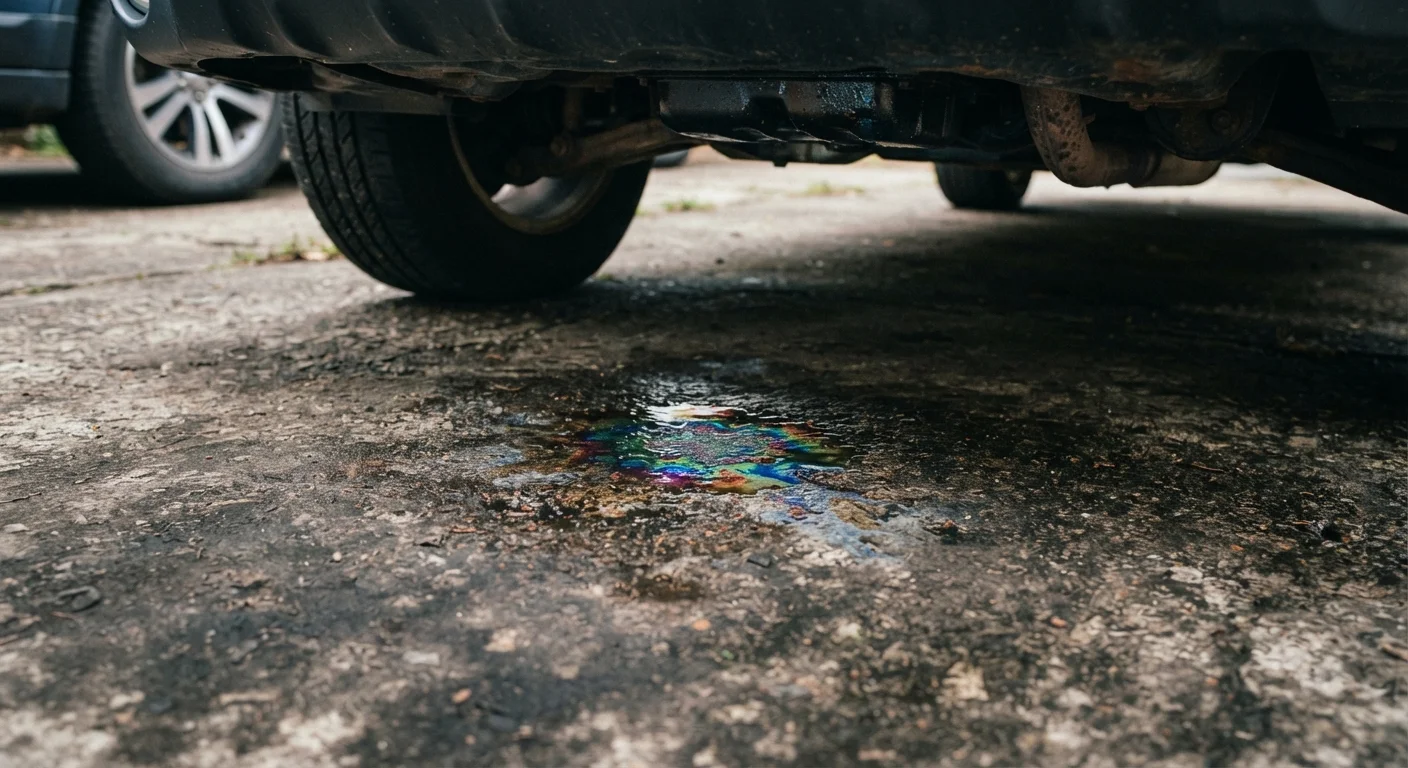
Why Fluid Color and Location Matter
Finding a puddle under your car can feel alarming, but not every drip signals an emergency. Some are harmless. Others point to a system that needs prompt attention. The key is learning to read what you're looking at - color, consistency, smell, and where exactly the fluid appears under the vehicle.
Before you panic or ignore the problem, grab a piece of white cardboard or paper, slide it under the drip for a few minutes, and take note of what you find. That simple step can narrow down the source significantly.
| Most common harmless drip | AC condensation (clear water) |
| Most urgent fluid leak | Brake fluid - affects stopping ability |
| Coolant leak risk | Engine overheating within minutes of driving |
| Easiest identification method | Place white cardboard under drip; note color and smell |
| Oil drip typical location | Front-center under the vehicle |
| Coolant smell | Distinctly sweet, sometimes compared to maple syrup |
For a broader view of how leaks and mechanical issues show up in ownership records, see what a vehicle history report actually tells you before buying a used car.
Fluid Color Reference Guide
Here's how to interpret the most common fluid colors found under a vehicle:
Coolant (Antifreeze)
A liquid mixture, typically ethylene glycol and water, circulated through the engine to regulate temperature. It prevents both overheating in summer and freezing in winter.
Transmission Fluid
A lubricating oil specifically formulated for the transmission system. It keeps gears shifting smoothly and helps manage heat generated by the drivetrain.
Brake Fluid
A hydraulic fluid that transfers force from the brake pedal to the brake components at each wheel. Loss of brake fluid directly reduces braking effectiveness.
Differential Fluid
A heavy gear oil that lubricates the differential, the component that allows wheels to rotate at different speeds during turns. Found in rear-wheel and four-wheel drive vehicles.
Power Steering Fluid
A hydraulic fluid that assists steering effort. Some modern vehicles use electric power steering and have no fluid reservoir, but many older and larger vehicles still rely on this system.
- Clear or light water: Almost always condensation from the air conditioning system, especially in warm weather. Normal and harmless.
- Light brown to black (oily): Engine oil. Fresh oil tends to be amber or honey-colored; older, degraded oil turns dark brown or black. Location matters - engine oil typically drips from the center-front of the vehicle.
- Bright orange or pink: Could be coolant (antifreeze) that has degraded, or transmission fluid in some vehicles. Coolant is often slightly syrupy and has a sweet smell.
- Bright green, yellow, or blue: Fresh coolant (antifreeze). The sweet smell is distinctive. Coolant leaks are serious - low coolant levels can cause engine overheating quickly.
- Red or reddish-brown: Transmission fluid or power steering fluid. Transmission fluid is typically found toward the center or rear underside of the vehicle.
- Light yellow to clear (slippery feel): Brake fluid. This is an urgent situation. A brake fluid leak can compromise stopping power. Do not drive the vehicle until a qualified mechanic evaluates it.
- Dark brown or black (near wheels): Could be gear oil from a differential or axle. Has a distinctly pungent, sulfurous smell.
If you're unsure and the fluid is oily, slippery, or has a chemical smell, treat it as potentially serious until a mechanic confirms otherwise. Paired with a dashboard warning, leaks become more urgent - your car's warning lights, decoded explains what those indicators mean.
What the Location Under Your Car Tells You
Fluid position under the vehicle roughly maps to specific systems:
- Front-center: Likely engine oil, coolant, or power steering fluid. The engine, radiator, and related components live here.
- Center of vehicle: Transmission fluid or, in older vehicles, manual gearbox oil.
- Near any wheel: Brake fluid or wheel bearing grease - both warrant immediate attention.
- Rear-center: Differential fluid (rear-wheel and four-wheel drive vehicles) or rear axle oil.
- Directly beneath the exhaust or tailpipe: Water condensation. Completely normal during warm-up, especially in cold weather.
Brake Fluid Leak: Don't Drive the Vehicle
If you suspect a brake fluid leak - look for a clear-to-light-yellow slippery puddle near a wheel or under the master cylinder - do not attempt to drive the car. Brake fluid loss can cause partial or complete brake failure. Have the vehicle inspected by a qualified mechanic before operating it, and consider having it towed to a shop.
Knowing when a leak crosses from a DIY fix into professional territory is important. DIY car maintenance - where it makes sense and where it doesn't can help you make that call confidently.
When to Act - and How Urgently
Not every drip demands the same response:
- Act immediately: Brake fluid loss, large coolant puddle, or any leak that accompanies a warning light or unusual driving behavior.
- Schedule soon: Slow oil leak, transmission fluid seep, or power steering fluid drip that is not worsening.
- Monitor only: Small water puddle under the AC drain port in summer.
Between now and your shop visit, check relevant fluid levels - refer to your owner's manual for reservoir locations and safe operating ranges. Top off only if you know the correct fluid type; mixing incompatible fluids can cause additional damage. When in doubt, have the vehicle towed rather than driven to prevent further harm.
This article provides general vehicle maintenance information for educational purposes. For diagnosis and repair of any fluid leak, consult a qualified, licensed mechanic.
The content provided on our blog site traverses numerous categories, offering readers valuable and practical information. Readers can use the editorial team’s research and data to gain more insights into their topics of interest. However, they are requested not to treat the articles as conclusive. The website team cannot be held responsible for differences in data or inaccuracies found across other platforms. Please also note that the site might also miss out on various schemes and offers available that the readers may find more beneficial than the ones we cover.