

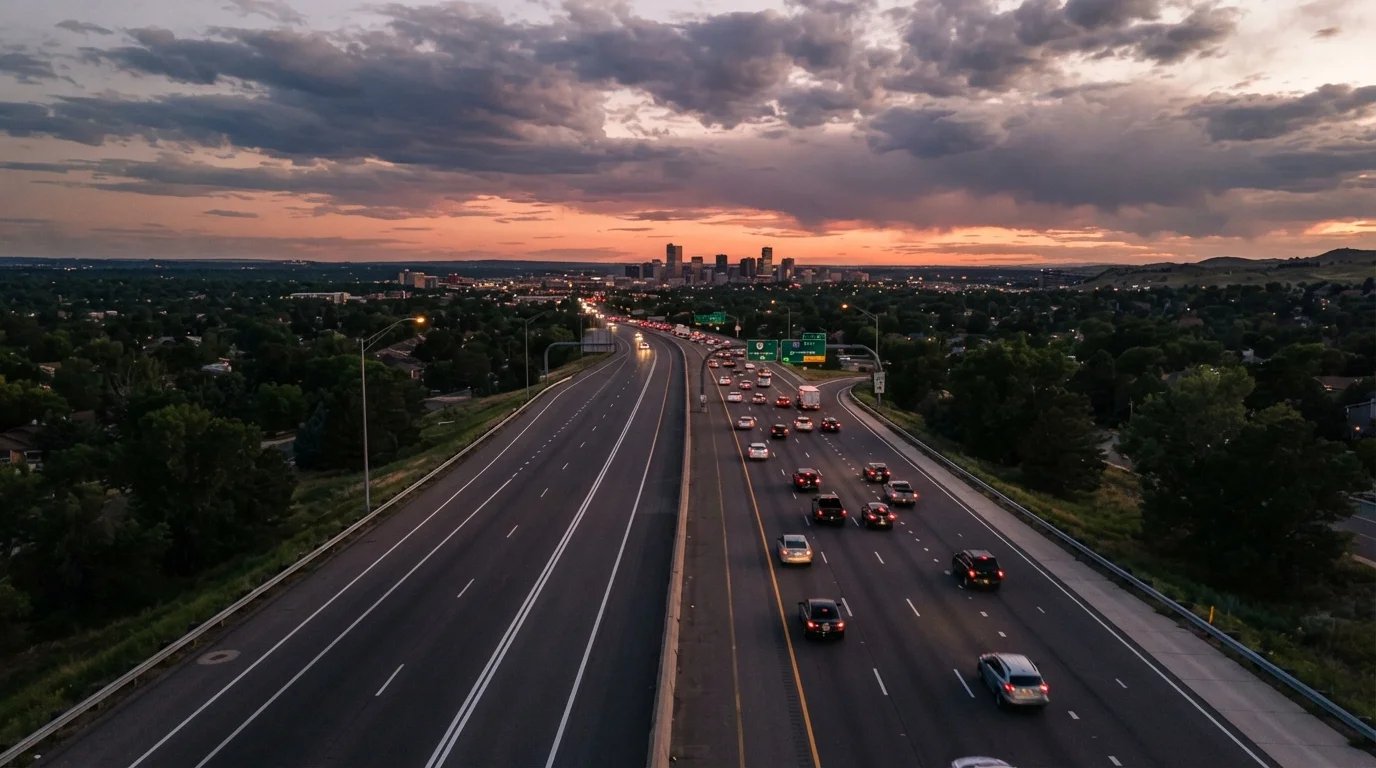
The Left Lane Has One Primary Job
On most US highways and interstates, lanes are not created equal. The right lane is the default travel lane - the one you should occupy when maintaining a steady pace. The left lane serves a specific function: to allow faster-moving vehicles to pass those traveling more slowly, after which drivers are expected to return to the right.
This isn't just informal etiquette. The Federal Highway Administration supports keep-right principles as part of highway design, and most state driver handbooks explicitly state that the left lane is for passing. The logic is straightforward - when the left lane flows freely, the entire highway moves more efficiently, reducing bottlenecks and the erratic driving that congestion produces.
For a broader overview of traffic rules that trip up even experienced drivers, see our plain-language guide to merging and right-of-way.
40+
US states with keep-right traffic laws
Most state vehicle codes include some form of a keep-right or pass-on-the-left statute, though enforcement intensity varies by jurisdiction.
~1 in 3
Drivers who admit to left-lane camping
Survey data from traffic safety researchers suggests a substantial share of drivers regularly travel in the left lane when not actively passing.
What the Law Actually Says
As of recent years, more than 40 US states have statutes that require drivers to keep right except when passing. Wording varies considerably. Some states say you must move right if a vehicle behind you is traveling faster. Others restrict left-lane use to specific speed thresholds or highway types. A few states - including Georgia, Indiana, and New Jersey - have actively enforced these laws with fines.
Crucially, driving at the posted speed limit does not exempt you from a keep-right obligation. Speed limit compliance and lane position are treated as separate responsibilities under most traffic codes. A driver going 65 mph in a 65 mph zone can still receive a citation for blocking the left lane if conditions require them to move right.
If you want to understand how speed rules interact with lane use, our explainer on posted and unposted speed limits fills in important context.
Check Your State's Specific Law
Keep-right statutes differ meaningfully from state to state - some apply only above a certain speed, others on highways only, and a few carry fines of $100 or more. Look up your state's DMV handbook or vehicle code to know exactly what applies where you drive most.
Why Left-Lane Camping Creates Real Hazards
When a driver occupies the left lane without passing, faster traffic stacks up behind them. Other drivers then make a choice: either tailgate in frustration or pass on the right. Right-side passing is more dangerous because it cuts across standard traffic flow and reduces the margin for error at merge points. Both outcomes - tailgating and right-side passing - raise the probability of a collision.
Traffic engineers describe this as a friction point: a place where speed differentials and unexpected lane changes cluster, increasing crash exposure. The problem compounds on roads with three or more lanes, where left-lane blockage pushes faster vehicles into middle lanes, squeezing everyone's reaction space.
Tailgating is closely linked to this dynamic. Our article on following distance and the three-second rule explains why the gap between vehicles matters more than most drivers realize.
Practical Lane Discipline for Everyday Drivers
Good lane discipline is a habit, not a one-time decision. These principles apply on any multi-lane road:
- Default to the right. Unless you're actively passing someone, the right lane is where you belong. The left lane should feel like a temporary position, not a home base.
- Check before you move left. Signal, check your mirrors and blind spot, then merge. Don't drift. Highway driving fundamentals covers these mechanics in detail for anyone building confidence.
- Pass and return. Once you've cleared the vehicle ahead, signal and move back right when it's safe - don't linger.
- Don't enforce the speed limit. It's not your role to prevent others from speeding by blocking the passing lane. That creates its own hazards and may be illegal.
- Stay calm if blocked. If someone ahead is camping in the left lane, resist tailgating. Wait for a safe opportunity to pass on the right if legal and clear, or allow space and adjust your pace.
Building these habits early pays dividends in safety and stress reduction on every highway trip. For a comprehensive foundation, the complete safe driving guide covers the full range of skills every driver needs.
Frequently Asked Questions
In many states, yes - it can be. Most states have some version of a 'keep right' or 'pass on the left' law requiring drivers to move right after passing. The exact rules vary by state, so check your local vehicle code for specifics.
Going the speed limit does not automatically give you the right to occupy the left lane indefinitely. If faster traffic is behind you and the right lanes are clear, most state laws still require you to move right. Speed limit compliance and lane position are separate obligations.
If it's safe to do so, move to a right lane to allow them to pass. Do not brake-check or match their aggression. If you feel unsafe, continue driving calmly and, if needed, contact law enforcement.
Yes. In heavy stop-and-go traffic where lanes move at the same pace, rigid lane rules are less practical. Some urban expressways also designate the far left lane as an HOV or express lane with its own rules. Always follow posted signs.
Research from traffic safety organizations links slow left-lane travel to increased lane weaving, aggressive passing on the right, and rear-end crashes. It disrupts traffic flow in ways that raise overall collision risk, even when individual speeds seem safe.
The content provided on our blog site traverses numerous categories, offering readers valuable and practical information. Readers can use the editorial team’s research and data to gain more insights into their topics of interest. However, they are requested not to treat the articles as conclusive. The website team cannot be held responsible for differences in data or inaccuracies found across other platforms. Please also note that the site might also miss out on various schemes and offers available that the readers may find more beneficial than the ones we cover.