

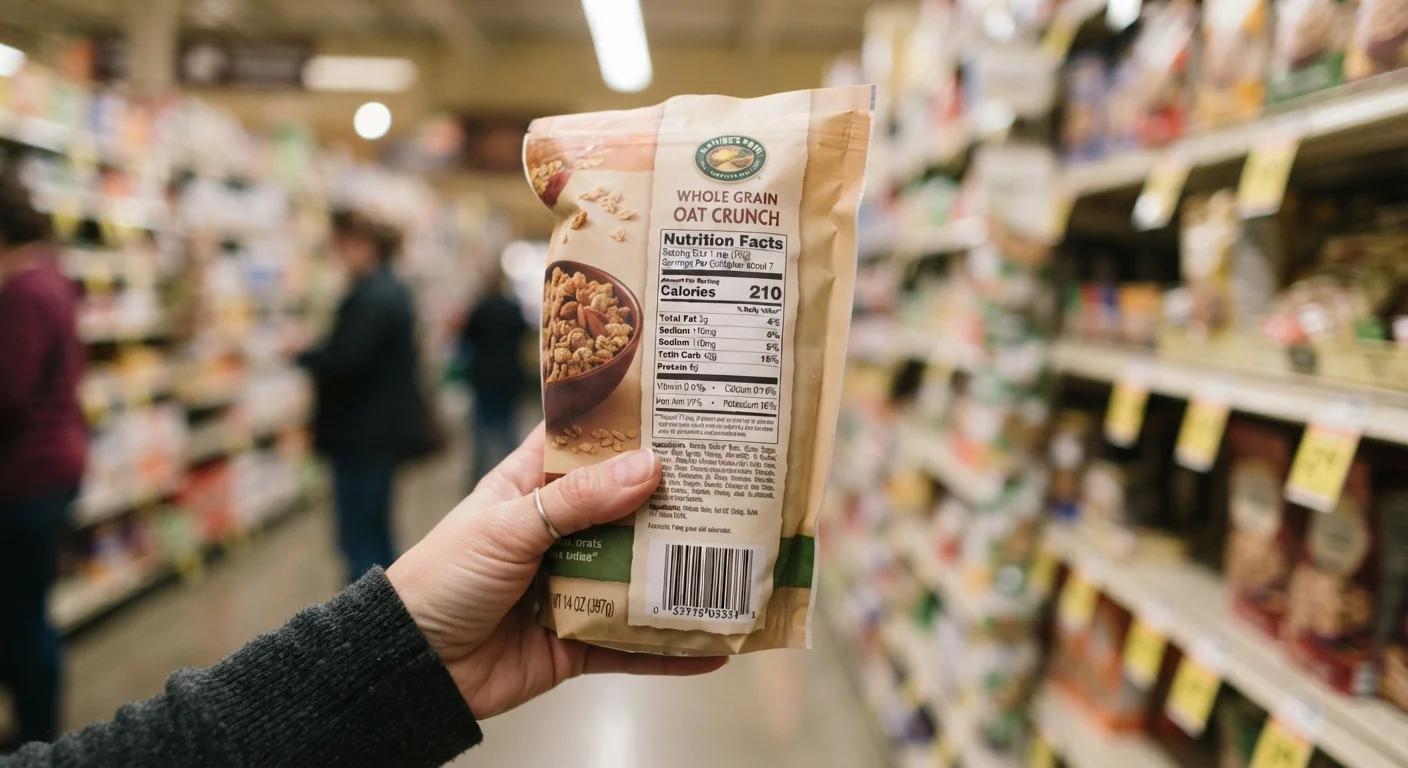
Start Here: The Serving Size Isn't Arbitrary
The very first thing to check on any Nutrition Facts label is the serving size - and it's worth pausing here longer than most people do. Every single number that follows on that label is tied to this amount. Calories, grams of fat, milligrams of sodium - all of it reflects one serving, not the whole package.
The FDA updated serving sizes as part of its 2016 label overhaul to reflect what people actually eat rather than idealized small portions. A serving of ice cream, for example, moved from half a cup to two-thirds of a cup. That said, packaging still varies widely. A bottle of juice or a small bag of chips that looks like a single-serve item may list two or more servings inside.
A practical habit: before reading any other number, check how many servings are in the container. If there are 2.5 servings and you plan to eat the whole thing, multiply accordingly. This single step prevents one of the most common misreadings of food labels.
The Serving Size Habit That Pays Off
Before you read anything else on a label, find the serving size and the number of servings per container. If a small package lists 2.5 servings, all the nutrient numbers must be multiplied by 2.5 if you eat the whole thing. This one habit eliminates the most common misreading of Nutrition Facts labels.
Calories and Nutrients: What to Prioritize
After serving size, calories appear prominently - and while they matter, they don't tell the whole story. The nutrient breakdown below the calorie count is where the label becomes genuinely useful.
Nutrients to limit include saturated fat, sodium, and added sugars. High intake of each is associated with increased risk of certain chronic conditions, according to mainstream dietary guidance from organizations like the American Heart Association and the Dietary Guidelines for Americans. Sodium in particular can add up fast across multiple servings of packaged foods throughout the day.
Nutrients to get enough of include dietary fiber, vitamin D, calcium, iron, and potassium - nutrients many Americans fall short on. The label flags these because getting adequate amounts supports overall health.
The % Daily Value column - marked %DV - is your shortcut. Based on a 2,000-calorie reference diet, a %DV of 5% or less signals a low amount of that nutrient per serving; 20% or more signals a high amount. You don't need to memorize exact grams - just use the 5/20 rule to scan quickly.
70%+
Of US adults read nutrition labels sometimes or often
According to FDA consumer research, the majority of American adults report using the Nutrition Facts label when making food purchases.
2,300 mg
Daily sodium limit recommended for most adults
The Dietary Guidelines for Americans set this as the upper daily sodium target - roughly one teaspoon of salt - for adults without specific medical conditions.
< 10%
Recommended cap for added sugars in daily calories
The Dietary Guidelines for Americans advise limiting added sugars to less than 10% of total daily caloric intake.
Decoding Added Sugars and the Ingredient List
One of the most meaningful additions to the updated label is the separate line for Added Sugars. Total Sugars - the line above it - captures everything, including sugar naturally present in dairy or fruit. Added Sugars, by contrast, are sweeteners introduced during manufacturing: cane sugar, corn syrup, honey, molasses, and dozens of other names.
The Dietary Guidelines for Americans recommend limiting added sugars to less than 10% of daily calories. Seeing the added sugars %DV on a label lets you gauge how quickly a single food eats into that budget. Understanding how added and natural sugars differ can sharpen your label-reading skills further.
The ingredient list works differently from the nutrient panel - it's ordered by weight, from most to least. An ingredient listed first is present in the greatest amount. If a sweetener appears in the top three ingredients of something marketed as a health food, that's worth noting. Watch also for multiple sugar types spread across the list (e.g., cane sugar, brown rice syrup, dextrose), which can disguise how much total sweetener is present.
For a broader look at what the science actually supports about everyday food choices, see common nutrition myths most families still believe.
Putting It All Together at the Store
Reading labels doesn't have to slow down your grocery run. With a few practiced habits, it becomes a quick scan rather than a full study session. Focus on serving size first, then glance at the %DV for sodium, added sugars, and fiber - the three numbers that often reveal the most about a packaged food's nutritional quality.
When comparing two similar products, use %DV as your common currency. The one with higher fiber and lower added sugars %DV is likely the stronger nutritional choice, all else being equal. Keep in mind that no single food determines dietary health - patterns across meals and days matter far more.
Practical grocery shopping habits can make consistent label-reading easier to build into your routine over time.
This article is for general informational and educational purposes only and does not constitute medical or dietary advice. For guidance specific to your health needs or conditions, please consult a qualified healthcare professional or registered dietitian.
Frequently Asked Questions
% Daily Value (%DV) tells you how much of a nutrient one serving contributes to a standard 2,000-calorie daily diet. A %DV of 5% or less is considered low, while 20% or more is considered high. It's a quick way to compare nutrients across products without doing the math yourself.
Every number on the label - calories, sodium, sugar, fat - applies only to the listed serving size. If you eat twice the serving, you're getting twice those nutrients. Serving sizes are now set to reflect realistic eating amounts, so check them carefully before assuming a package contains just one portion.
Total Sugars includes all sugars in a food - both those occurring naturally (like in fruit or milk) and those added during processing. Added Sugars are sweeteners put in during manufacturing and are linked more closely to excess calorie intake. The label lists them separately so you can see how much sweetness was added, not just present naturally.
Look for foods with higher %DV for fiber, vitamins, and minerals, and lower %DV for saturated fat, sodium, and added sugars. Scanning the ingredient list can also help - shorter lists with recognizable ingredients are generally a good sign. No single food needs to be "perfect"; the goal is balance across your whole diet.
Most packaged foods sold in the US must carry a Nutrition Facts label under FDA regulations. Some exemptions apply to small businesses, certain bulk items, and foods with no added nutrients that are not a significant source of any nutrient. Fresh produce and raw meats follow different labeling guidelines.
Nutrition experts generally suggest looking beyond calories alone. The quality and type of nutrients - such as fiber, saturated fat, and added sugars - often matters more than total calories in isolation. Consider the full picture of what you're getting per serving, not just the calorie count at the top.
The content provided on our blog site traverses numerous categories, offering readers valuable and practical information. Readers can use the editorial team’s research and data to gain more insights into their topics of interest. However, they are requested not to treat the articles as conclusive. The website team cannot be held responsible for differences in data or inaccuracies found across other platforms. Please also note that the site might also miss out on various schemes and offers available that the readers may find more beneficial than the ones we cover.