

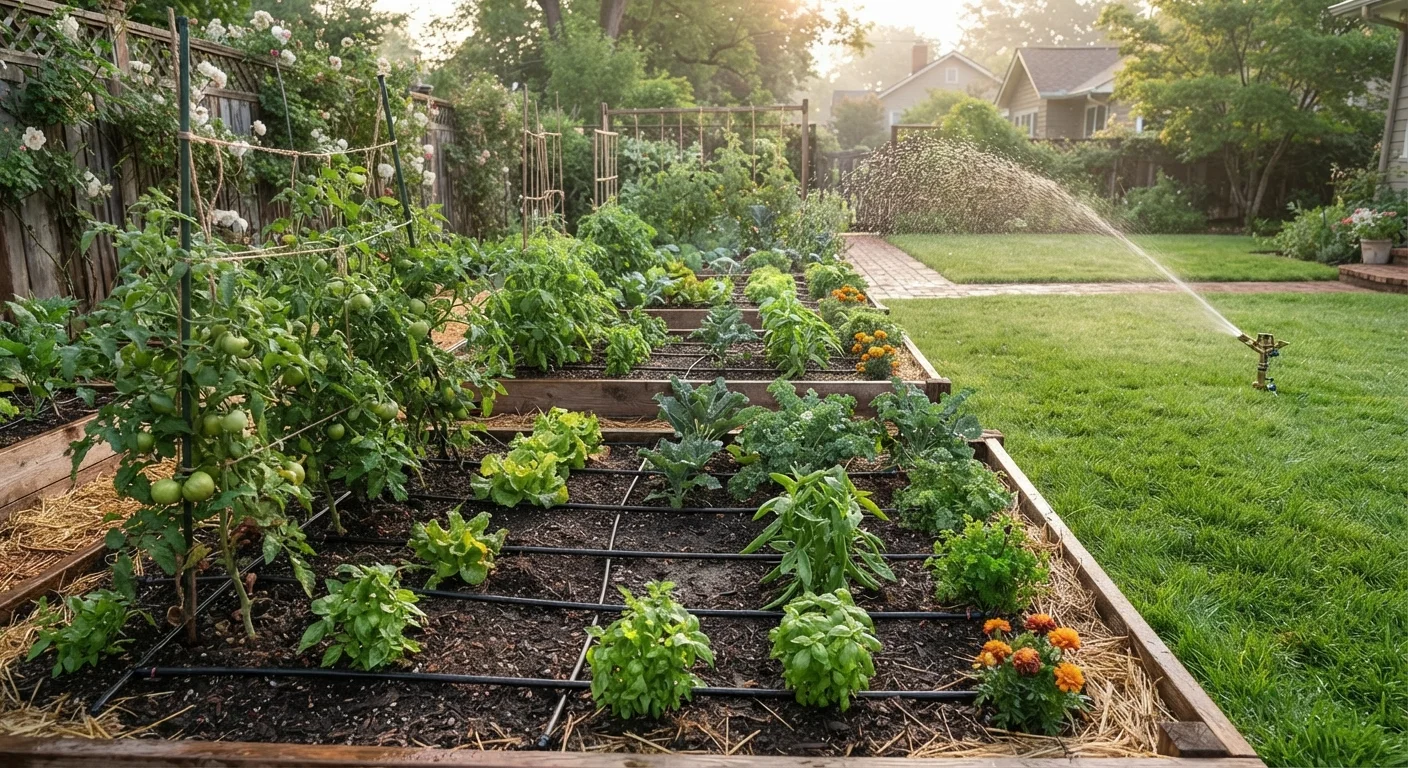
Option A
Drip Irrigation
The precision, root-zone watering method.
Best for: Vegetable beds, raised beds, shrub borders, and water-conscious gardeners who want targeted delivery directly to plant roots.
Option B
Sprinkler Systems
The broad-coverage, hands-off watering solution.
Best for: Lawns, large ground-cover areas, and gardens where uniform overhead coverage across a wide area is the priority.
How Each System Works
Understanding the mechanics of each method helps you match the right system to your garden's actual needs.
Drip irrigation delivers water through a network of flexible tubing fitted with emitters - small outlets that release water slowly and directly at the base of each plant. Water seeps into the soil at a controlled rate, reaching the root zone with minimal surface runoff. Most home systems run from a standard garden hose bib, making them straightforward to install without any trenching or professional help.
Sprinkler systems distribute water overhead in a spray or rotating pattern, mimicking rainfall across a defined zone. They range from portable hose-end oscillating sprinklers to fully automated in-ground systems with multiple zones controlled by a timer. In-ground installations require burying supply lines, typically a job for a licensed irrigation contractor to ensure it meets local plumbing codes.
The fundamental difference comes down to delivery location: drip targets the root zone; sprinklers cover the canopy and soil surface broadly. That distinction drives most of the practical trade-offs between the two approaches. For a deeper look at how watering frequency interacts with root development, see our guide to deep vs. frequent watering.
| Criterion | Drip Irrigation | Sprinkler Systems |
|---|---|---|
| Water delivery | Root zone, slow and targeted | Overhead, broad coverage |
| Water efficiency | High - minimal evaporation | Moderate - evaporation and drift losses |
| Best application | Vegetable beds, shrubs, raised beds | Lawns, large open areas |
| DIY setup | Yes - surface kits, no trenching | Portable: yes; In-ground: typically professional |
| Upfront cost | Low to moderate | Moderate to high (in-ground) |
| Foliage wetting | None - soil-level only | Yes - increases disease risk potential |
| Weed promotion | Low - waters planting area only | Higher - wets full surface |
| Winterization needed | Simple - drain and store tubing | Yes - blowout required for in-ground lines |
Efficiency, Water Use, and Plant Health
Water efficiency is one of the strongest arguments for drip irrigation in garden beds. Because water is applied slowly at ground level, there is far less evaporation loss compared to overhead spraying - particularly important in hot, dry US climates or during peak summer months. Keeping foliage dry also reduces the risk of fungal diseases like powdery mildew, which thrive when leaves stay wet.
Sprinklers, by contrast, lose a measurable portion of their output to wind drift and evaporation before water ever reaches the soil. They can also promote weed germination across the whole surface area they cover, including between your intended plants. That said, for turf grass - where full, even coverage is the goal - sprinklers remain the most practical tool available.
Up to 50%
Water saved with drip vs. overhead irrigation
The US Environmental Protection Agency notes that drip irrigation can use up to 50% less water than conventional sprinkler systems when properly installed.
30-50%
Outdoor water use attributed to irrigation
According to the EPA's WaterSense program, landscape irrigation accounts for roughly one-third or more of residential outdoor water use across the US.
Pairing either system with a layer of mulch over your garden beds meaningfully reduces moisture loss from the soil surface. Mulching your garden beds correctly can extend the interval between watering cycles regardless of which system you use.
Setup, Cost, and Maintenance
Setup effort and ongoing maintenance differ considerably between the two systems.
Drip irrigation kits designed for home gardens are widely available and genuinely DIY-friendly. You lay flexible supply tubing along your planting rows, punch in emitters near each plant, and connect the whole thing to a hose bib - optionally adding a timer. The components are inexpensive, and you can reconfigure the layout as your planting plan changes season to season. The main maintenance task is checking emitters periodically for clogging, which mineral deposits in hard water can cause over time.
In-ground sprinkler systems involve a significantly higher upfront investment. Trenching for supply lines, installing zone valves, and programming a multi-zone controller typically requires professional installation. Ongoing maintenance includes winterizing the system before freezing temperatures arrive - a step that, if skipped, can crack pipes and fittings. Portable above-ground sprinklers are cheaper but require manual repositioning and are less consistent than a zoned in-ground setup.
If you garden in raised beds or defined in-ground plots, you may also want to weigh how your watering method interacts with your bed structure. Raised beds vs. in-ground planting explores how each growing format affects drainage and soil management, both of which influence how water moves through your system.
Check Local Water Restrictions Before You Install
Many US municipalities impose seasonal watering restrictions, time-of-day limits, or require permits for permanent irrigation installations. Before purchasing or installing any system, contact your local water utility or municipality to understand what rules apply in your area. Installing an in-ground system without the appropriate permits can result in fines and may affect your home insurance coverage.
The content provided on our blog site traverses numerous categories, offering readers valuable and practical information. Readers can use the editorial team’s research and data to gain more insights into their topics of interest. However, they are requested not to treat the articles as conclusive. The website team cannot be held responsible for differences in data or inaccuracies found across other platforms. Please also note that the site might also miss out on various schemes and offers available that the readers may find more beneficial than the ones we cover.