

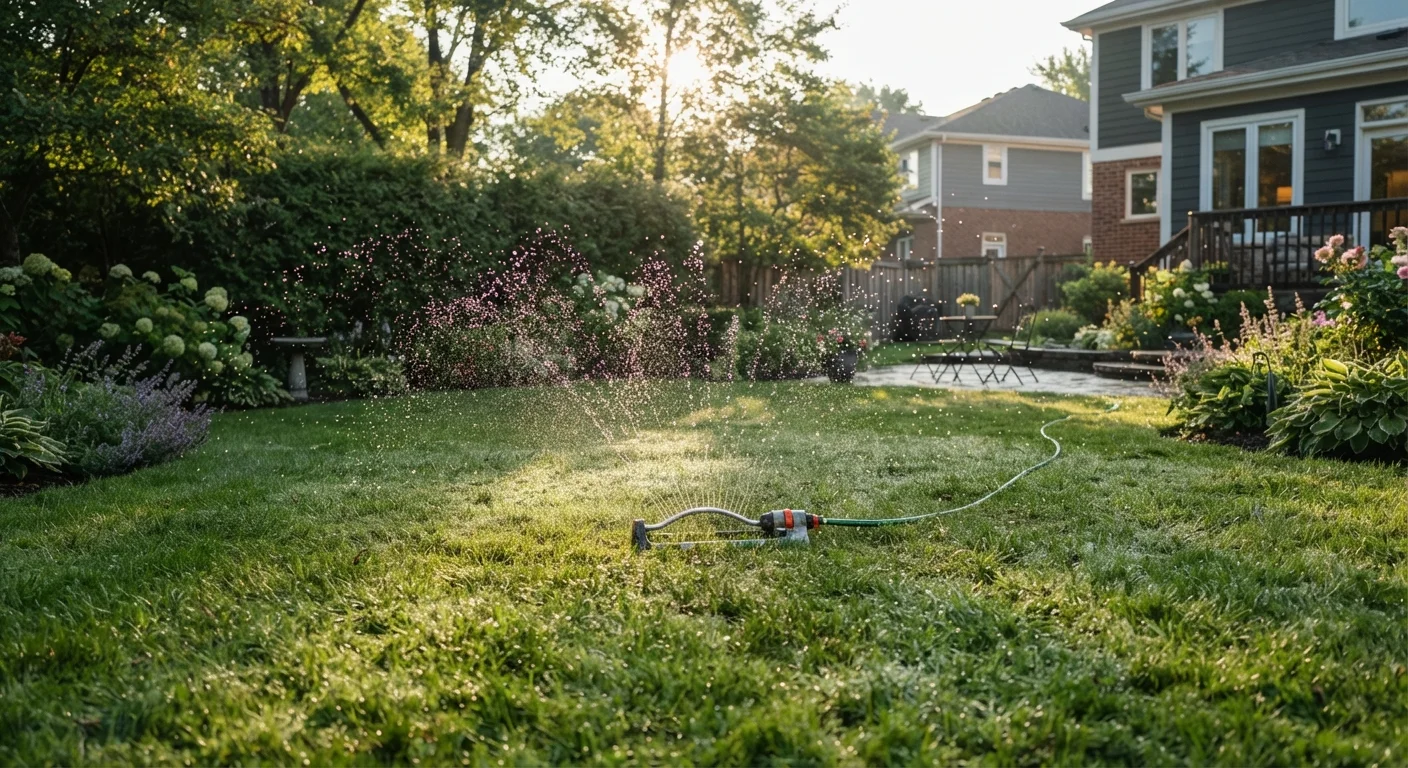
Why Watering Style Shapes Root Depth
Grass roots follow water. That's the core principle behind every good lawn watering recommendation. When water penetrates only the top inch or two of soil, roots have no reason to grow deeper - they find everything they need right at the surface. That might seem efficient, but it creates a fragile system.
Shallow-rooted turf is the first to turn brown during a summer dry spell because surface soil loses moisture rapidly when temperatures rise. Deeply rooted grass, by contrast, can draw from reserves several inches down, staying greener and more stress-tolerant with far less intervention.
Applying 1 to 1.5 inches of water in a single session - rather than spreading that same volume across five or six short waterings - signals to grass plants that the moisture they need lies deep. Over weeks and months, roots follow that moisture downward, building the structural foundation of a truly resilient lawn.
6-8 inches
Ideal root zone moisture depth for turfgrass
University cooperative extension programs generally recommend watering to 6-8 inches deep to support robust grass root systems.
1-1.5 inches
Water per week most lawns require
This figure, widely cited by turfgrass specialists, accounts for both rainfall and supplemental irrigation combined.
30-50%
Estimated water loss from midday irrigation
Watering during peak daytime heat can result in significant evaporation before water reaches the root zone, according to general turfgrass management guidance.
Reading Your Soil and Lawn Type
Not all lawns respond to watering the same way. Soil texture plays a significant role in how fast water moves through the ground and how long it stays accessible to roots.
- Sandy soils drain quickly. Water moves through fast, which means moisture doesn't linger long enough for deep roots to absorb it over a long period. You may need to water with a slightly higher frequency than clay-based yards, but still prioritize depth over surface dampening.
- Clay soils hold water well but are prone to runoff and compaction. Water applied too quickly will pool or sheet off rather than absorbing. Breaking watering sessions into shorter cycles with pauses - sometimes called cycle-and-soak - helps clay absorb water more effectively.
- Loam soils (a balanced mix of sand, silt, and clay) typically respond well to standard once-or-twice-a-week deep watering schedules.
Grass species also matter. Cool-season grasses like Kentucky bluegrass and tall fescue have different seasonal water needs than warm-season varieties like Bermudagrass or Zoysia. Understanding your specific grass type helps calibrate the right depth-and-frequency balance. If your lawn is struggling even with good watering habits, soil pH imbalances could be limiting nutrient uptake as well.
Putting the Right Watering Routine in Practice
The most common mistake homeowners make isn't caring too little - it's watering a little every day out of habit. Here's how to shift toward a more effective routine.
Start With a Simple Soak Test
Before adjusting your irrigation schedule, run your current system for its normal duration and then probe the soil afterward. Knowing exactly how deep water is currently reaching gives you a concrete baseline - and makes it easy to calculate how much longer you need to run the system to hit 6 inches. This one-time test often reveals a significant gap between perceived and actual watering depth.
Measure What You're Applying
Place a few empty tuna cans or rain gauges around your lawn while the sprinkler runs. When they hold about an inch of water, that's your cue to stop. This simple check reveals how long your system actually needs to run to hit the target - and it's often much longer than most people assume.
Check Depth After Each Session
After watering, push a thin rod, screwdriver, or soil probe 6 inches into the turf. Easy penetration means moisture has reached the root zone. Resistance means you need more water or - in clay soils - a longer soak-and-pause cycle.
Water in the Morning
Watering between roughly 6 a.m. and 10 a.m. takes advantage of cooler temperatures and reduces water lost to evaporation. It also allows grass blades to dry before nightfall, limiting the humid conditions that encourage lawn fungus and disease.
For larger yards or those looking for a more precise system, comparing drip irrigation and sprinkler options can help you determine which delivery method best suits your lawn's layout and needs.
Seasonal Adjustments and Signs of Trouble
Watering needs shift significantly throughout the year. In spring, when temperatures are moderate and rainfall is common, established lawns often need little to no supplemental irrigation. In peak summer heat, you may need to extend your weekly sessions or add a second one. In fall, as temperatures cool, reduce watering frequency and let the lawn begin preparing for dormancy - though fall is also a critical season for lawn repair and overseeding, so don't cut irrigation off entirely right away. See our guide on why fall lawn care matters for context.
Watch for these warning signs that your current watering isn't working:
- Footprints that linger: If you walk across the lawn and your footprints don't spring back within a few minutes, the grass is drought-stressed and needs water.
- Bluish-gray tint: Grass that's losing moisture often shifts from bright green to a dull blue-green before it turns straw-colored.
- Runoff during watering: Water sheeting off the lawn before it can absorb indicates compaction or overly fast application - break sessions into shorter intervals.
- Patchy dry spots despite regular watering: Uneven coverage from sprinkler heads, compacted areas, or thatch buildup can all create dry patches even when the rest of the lawn is receiving adequate water.
Pairing smart watering habits with complementary practices - like proper mulching in adjacent garden beds to retain soil moisture near the lawn's edges - contributes to a more cohesive, water-efficient yard overall.
Frequently Asked Questions
Most established lawns do well with one to two thorough watering sessions per week, delivering a combined total of about 1 to 1.5 inches of water. The exact frequency depends on your grass type, soil, and local climate. During hot, dry spells you may need to increase slightly, but avoid daily watering.
After watering, push a long screwdriver or thin rod into the turf. If it slides in easily to about 6 inches, the soil is adequately moist. If it meets resistance quickly, you need to water longer. You can also dig a small plug of soil to inspect moisture depth visually.
Early morning - roughly between 6 a.m. and 10 a.m. - is the best window. Water pressure is typically higher, temperatures are cooler so evaporation is lower, and grass blades dry off during the day, reducing the risk of fungal disease. Evening watering leaves foliage wet overnight, which can promote lawn diseases.
Yes, over time it does. Shallow watering encourages roots to concentrate in the top inch or two of soil. That zone heats up and dries out quickly in warm weather, putting the lawn under stress. Deeply rooted grass can access moisture reserves lower in the soil and remains green and stable much longer.
Absolutely. Sandy soils drain quickly and may need watering more often, though still in a deep-and-infrequent pattern. Clay soils hold water much longer but can become compacted and waterlogged. Aerating clay-heavy lawns helps water penetrate more effectively rather than running off the surface.
No - new grass needs more frequent, lighter watering until roots are established, typically the first two to four weeks. Once roots are established, gradually transition to the deep, infrequent schedule used for mature lawns. Check your specific grass variety for guidance, or see our comparison of <a href="/home-garden/lawn-and-garden/grass-seed-vs-sod-which-is-right-for-your-lawn">seeding and sodding approaches</a>.
The content provided on our blog site traverses numerous categories, offering readers valuable and practical information. Readers can use the editorial team’s research and data to gain more insights into their topics of interest. However, they are requested not to treat the articles as conclusive. The website team cannot be held responsible for differences in data or inaccuracies found across other platforms. Please also note that the site might also miss out on various schemes and offers available that the readers may find more beneficial than the ones we cover.