

Summary
28 items · 2-4 hours spread over one or two weekends
Why a Structured Spring Walkthrough Pays Off
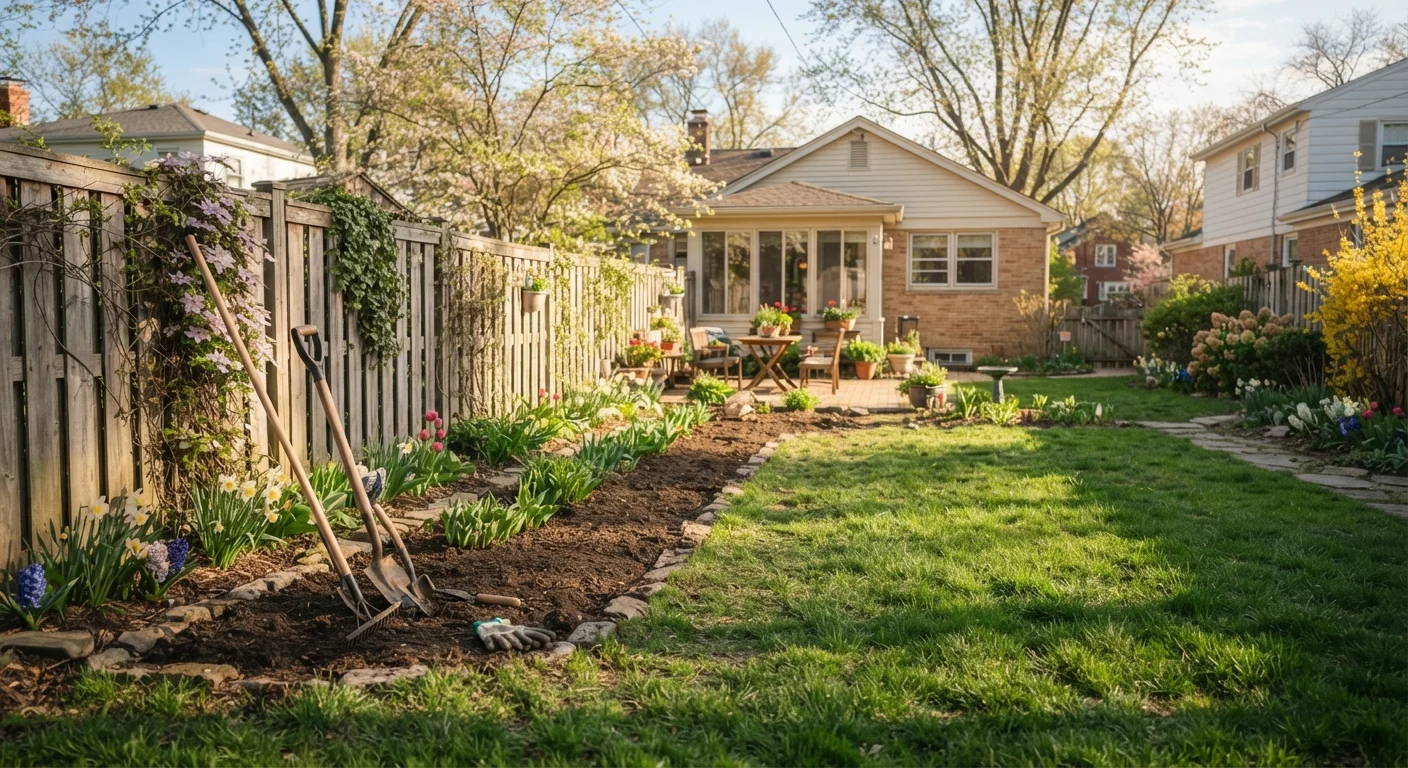
Spring arrives with a long list of competing yard tasks, and it's easy to spend energy in the wrong order - fertilizing a lawn that hasn't been aerated, or planting annuals in beds still choked with debris. A room-by-room approach, borrowed from interior organization practice, helps you move through the yard systematically so nothing gets skipped and your effort compounds across the season.
Think of your outdoor space as a series of distinct zones: the lawn, the garden beds, trees and shrubs, the irrigation system, and the tool and equipment area. Addressing each zone in sequence lets you spot problems early, purchase supplies in one trip, and build on completed work rather than circling back repeatedly.
This checklist pairs well with a month-by-month lawn care calendar if you want to extend your planning through the entire growing season. And while you're in a seasonal-prep mindset, it's also worth checking overlooked seasonal home maintenance tasks that affect the structure around your yard - gutters, drainage, and exterior trim all influence how well your landscape performs.
Soil thermometer
Confirms when soil temperature is appropriate for seeding, fertilizing, and transplanting.
Soil test kit or extension service
Determines pH and nutrient levels so amendments are applied accurately rather than by guesswork.
Core aerator
Relieves soil compaction to improve water, air, and nutrient movement to grass roots.
Garden rake
Removes thatch, debris, and dead material from the lawn and bed surfaces.
Pruning shears and loppers
Remove dead, crossing, or damaged branches from shrubs and small trees.
Blade sharpening file or bench grinder
Restores a clean cutting edge to mower blades, hoes, and pruning tools.
Hose-end pressure gauge
Checks water pressure at irrigation heads to identify blockages or supply issues.
The Checklist: Zone by Zone
Work through each zone below before moving to the next. Timing matters: lawn assessment and bed cleanup should generally come before fertilizing, and irrigation checks should happen before you establish a regular watering schedule.
Lawn Assessment & Care
Garden Beds & Planting Areas
Trees, Shrubs & Structures
Irrigation & Water Management
Tools & Equipment
Don't Fertilize Before Soil Is Ready
Applying fertilizer to frozen, waterlogged, or recently thawed soil increases the risk of nutrient runoff into storm drains and nearby water bodies. Wait until the soil has warmed, drained, and your grass has begun actively growing before feeding. When in doubt, a soil test will tell you exactly what - if anything - your lawn actually needs.
Once trees, beds, and lawn are addressed, turn your attention to the tools and storage that make ongoing maintenance possible. If your garage doubles as a potting shed or equipment bay, a full seasonal reset - like the approach covered in this guide to garage organization - can dramatically cut down on time lost hunting for tools mid-project.
For gardeners who also compost, spring is the right moment to harvest finished material from a winter pile and work it into beds. Composting at home walks through how to evaluate whether your pile is ready and how to apply finished compost without over-amending your soil.
Timing, Climate, and Setting Your Own Pace
Not all spring prep tasks happen on the same date across the US. Soil temperature - not calendar date - is the most reliable signal for when to fertilize cool-season grasses, overseed bare patches, or set out transplants. A soil thermometer (a low-cost tool worth owning) takes the guesswork out of timing.
In warmer USDA zones (8-10), many of these tasks arrive in late winter; in northern zones (4-6), they may not begin until late April or even early May. Adjust your checklist sequence accordingly rather than following a calendar written for a different region.
If fall is coming to mind, note that autumn is actually the most impactful season for lawn repair in many regions. Why fall is the most important season for lawn repair explains why overseeding and recovery work often outperforms spring efforts for cool-season turf - useful context as you set expectations for what this spring prep can realistically achieve.
This article is for general informational and educational purposes only. Results from yard care tasks vary based on soil type, local climate, existing plant health, and other site-specific factors. Always verify local regulations before applying fertilizers or pesticides, and consult a licensed arborist for significant tree work.
The content provided on our blog site traverses numerous categories, offering readers valuable and practical information. Readers can use the editorial team’s research and data to gain more insights into their topics of interest. However, they are requested not to treat the articles as conclusive. The website team cannot be held responsible for differences in data or inaccuracies found across other platforms. Please also note that the site might also miss out on various schemes and offers available that the readers may find more beneficial than the ones we cover.